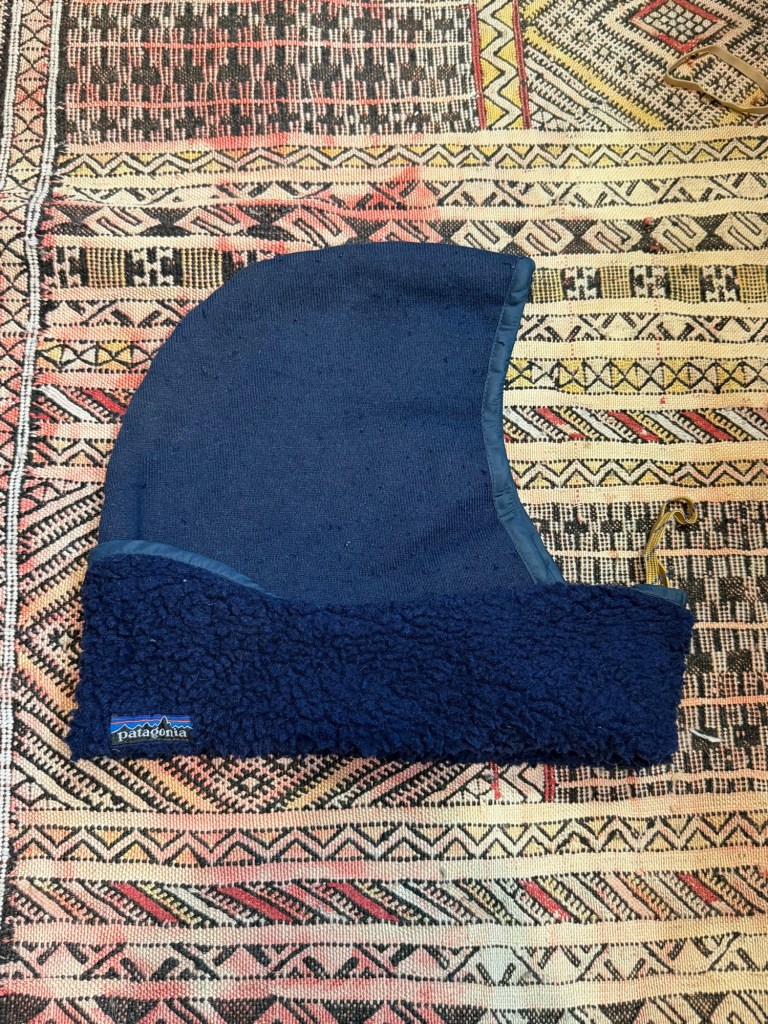
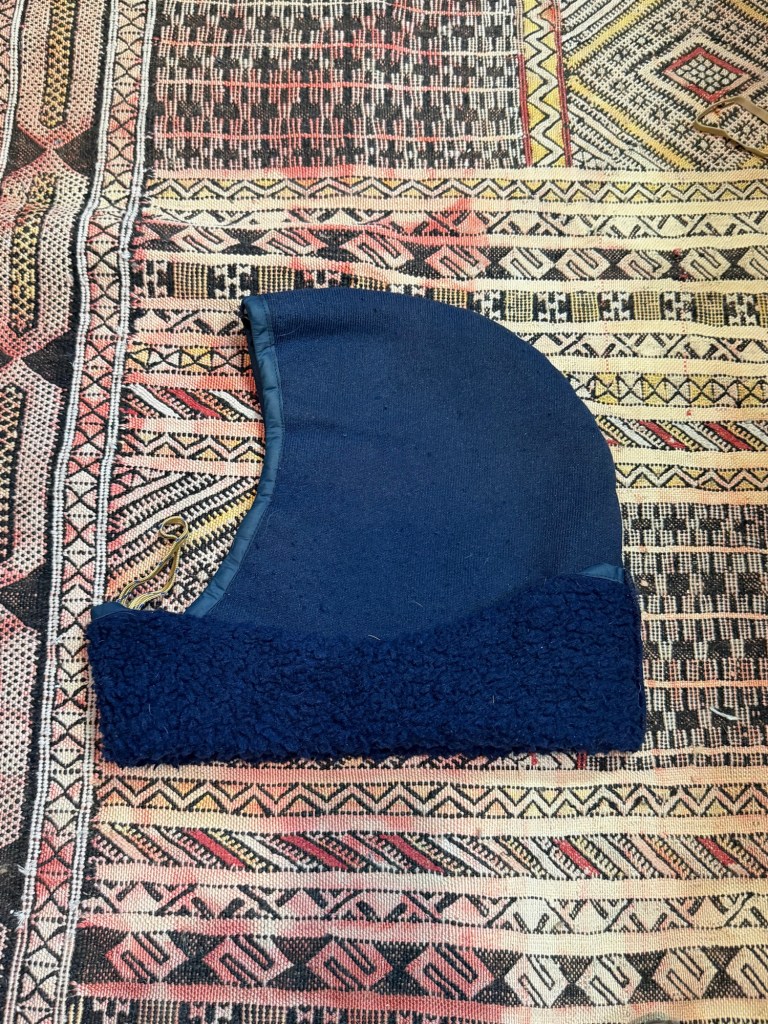
Early 80s Patagonia Pile Balaclava

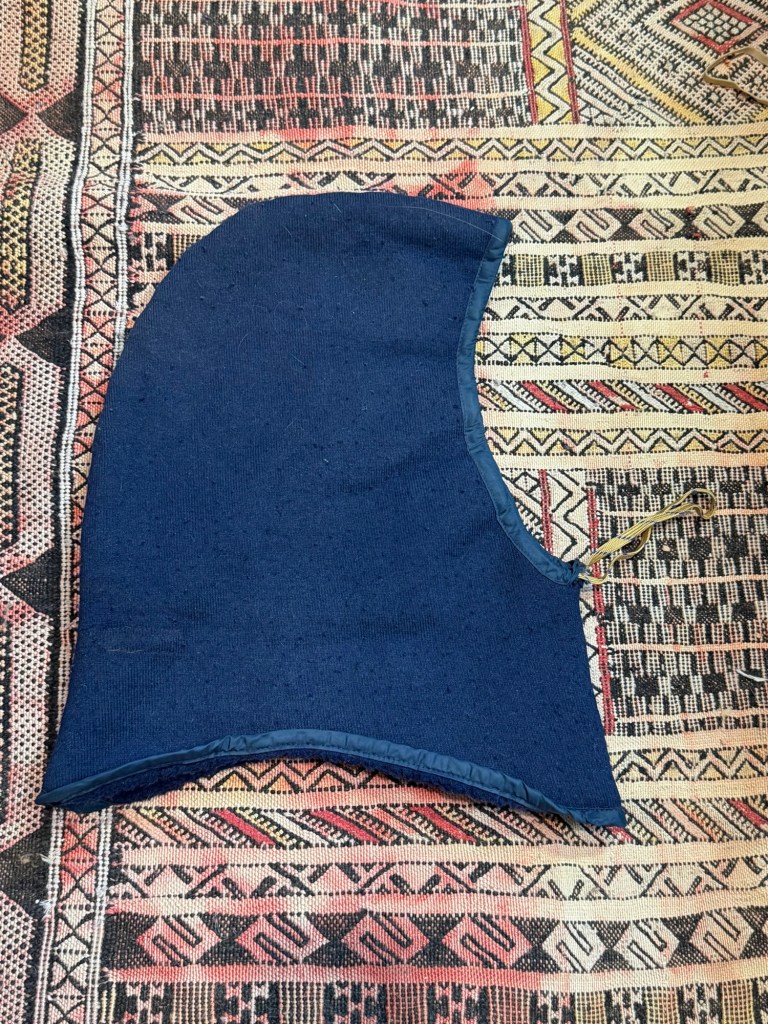
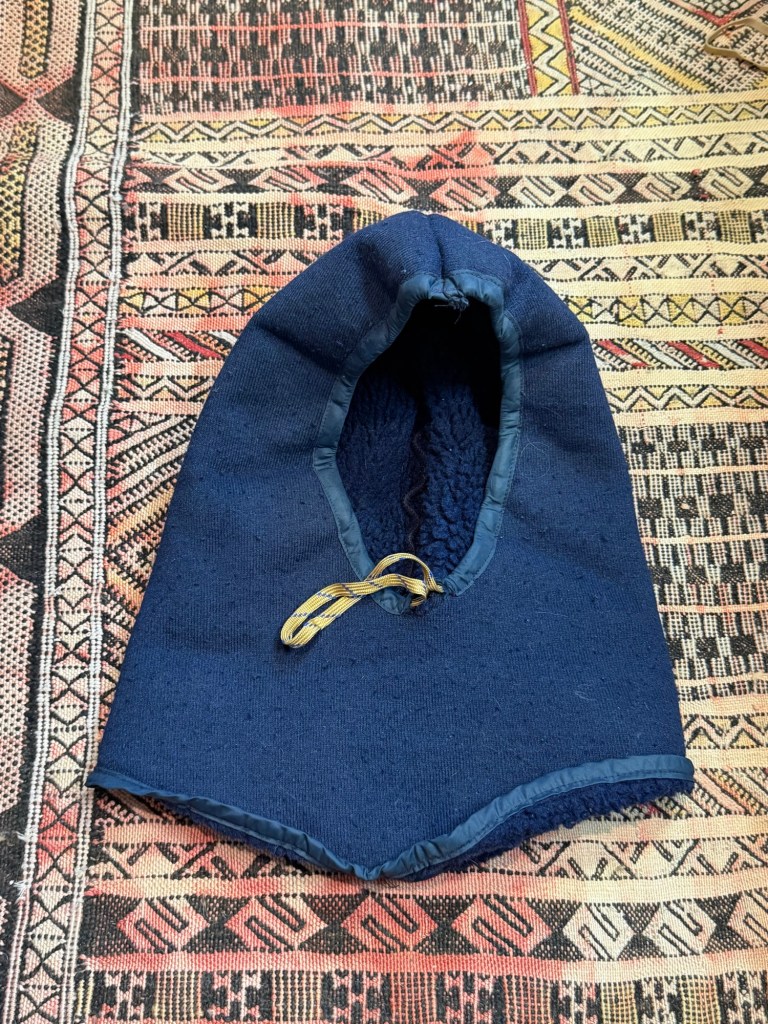
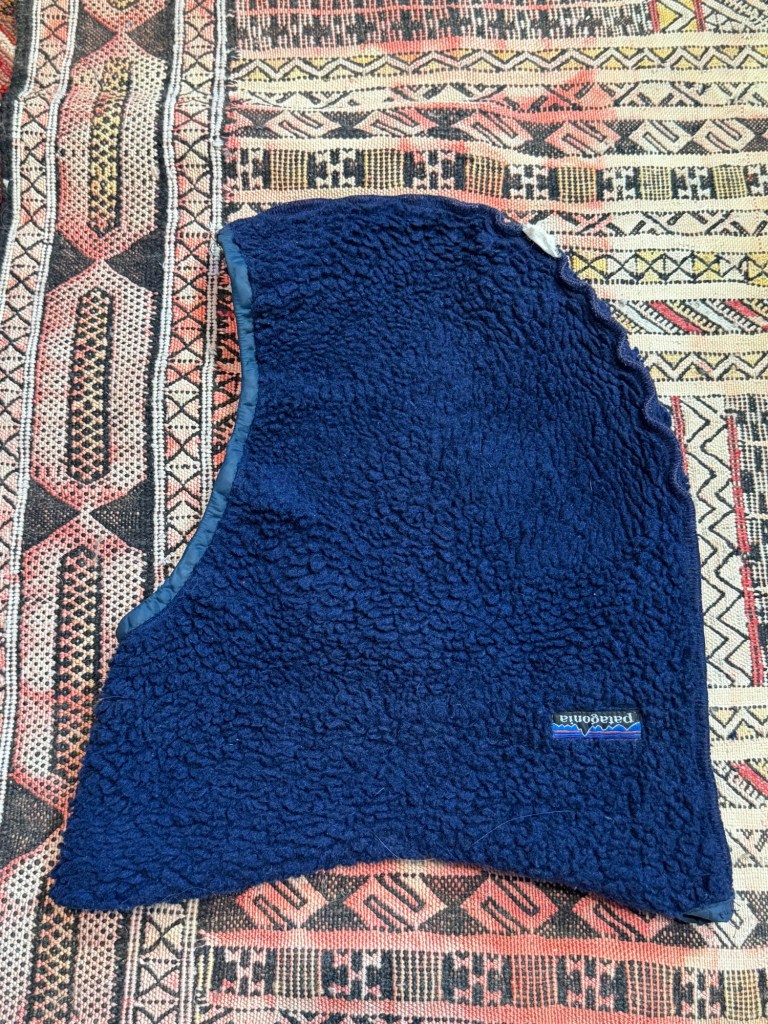
What we have here is a rare standalone hood constructed from the same deep, chunky pile fleece Patagonia used for their iconic early-80s Pile Jackets and Bunting Pants. Same fabric. Same weight. Same unmistakable loft, shaped into a balaclava hood with a structured face opening, a satin-bound edge, and a fleece-lined interior that wraps the wearer in that signature Patagonia warmth.
It might just be the fabric that built the brand.


Patagonia’s earliest fleece wasn’t fleece at all, it was pile: a thick, looped, almost shaggy fabric with extraordinary warmth-to-weight that looked more like a sheep had been processed through a textile mill than anything resembling modern synthetic insulation. Yvon Chouinard famously adopted pile in the late 1970s after discovering it in a fabric sample from Malden Mills, and the resulting pile jackets became totems of a certain kind of outdoorsman one who climbed hard, slept rough, and wore the same jacket to the bar afterward.


By the early 1980s, Patagonia was well regarded for their pile line jackets and pants, but the hood doesn’t have a lot of provenance.
The overall silhouette is neither a simple beanie nor a full balaclava. Think of it as a hood shell, it covers the crown, back of the head, and neck completely, leaving an open face. Worn alone, it’s a wind-blocking, pile-lined head cocoon. Worn over a cap or under a shell, it adds a layer of warmth that’s genuinely hard to replicate with modern gear. One could also just roll up into a beanie if the day got warm


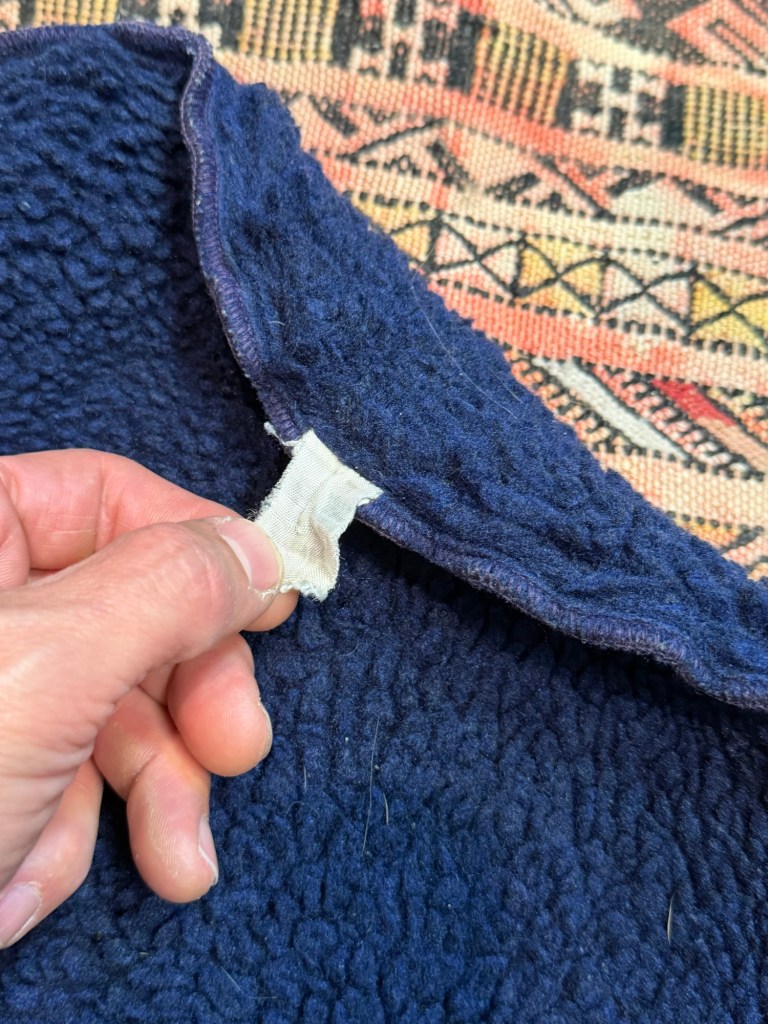
The label is the tell. Woven directly into the pile cuff, it bears the early 1980s Patagonia logo: the mountain silhouette rising above a striped color bar in deep red, blue, and orange, with patagonia in the lowercase serif that preceded the brand’s later, rounder lettering. With the lack of a ® this label variant places the piece firmly in the early 1980s window.
1973/74 The Great Pacific Iron Works Ultima Thule Pack

After over a decade of looking for packs at thrift stores, garage sales and flea markets I finally found a piece from The Great Pacific Iron works. I was relatively quick to discover the model of this frameless backpacking unit as the Ultima Thule. Digging further into some of the nuance of this bag compared to others, I believe its 1974 model. 73 would coincide with the first year of the shop label, but a catalogue for that year states the pack has a yellow duck canvas back. The difference between this and later models being the conjoined top flap strap. The two-to-one design is replaced by two individual straps for the 1975 catalog.

The early 70s were a coming of age period for backpacking and backpacking gear. While most other pack makers were designing and developing lightweight aluminum frame packs for multi night use, Chouinard and co were already bucking the trend. The Ultima Thule was designed for use to, from, and on the crag and slopes. For this reason, they forewent the frame and instead made a pack that hugged the wearers body to help maintain balance and center of gravity. If you’ve ever donned a loaded up frame pack you know the feeling. Load’s sit comfortably off your back but the slightest tip or tilt can have you quickly repositioning your feet below to keep from stumbling. For Chouinard, this instability simply wouldn’t due on the talus and slopes.

What looks like an over-sized day pack is thoughtfully designed with the wearer in mind. The bottom compartment, opens all the way around the waist into what are referred to as “dewlaps”. This compartment was meant to be stuffed full with a sleeping bag and other soft goods to create a firm base for the rest of the load to sit upon. The Velcro belt, enables a nice cinch around the waist and allows the load to ride on the wearer’s hips. “Let your hips shoulder the weight” one pack maker said in their advertisements. The top compartment is separated into to side-by-side silo pockets which is nice for equipment containing fuel, or anything that best rides upright. Reinforcing via rivets and nylon webbing ensured you could stuff this thing like a turkey without it splitting. When packed thoughtfully, it also helps maintain that center of gravity the company was going for. The top flap offers a good amount of space, but has no side gussets, so more practical for maps and smalls. An intentional design meant to keep from top loading weight of the pack.

The material on the pack is pretty standard for the time. A heavy, coated nylon in a royal blue. Perhaps the biggest wow factor, aesthetically at least, comes from the green duck canvas backing which extends from just above the shoulder straps down to the inside of the “dewlaps”. With this pack adhered to he wearer’s back, I am sure the duck canvas offered at least some sweat absorption. Shoulder straps are reinforced with a riveted leather backer and feed down into the body of the pack. There’s an ergonomic crescent shape to them and they’re lightly padded. Standard leather lashing points adorn the body of the bag for side canister compartment attachments, axes, skis, poles or whatever else one would need for the adventure.

This example is rather clean for its age. There’s some dust externally I haven’t quite removed, but the true mark is the condition of that inner nylon coating which breaks down with wear and improper storage. In this pack, it’s about as good as you could hope for. The Rocky Mountaineering cord lock is a fun add-on, probably deserving of some investigation of its own write up at some point.