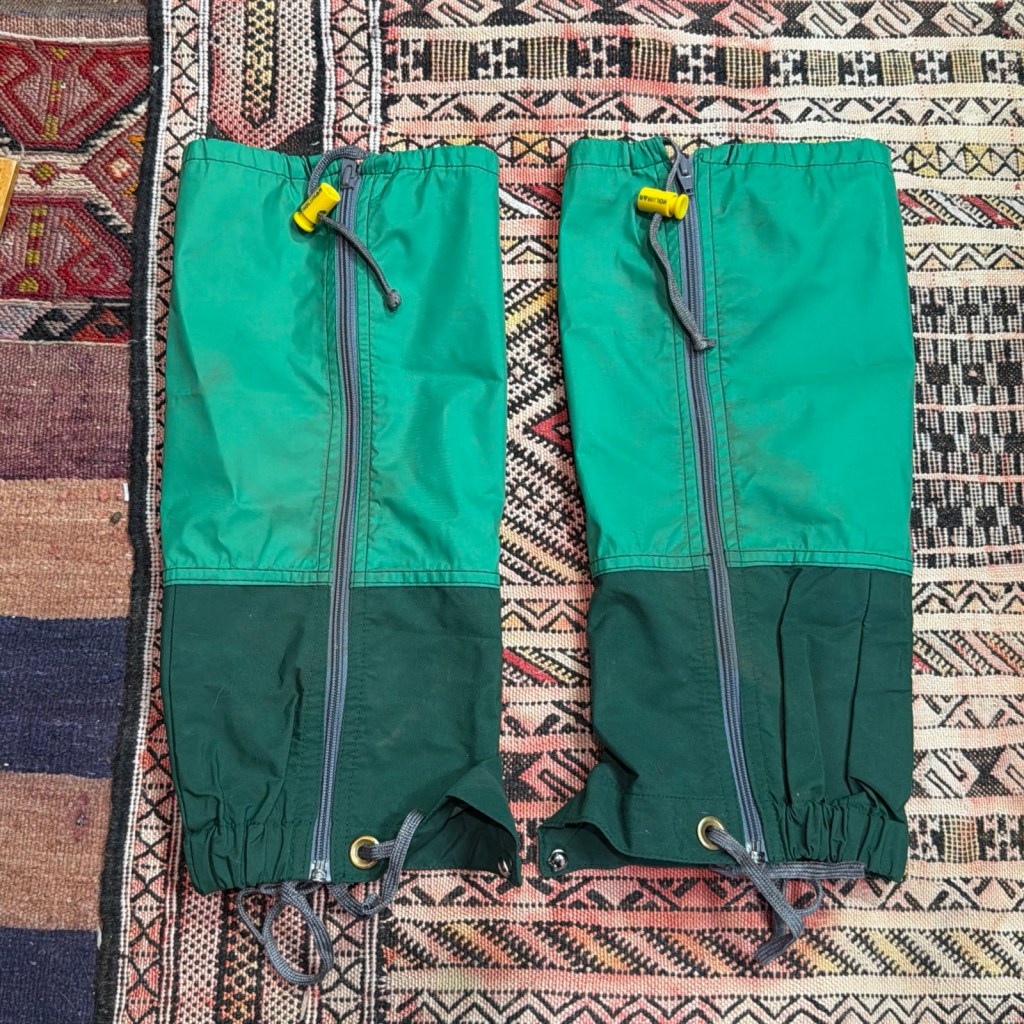
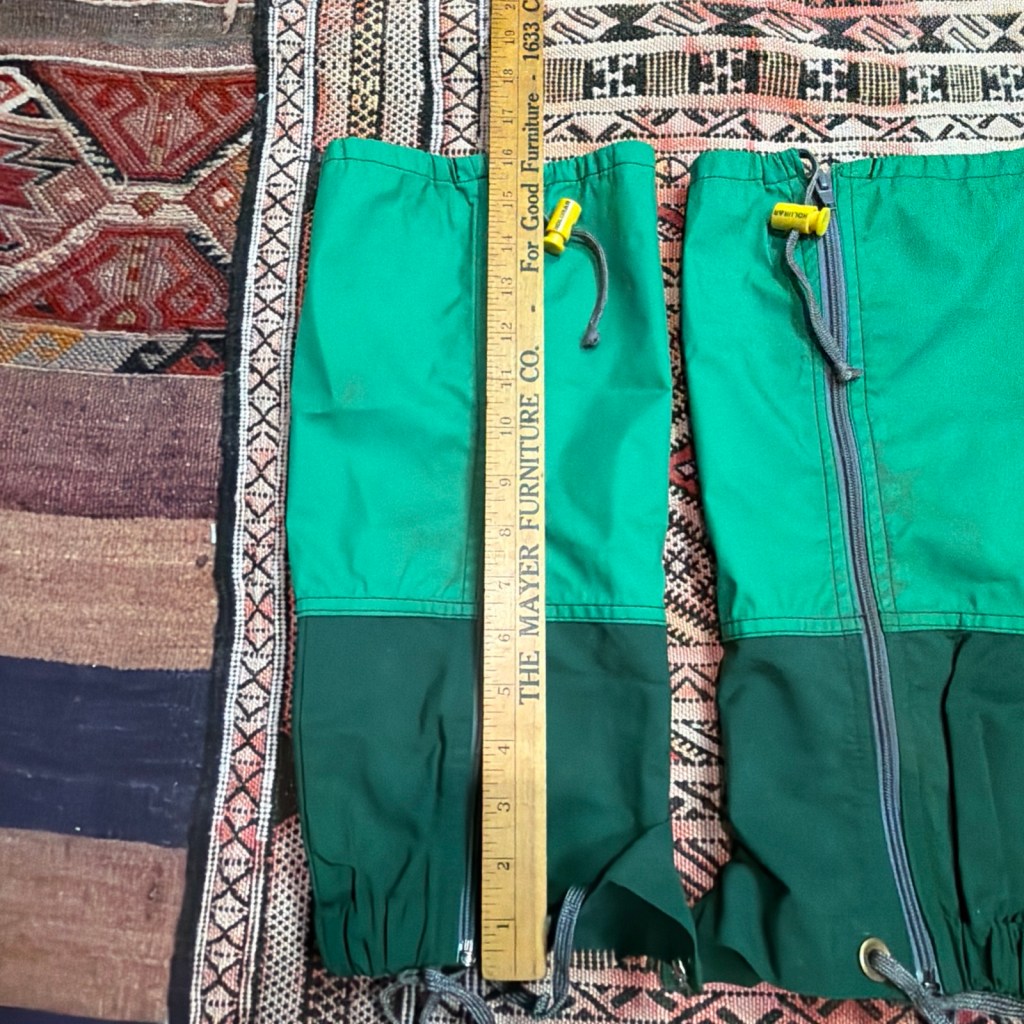
1980s Holubar Gaiters

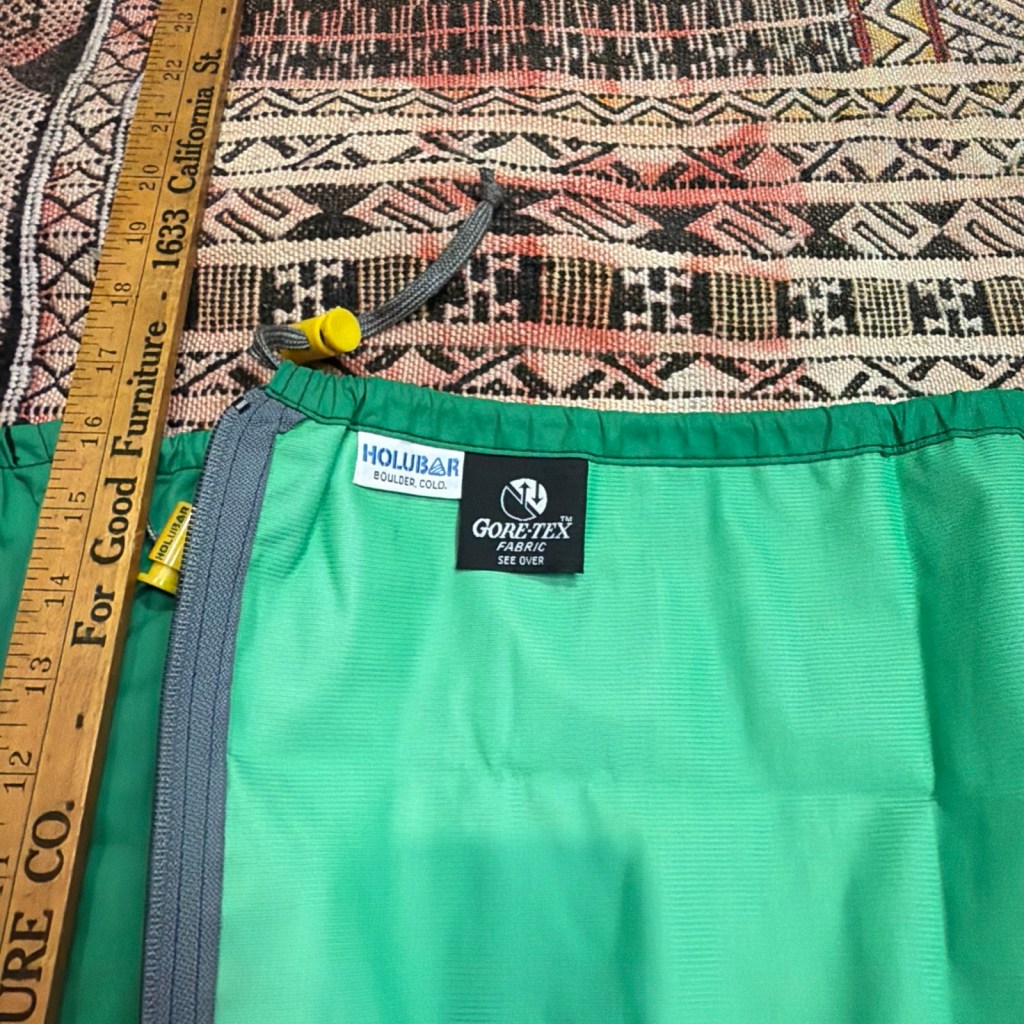
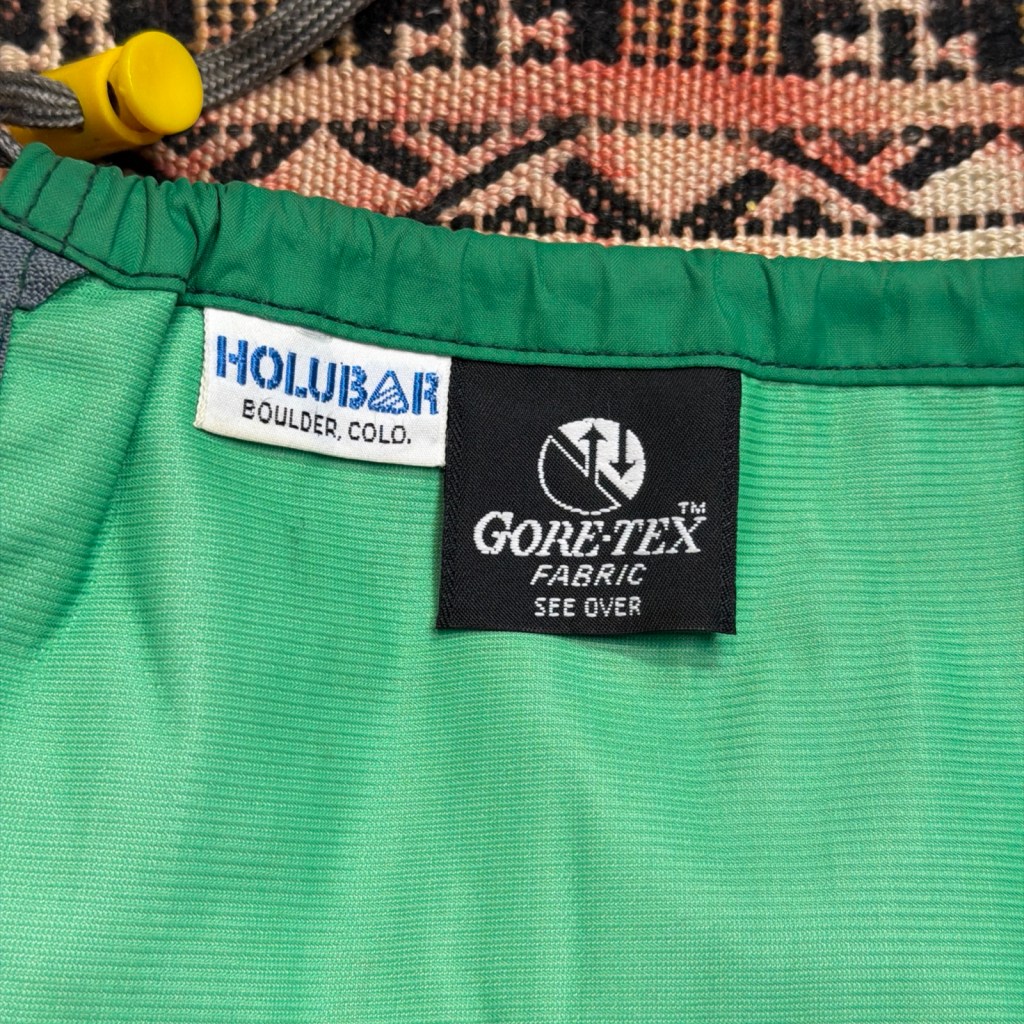
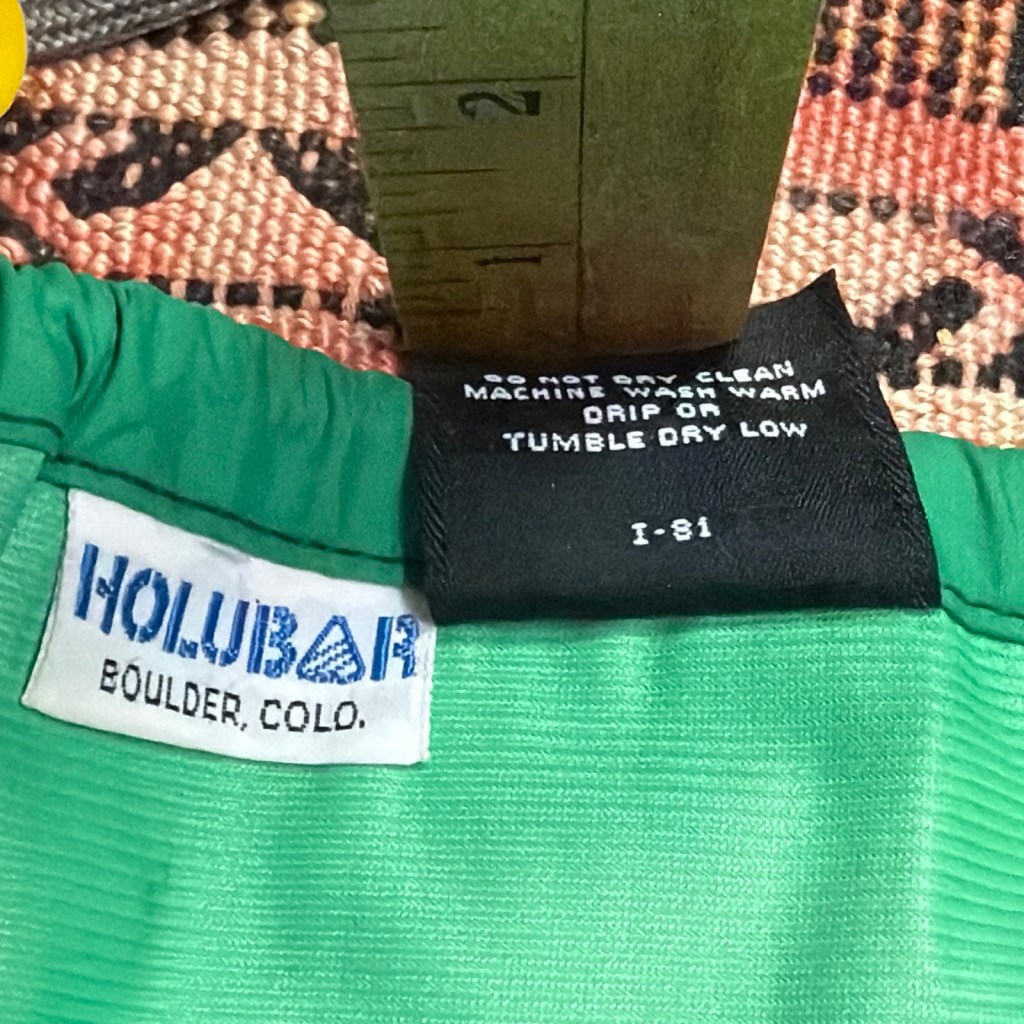
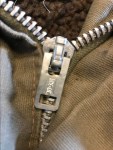
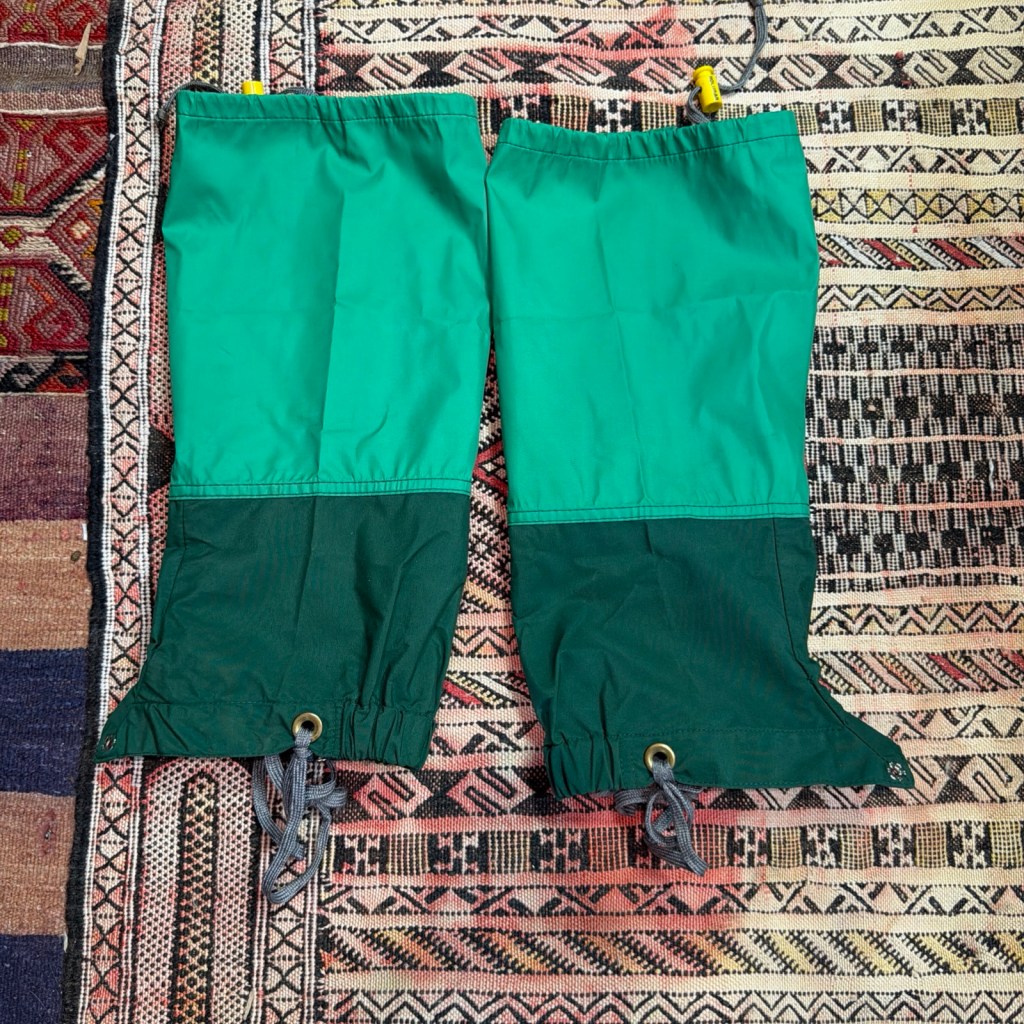
Recently acquired these late model Holubar Gaiters. I’ve seen this simplified logo prior and recognized it as being from the tail end of the brand’s initial run. The Gore-Tex label indicates a production date of 1981, which would roughly coincide with when the brand was acquired by TNF.
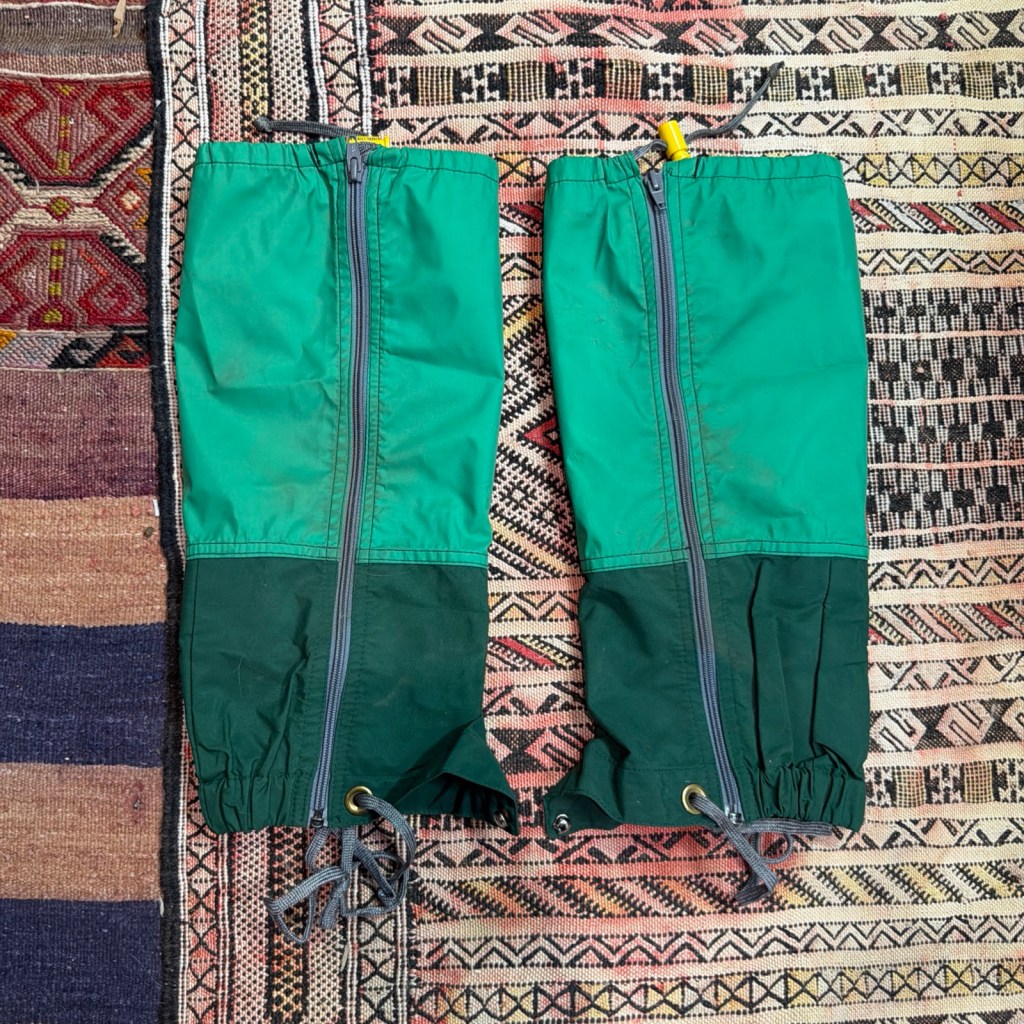
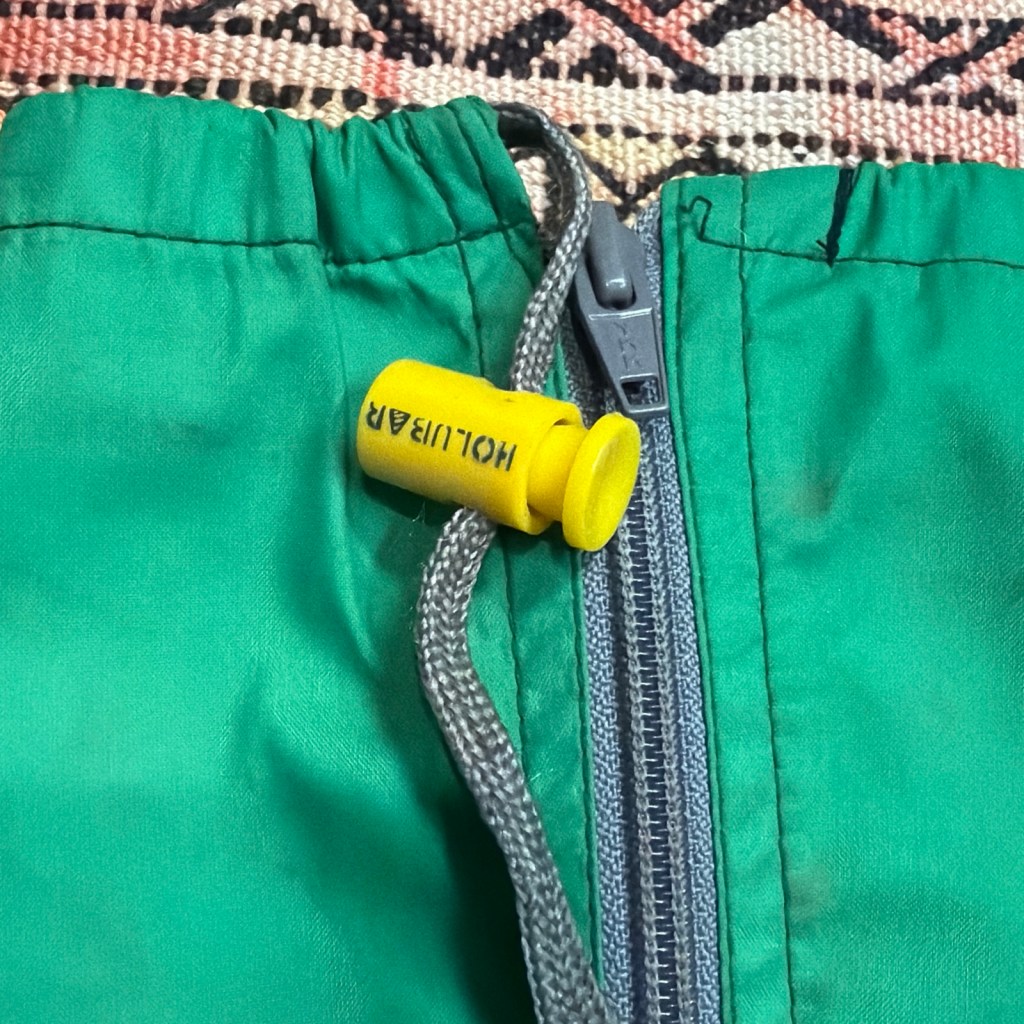
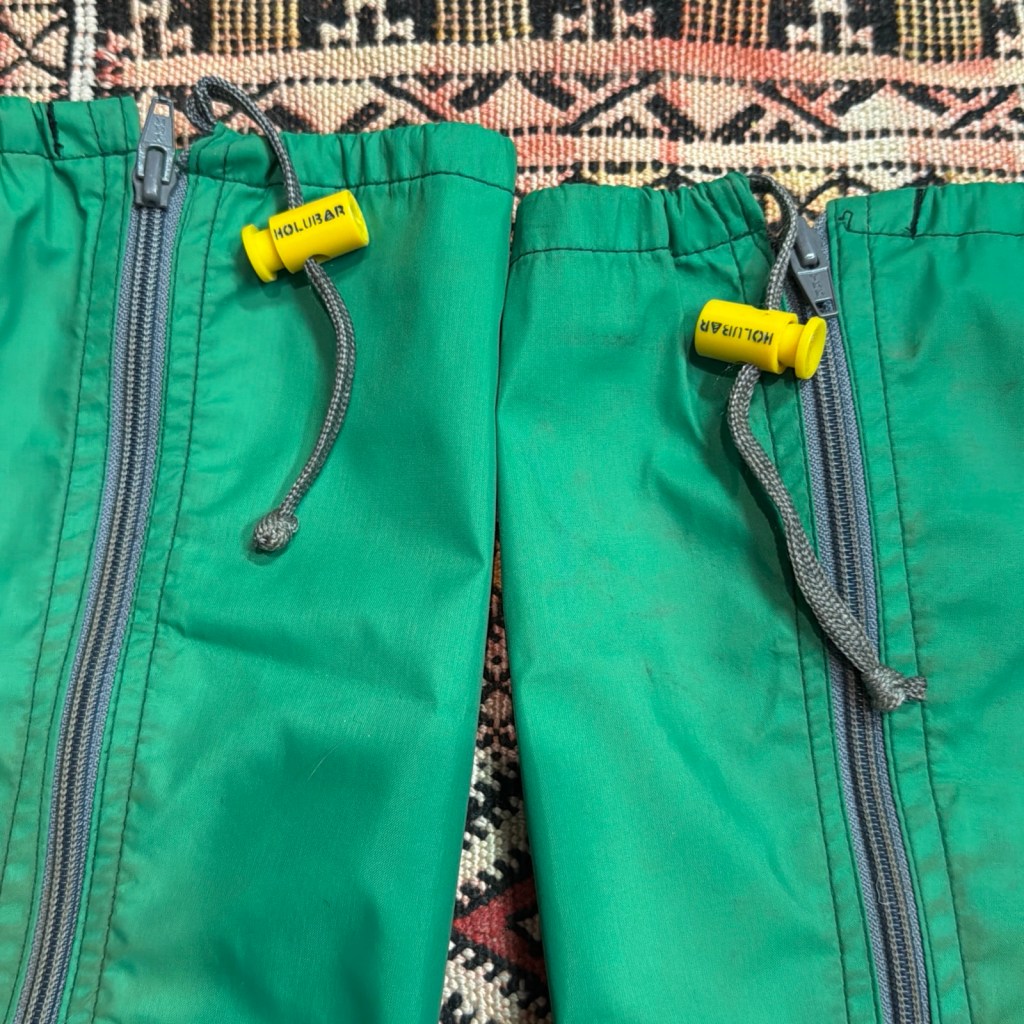
Holubar — The Later Years: A Timeline

1975 — The company was purchased by Johnson Wax around 1975. Despite an attempt to transition from a high-cost manufacturing model to a lower-cost design and manufacturing approach, Holubar failed to meet the business expectations of its new owner. Wikipedia

1981 — The September 1981 “North Face Newsletter” proudly announced The North Face’s acquisition of Holubar from Johnson Wax, with Hap Klopp himself signing the landmark newsletter. The nine Holubar stores across three states, the Holubar name, and all inventory became North Face’s. Oregonphotos

1981–1983 — The North Face swiftly established itself at the original Boulder store on 30th Ave., but left all the Holubar signs in place. Employees received North Face payroll checks, but their signs all said “Holubar” — no one would have known of the ownership change unless told. Sometime in 1981, a planned shopping mall forced closure of the original store, and it moved to South Broadway St., still using the Holubar name into 1983. What appeared to be “Holubar” labelled garments were actually being made by North Face in Berkeley, in gradually diminishing numbers. Oregonphotos

Late 1980s — The North Face eventually stopped producing the Holubar brand altogether. The brand had not been active in the U.S. since the eighties. WWD

Late 1990s — An Italian group led by entrepreneur Alberto Raengo purchased Holubar from The North Face. WWD

2012 — The Italian group reintroduced the Holubar brand to the European market. WWD Today, Holubar is sold in more than 500 stores in Europe and Asia, including Le Bon Marché and La Rinascente. WWD

2019 — Fashion Box USA, a new business created by Patrick Nebiolo, the former managing director of Woolrich Inc., acquired the North American license and relaunched the brand for the U.S. market. The fall collection centered around parkas and mountain jackets intended to compete with Moncler, Stone I
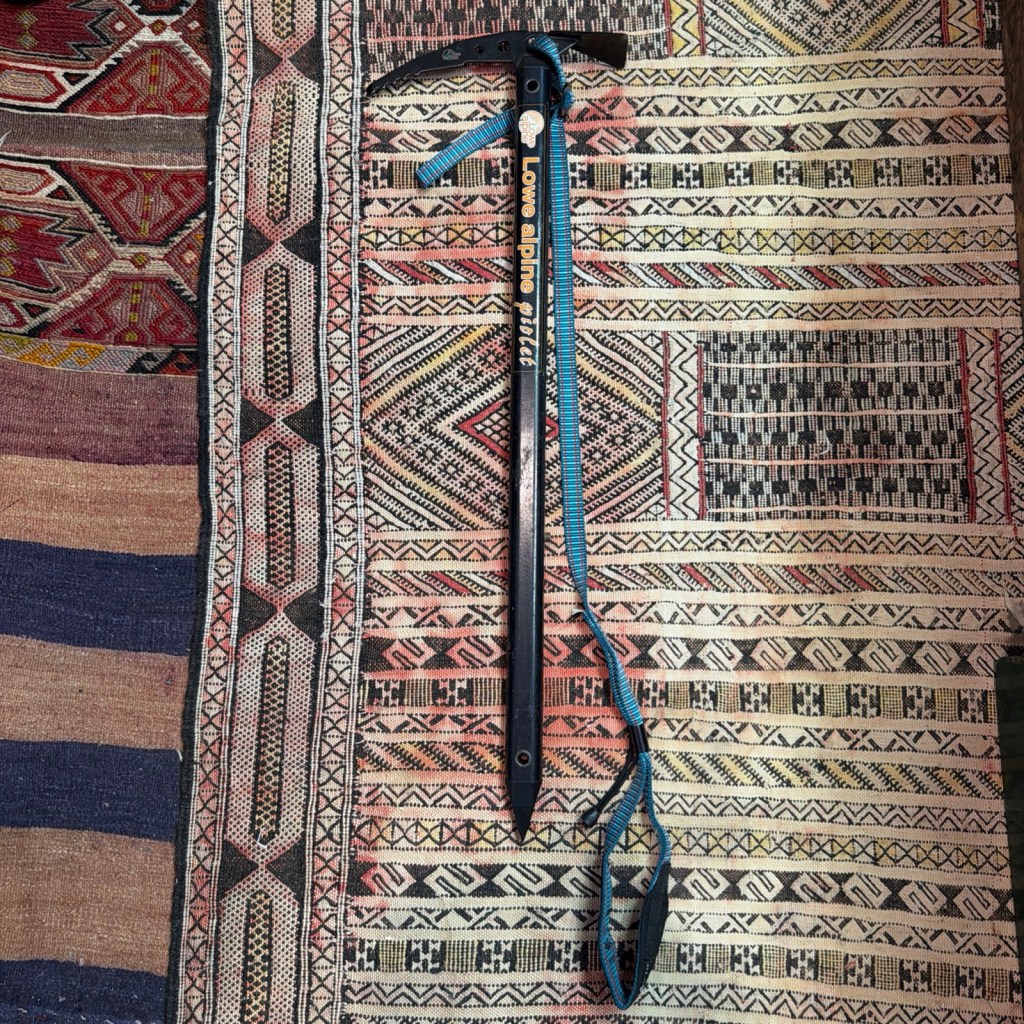
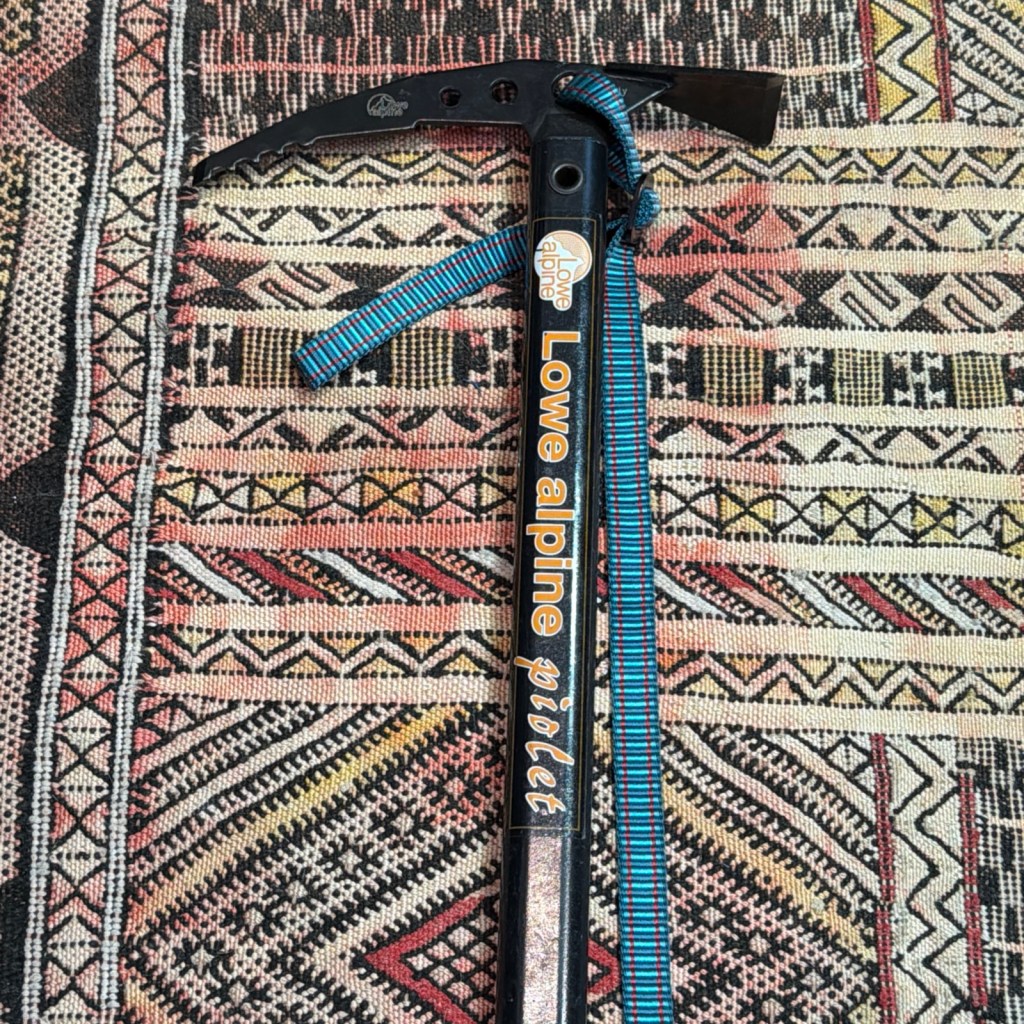
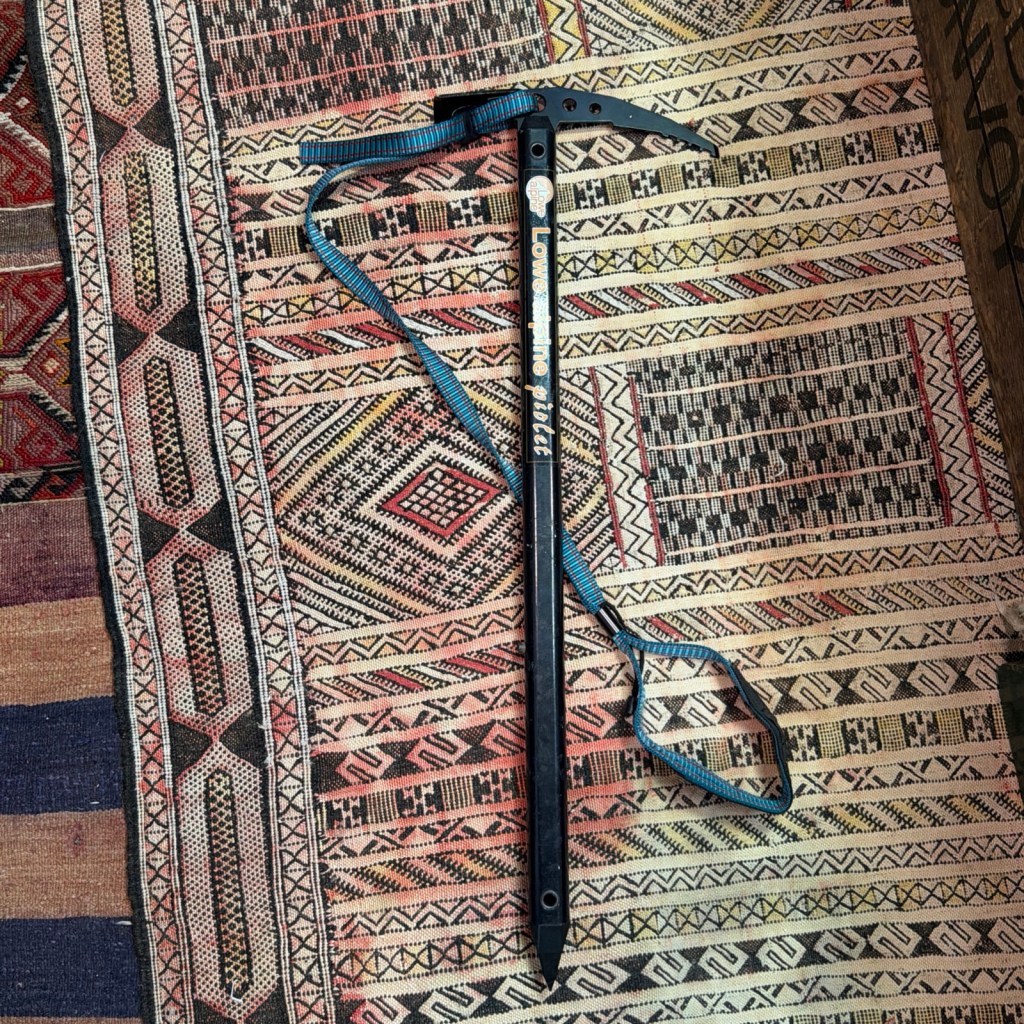
Lowe Alpine Piolet Ice Axe

When I think of Lowe Alpine, I think of their packs and photo bags which I’ve come across countless times of over the years. Besides maybe some of the early examples I don’t get too excited when encountering the soft goods. Hard goods on the other hand are much fewer and further between. Coming across this ice axe was a rare find and one that made me want to dig deeper on this often overlooked (by me) label.

The story of Lowe Alpine begins in Ogden, Utah, where brothers Greg, Mike, and Jeff Lowe grew up climbing alongside legends like Royal Robbins and Yvon Chouinard. When the available gear couldn’t keep up with their ambitions, they built their own.
In 1967, Greg descended into the family basement and invented the world’s first internal-frame backpack, the Expedition Pac one that quietly rewrote the rulebook for pack design in the process. By 197 Lowe Alpine Systems was incorporated. The innovations came fast: the first spring-loaded camming device (1973), the first step-in crampons with anti-balling plates (1974), the first plastic buckles on rucksacks (1980), and the first softshell garment (1984).
Jeff, meanwhile, was becoming one of the greatest alpinists of his generation. Credited with inventing mixed climbing, with over 1,000 first ascents, and a solo of a new route on the Eiger’s North Face in 1991 (Metanoia) that went unrepeated for 25 years. He was awarded the Piolet d’Or Lifetime Achievement Award in 2017 and passed away in 2018.
The brand was eventually sold and acquired by Rab in 2011, where it continues today as a pack-focused label. The hardware era the axes, crampons, and raw alpine tools — belongs to history.

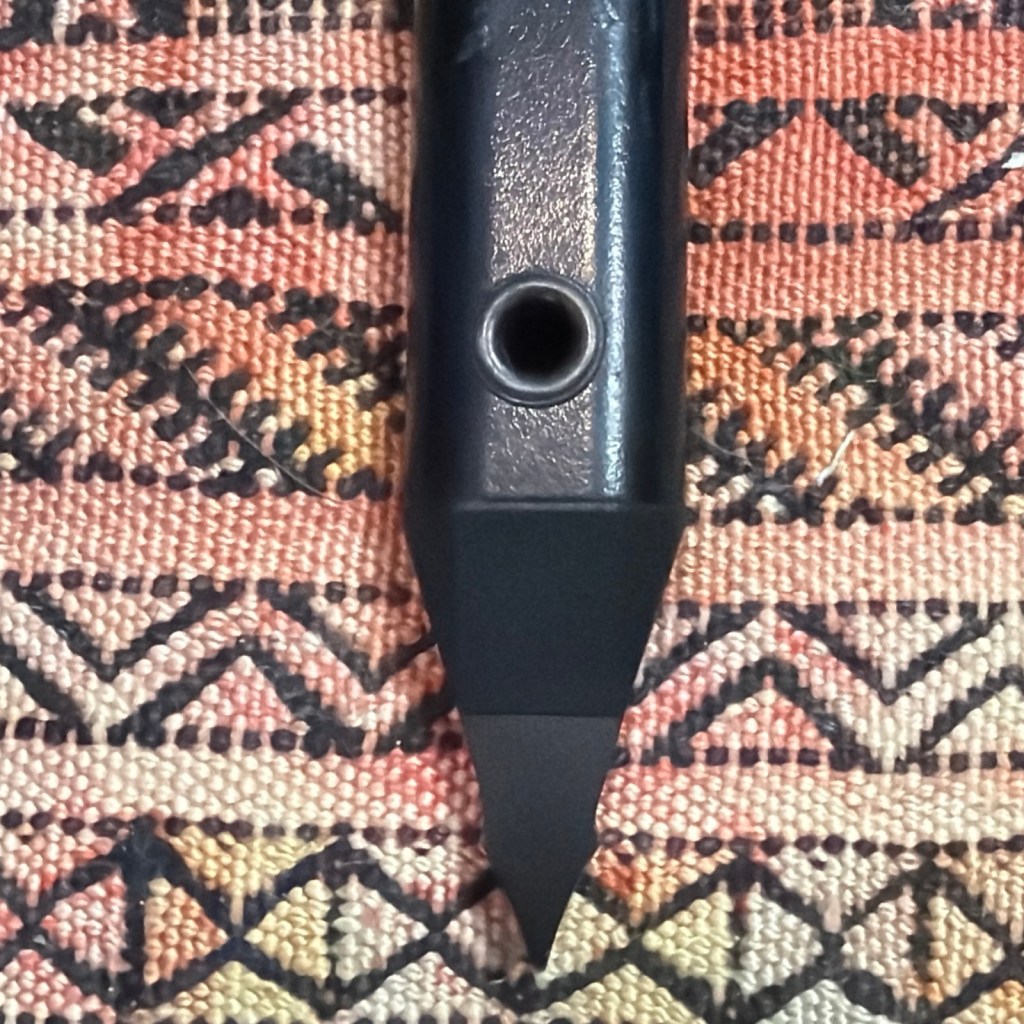
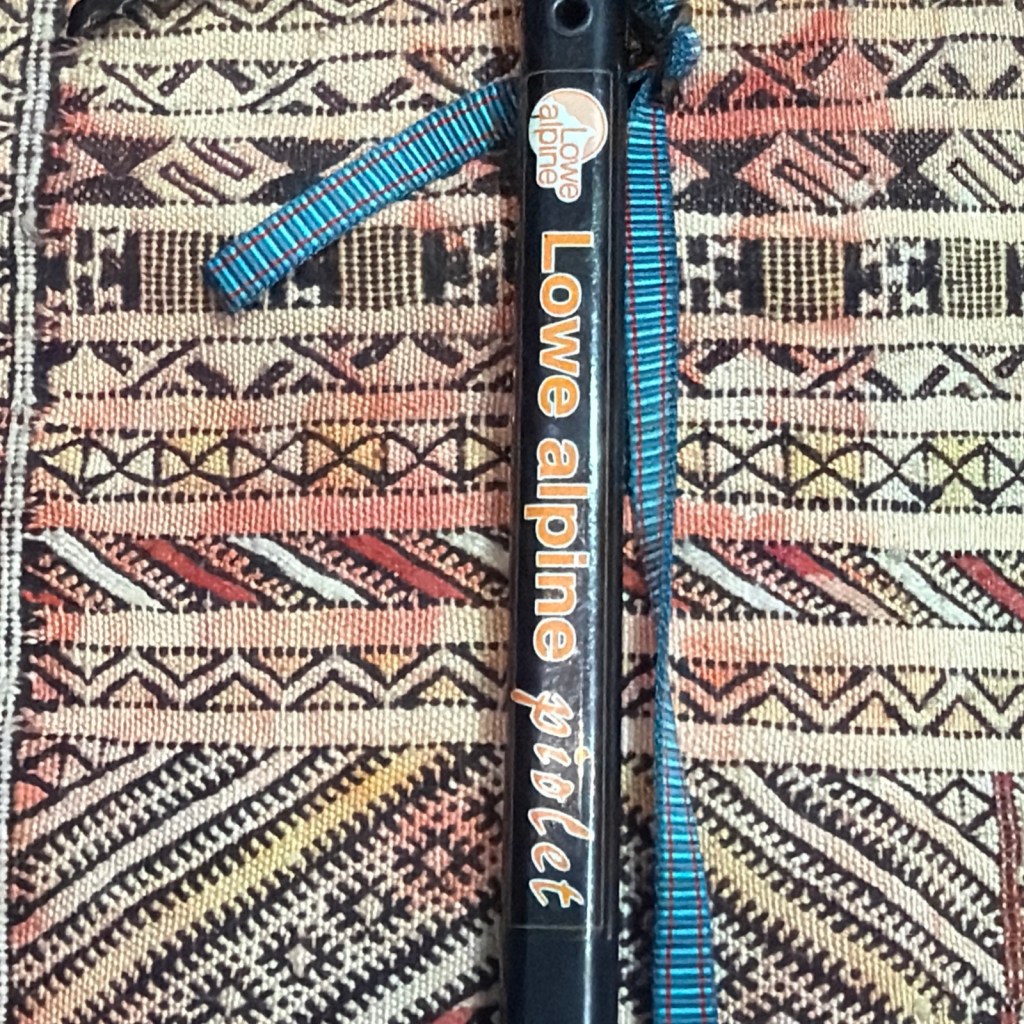
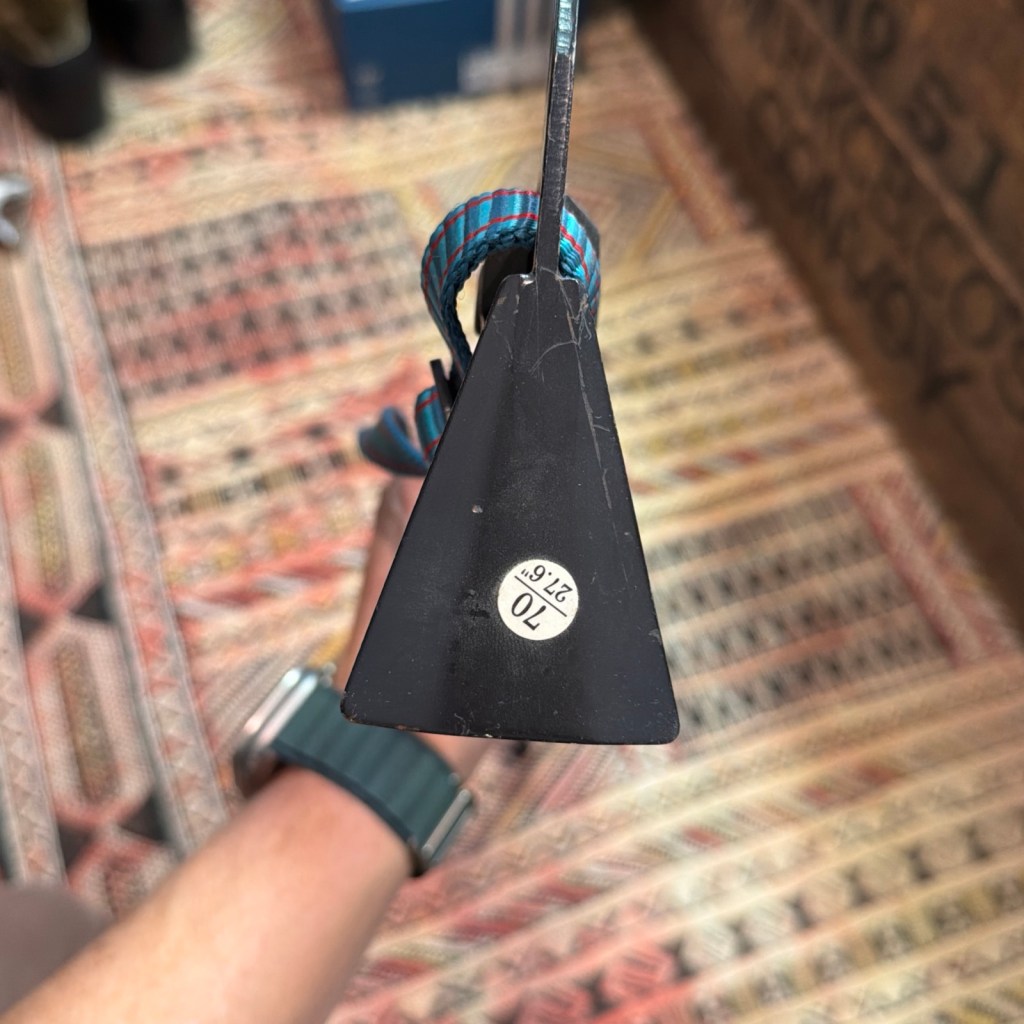
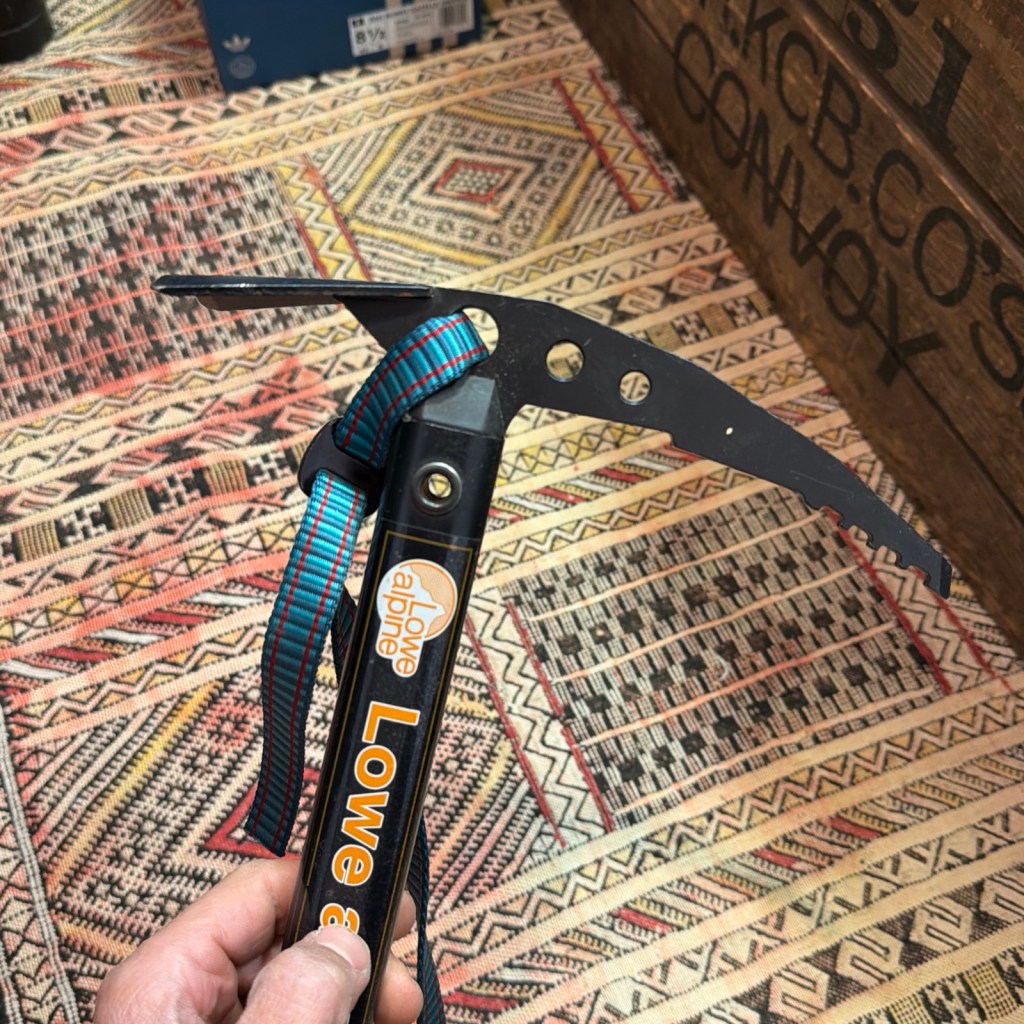
This 70cm (27.6”) Lowe Alpine Piolet is a classic straight-shafted mountaineering axe from the brand’s hardware period. The black aluminum shaft is clean and purposeful, the pick carries a classic mountaineering curve built for firm snow and glacier ice, and the broad adze is made for step-cutting and self-arrest. The spike is sharp and true.
Ice axes bearing the Lowe Alpine name rather than their hardware sub-brand, Latok Equipment are uncommon. This isn’t a mass-market tool. It’s a genuine relic from a company that didn’t just sell gear to mountaineers. They were mountaineers.
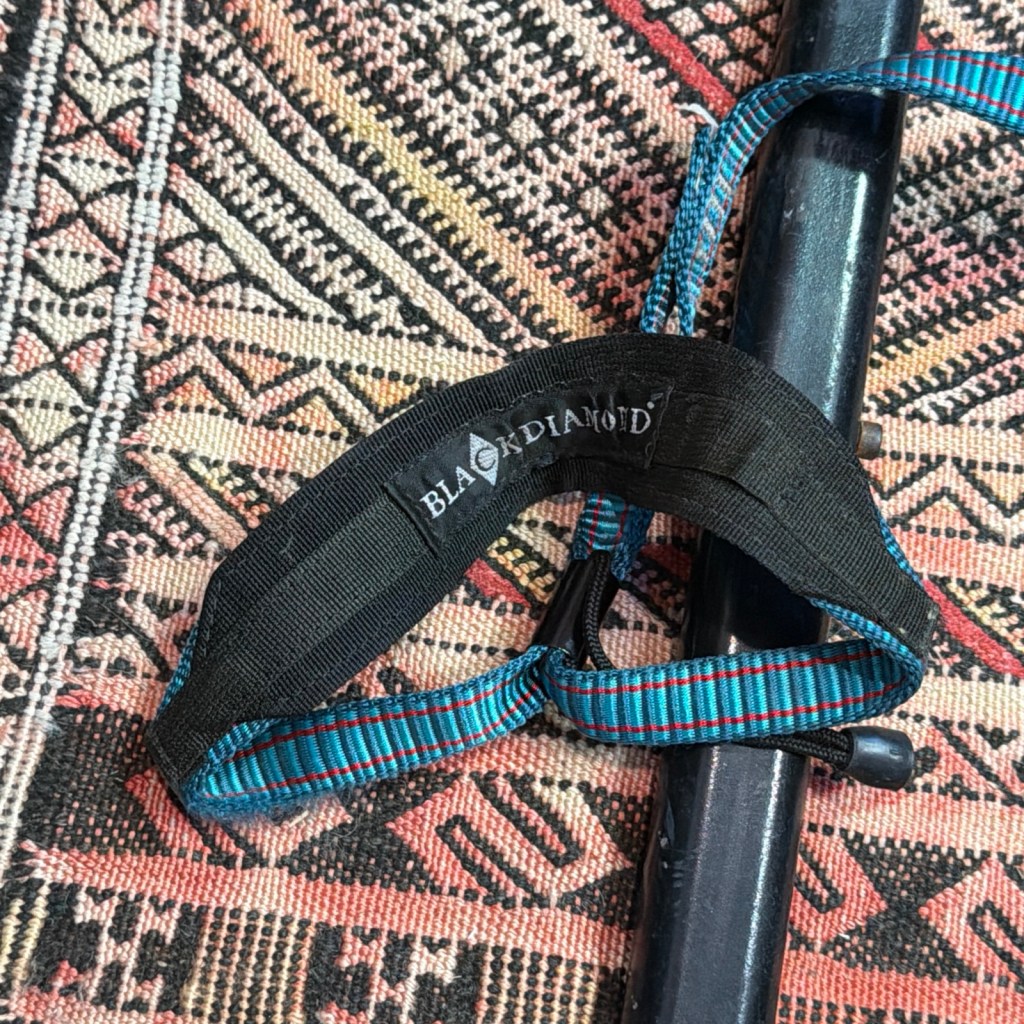
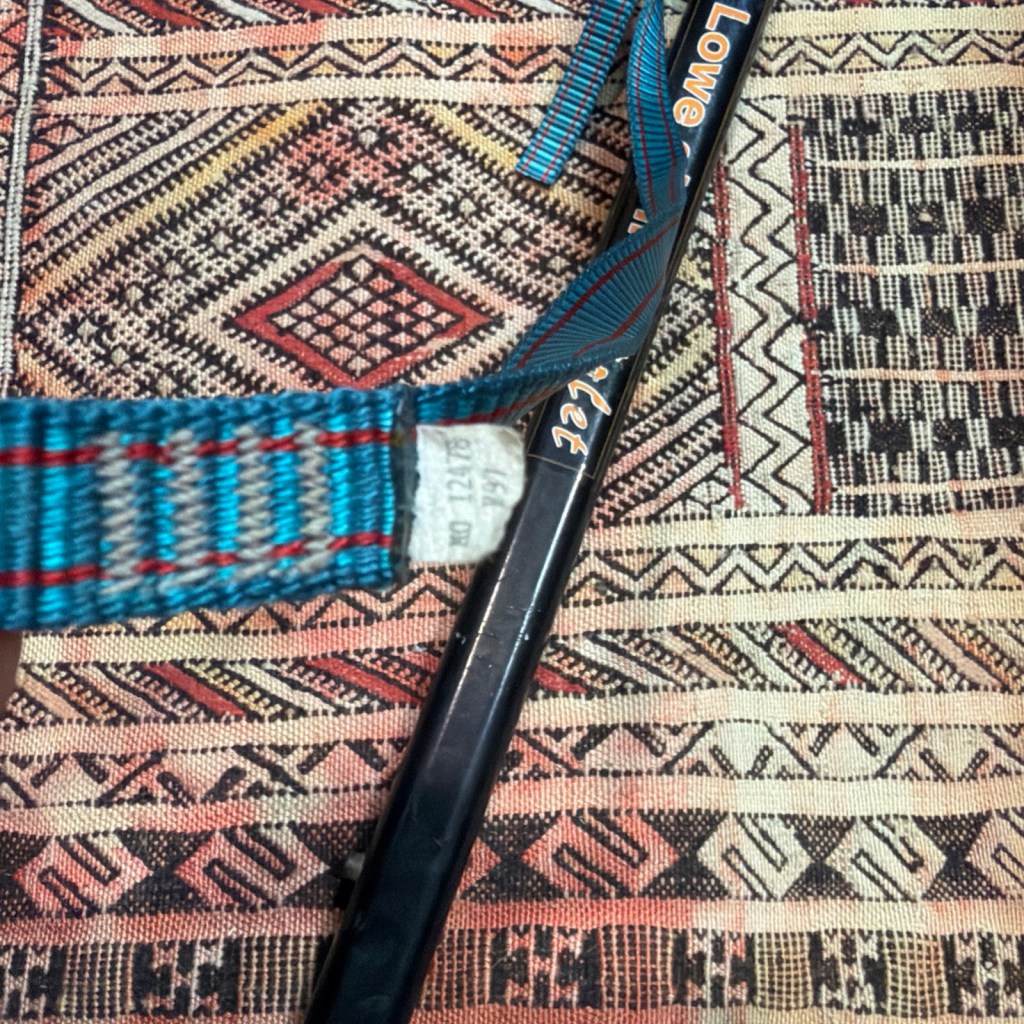
The Black Diamond wrist leash is still threaded through the shaft appears to be dated 1997.

National Park Service Fleece Jacket

This National Park Service fleece is made in the USA by VF Imagewear an official supplier to the NPS as well as other land and wildlife management firms and governmental agencies. VF Imagewear is also owned by VF Corp, owners of The North Face, Jansport, Smartwool and others.

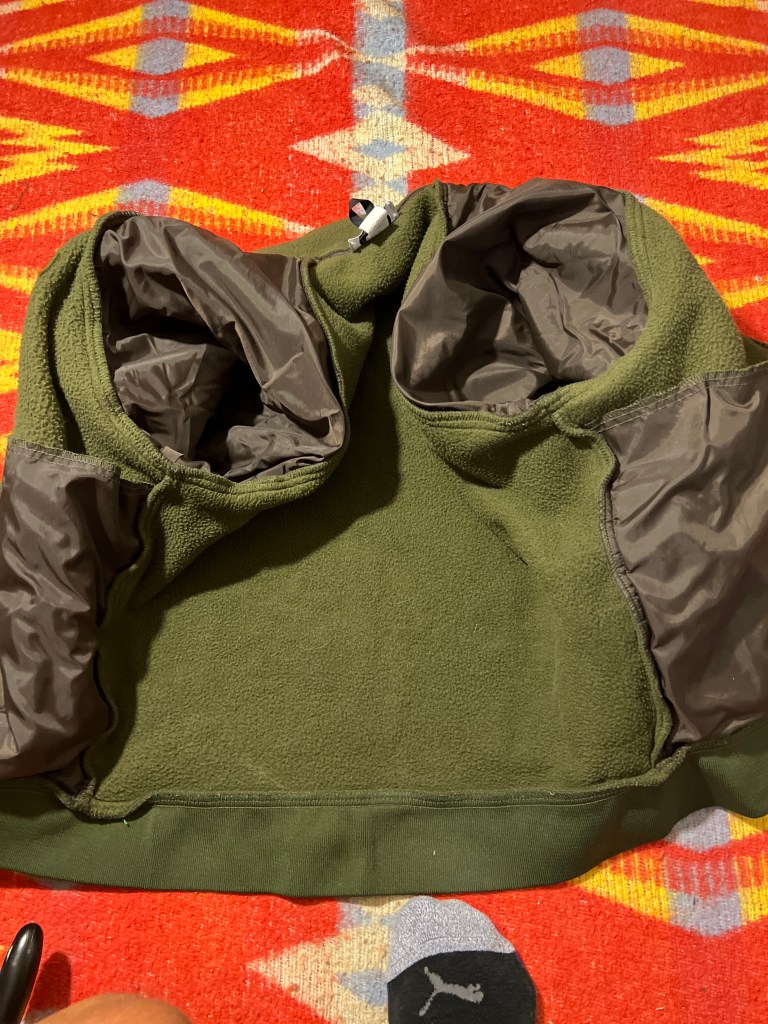
This quality fleece has nylon lined sleeves so undergarments don’t bunch. The patch is sewn onto the fleece but covered by the lining indicating it was added during production. There’s also something resembling a name bar adhered to the inside right chest. Pockets are also nylon lined.

1950s Civilian N-1 Jacket

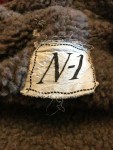
Vintage Civilian USN N-1 Deck Jacket

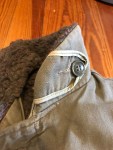
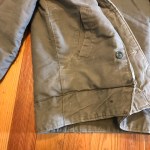
Example of a civilian model jacket design based on the N-1. The N-1, to a lesser extent of then the Air Force A-2, MA-1 and N3-B became somewhat legendary for being a well-serving, functional jacket. The problem is one had to enlist and end up in certain positions to receive one. Post WWII patterns and probably sometimes even surplus were converted for civilian use. Today you still see similar jackets being produced by everyone from Schott to Abercrombie and Fitch.

The Jacket seen here has a very similar cut and fabric composition as a Navy issue N-1. Unfortunately the liner is made up of a blended pile and not what would have been alpaca. Still the rugged cut and warmth make these civilian versions a great option for someone who wants the style at a fraction of the price for an original.


Red Head Herringbone Hunting Satchel

vintage Red head Brand Hunting bag

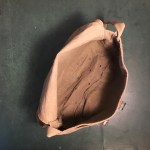
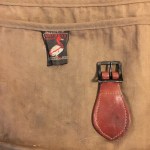
A unique offering from one of the iconic labels in hunting apparel. This bag from the 1930s-1940s pairs well with the company’s jackets and would prove useful in the field. It’s made of a herringbone weave cotton with leather buckle for the flap. Two compartments inside with grommeted bottom to let moisture and small particles escape. While the likely use would be munitions and other sundries, it’s possible it could be used to carry small game if you’re lucky enough to fill up the game pocket on your jacket.

Vintage Dr. Pepper Metal Thermometer Sign

Vintage Dr. Pepper Painted Thermometer Sign

The thermometer sign in itself is not a rare piece. My research shows it to be a favorite advertising format for many products, for the first half or more of the 20th century.  Dr. Pepper signs of many versions can be found with thermometers. Many using the “Enjoy Hot or Cold” slogan. This particular version, inclusive of “the friendly Pepper Upper” text seemed to be a bit more rare in nature.  The sign was painted on as opposed to porcelain which may have affected durability and decreased production rates.


New Old Stock 1970s Champion Reverse Weave Sweatshirt

Vintage 60s/70s Sweatshirt CHAMPION REVERSE WEAVE NOS Deadstock

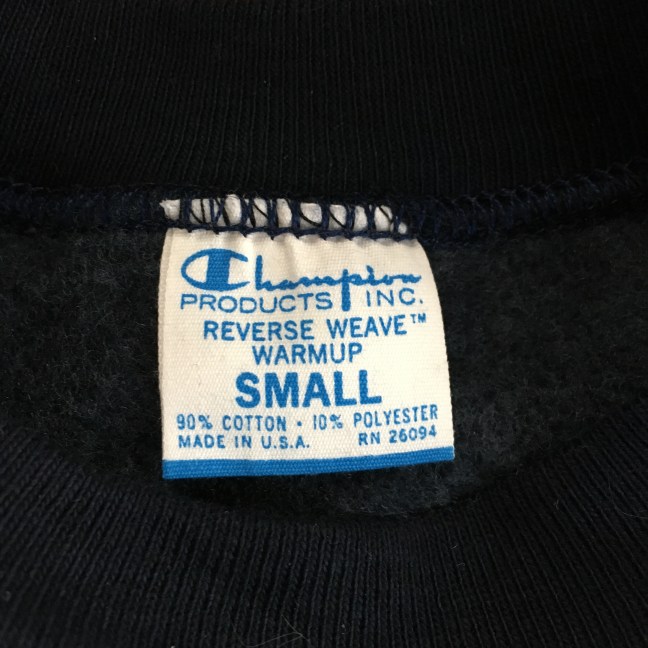
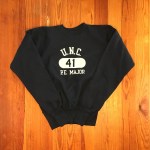
This is an unwashed Champion Reverse Weave sweatshirt from the 1960s/70s. Easily distinguishable by the large 4″ cuffs at wrists and bottom. The wide band at the hem of this sweatshirt keeps the fabric bunched here, but it would eventually loosen up after wear and wash.  This era of Reverse Weave tags were color coded by size. Blue seen here is small. Red Medium and Large, Gold XL, from what I have seen. This example still has original sales tag from the university book store. Presumably University of Northern Colorado as it was found here in CO.

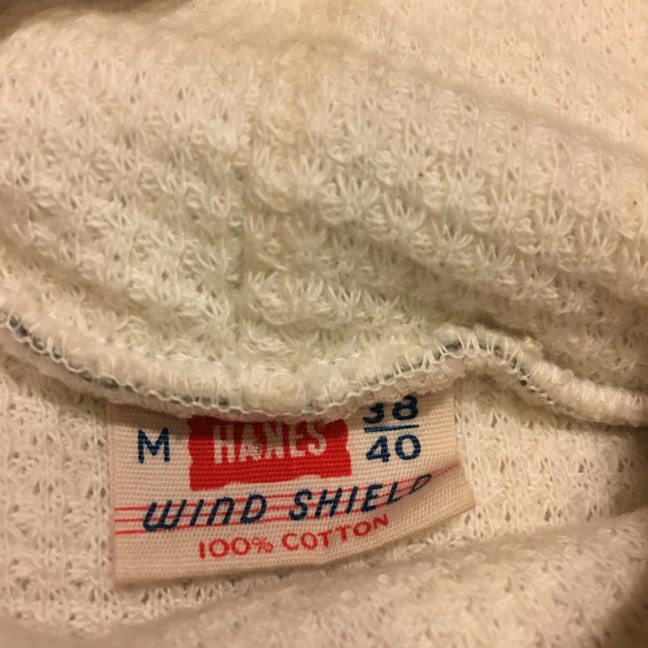
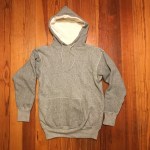
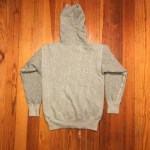
1950s/60s Hanes ‘Wind Shield’ Insulated Sweatshirt

Vintage 1950s/60s Hanes 'Wind Shield' Insulated Sweatshirt

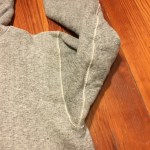
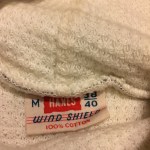
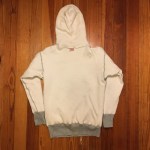
Two of Hanes staple products come together in this early insulated sweatshirt. The Wind Shield gets a boost from Hanes’ insulation layer and a new product is born. The insulating layer is attached at the seams but loose elsewhere, not melded to the outer layer. Wide cuffs at wrists and hem. Exterior seams have almost a selvedge look to them and break up the heatherd gray exterior.