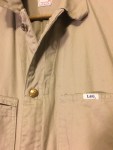
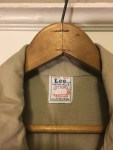
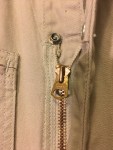
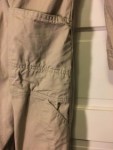
Genuine pair of 1960s Lee Union-alls. Size 38. Fits 5’8” to 5’11”. This pair I think is early 60s due to the Talon zipper pull. From a time when more Americans were getting dirty on the job!



Products listed for sale that have sold or remain for sale.
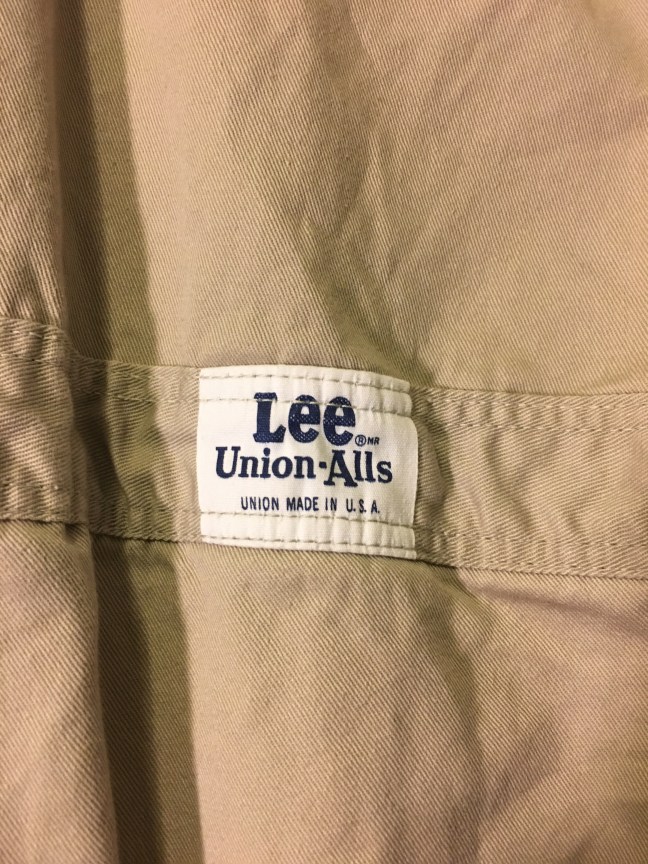
Genuine pair of 1960s Lee Union-alls. Size 38. Fits 5’8” to 5’11”. This pair I think is early 60s due to the Talon zipper pull. From a time when more Americans were getting dirty on the job!
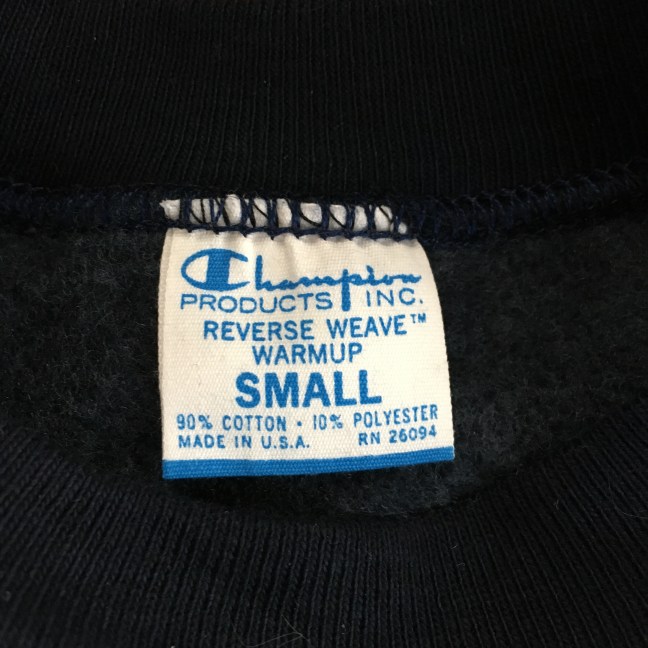
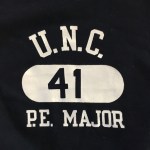
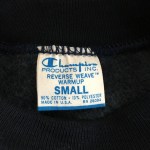
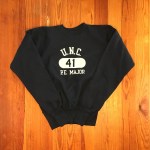
This is an unwashed Champion Reverse Weave sweatshirt from the 1960s/70s. Easily distinguishable by the large 4″ cuffs at wrists and bottom. The wide band at the hem of this sweatshirt keeps the fabric bunched here, but it would eventually loosen up after wear and wash. This era of Reverse Weave tags were color coded by size. Blue seen here is small. Red Medium and Large, Gold XL, from what I have seen. This example still has original sales tag from the university book store. Presumably University of Northern Colorado as it was found here in CO.



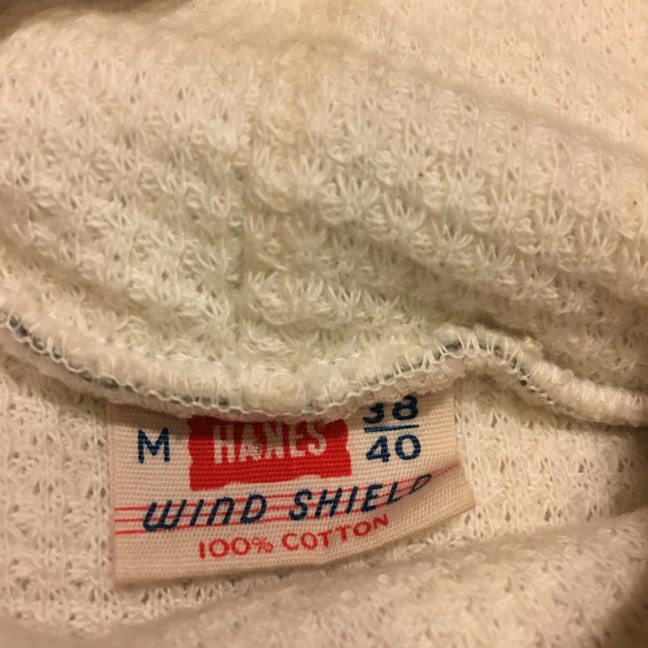
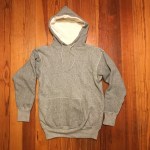
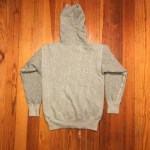
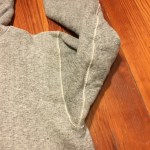
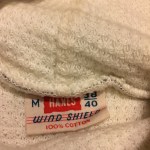
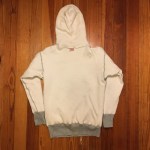
Two of Hanes staple products come together in this early insulated sweatshirt. The Wind Shield gets a boost from Hanes’ insulation layer and a new product is born. The insulating layer is attached at the seams but loose elsewhere, not melded to the outer layer. Wide cuffs at wrists and hem. Exterior seams have almost a selvedge look to them and break up the heatherd gray exterior.


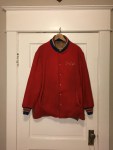
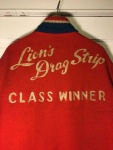
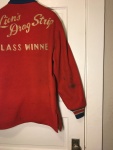
This is an authentic Lion’s Drag Strip Class winner jacket. Mid-1960s era. Jacket is a Buddie Original by Alsup Enterprises of Bellflower, CA. Jacket appears to be garage worn, with some grease spots on right elbow, back of jacket an left elbow. Front has tiny hole near snaps that doesn’t go all the way through. Also some slight thread bare spots. Inside satin is dirty around the bottom third. Small hole on left inside lapel. Right armpit lining is a little blown out as well. Collar is dingy, but in nice shape otherwise. This jacket does have its condition issues. I am selling as is and leaving up to the buyer to either restore or enjoy in its original glory.
Ralph is chain stitched on the left lapel. My research indicates this would have been added by the winner and not included at time of presentation. Closest possible match I can find on a driver would be Ralph Hayes registered in 64 and 65 in a Chrysler Hemi AA/FD dragster driver out of California.






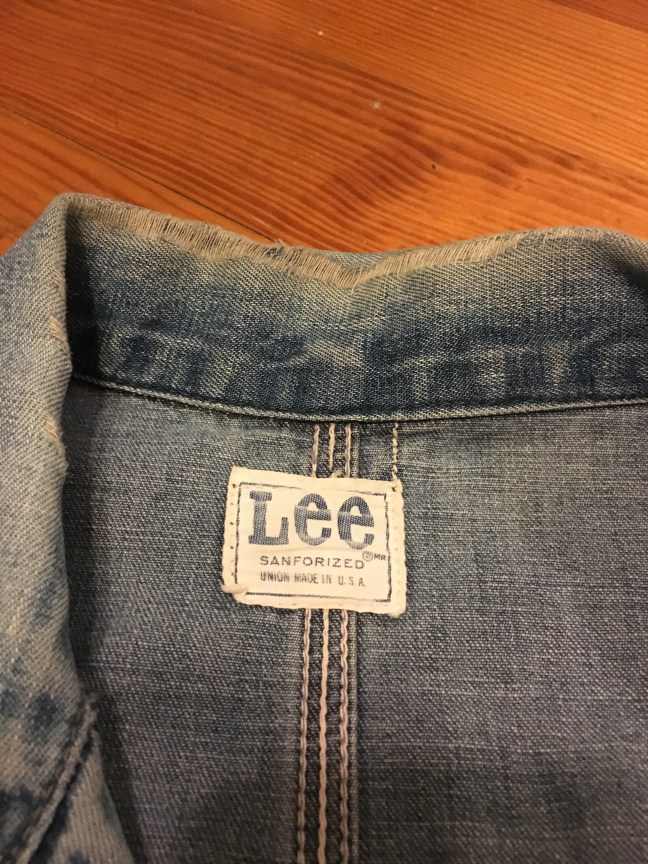
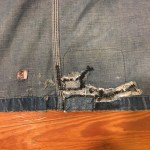
This iconic chore coat design was previously designated 91-J in the labels that preceded it. Prior versions using the older Lee logo where the tail of the L extends underneath both e’s. Besides label and button changes the design remains the same. Triple stitched seams, brass tone hardware and same iconic lines. Maybe the most tale tell sign is the three button cuff. The jacket seen here has some beautiful fading and patch work on the lower tail end.





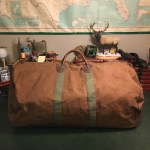
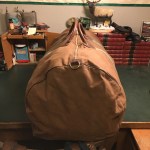
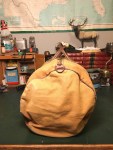
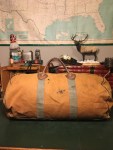
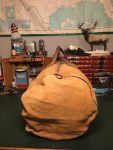
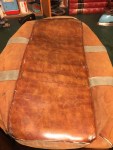
Always love finding these bags and wanted to post a couple of examples. Most common colors are brown and duck (tan), but I’ve also seen blue in later models. The heart-shaped handles are unmistakable and a hallmark of LL Bean bags. They’re used on the all-leather tote, wood carriers and even certain canvas (boat and tote) models. Contrary to popular belief, or despite what listings say, the bottom is not leather. Instead, at least in the versions I’ve found, synthetic like vinyl. I am not saying there aren’t leather bottom versions out there, but at least in the case of these ( and the one is a rather old, script logo label), they are synthetic bottoms.




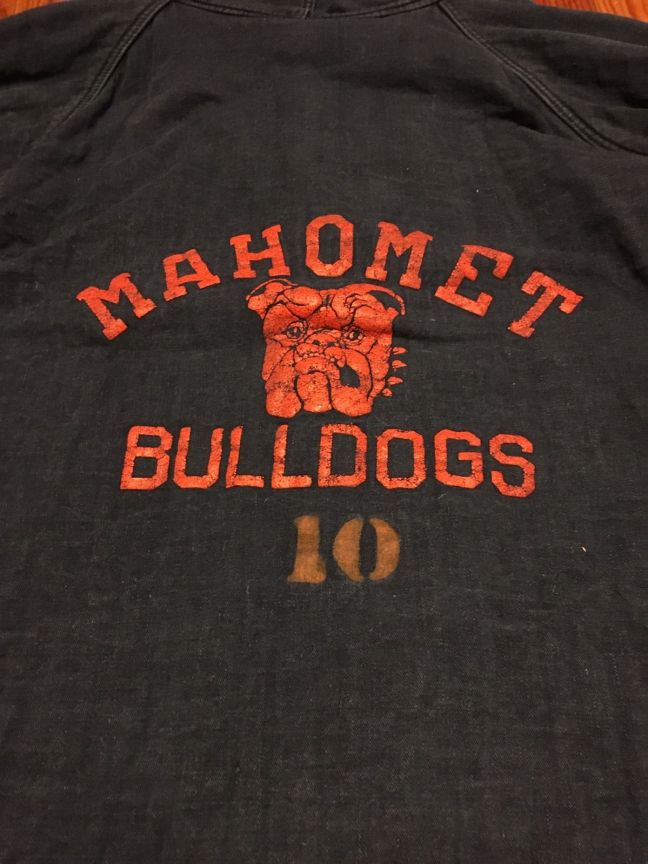
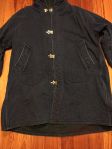
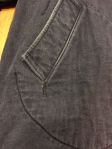
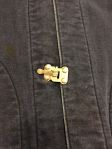
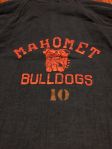
What I believe to be a 1950s football sideline warmup jacket. The jacket is made of a thick, blanket like denim with an oversized cut. D shaped pockets on the exterior and interior. Metal clasp closure. Silk screened Mahomet Bulldogs 10 on the back. I’ve traced the logo back to an Ohio High School, but know little else about the jacket or manufacturer as there’s no label. I’d guess the piece or pieces like it were manufactured by Champion or Wilson. A part from them appearing in some old photos, there’s really not any information on these available.



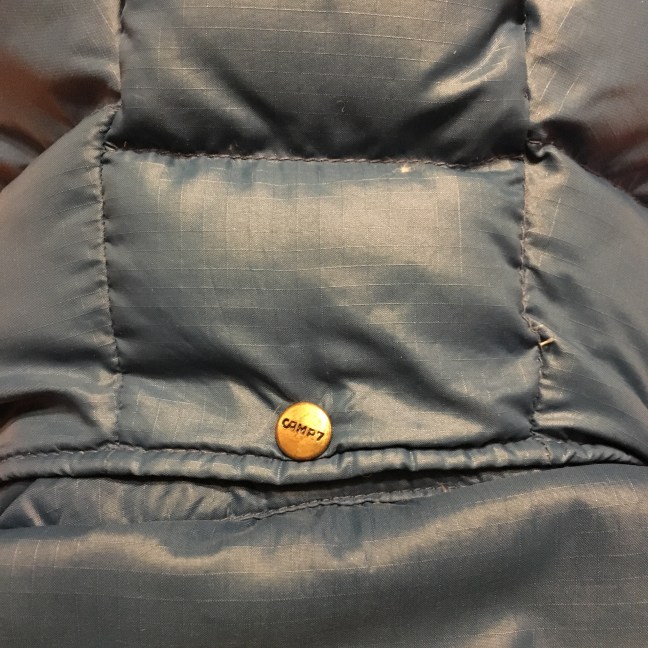
The always innovative Camp 7 line is descendant of the Alp Sport and Alpine Designs lines conceived by founder George Lamb of Boulder Colorado in the 1970s. This coat is exemplifies the company’s innovative spirit in the cut and construction of this outdoor staple.
Notice specifically the construction of this coat around the arms. Where many competitors would join the torso with the arms in simple perpendicular fashion, the Camp 7 design utilizes a more complex design that includes additional quilting to form a more contoured fit and eliminates a hard shoulder seam. Additional details including the internal seam finishing in black along the back and front panels reduces fraying on high friction areas. Designers also chose the use of Polargaurd for the pocket insulation as opposed to down. Polarguard, a relatively newer product for the period was probably seen as a more durable alternative for an often used, well-worn area.
Subtle differences in the hood color, embossed snaps, which differ from the coats snaps and individual materials tag suggest the hood was a sold separately option for this coat.
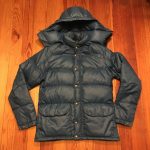
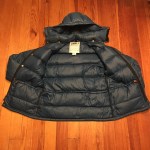
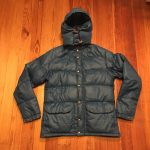
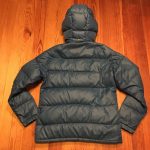
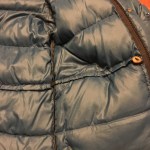

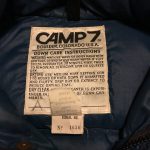

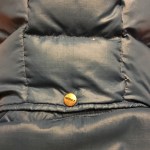

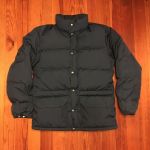
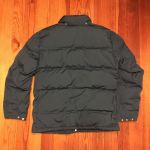
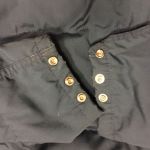
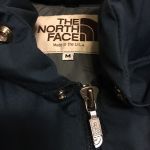
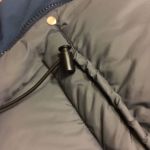
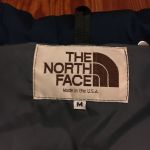
Nice example of a later first generation puffer jacket. This piece was manufactured in the mid 1980s near the end of this iconic style’s run. Some of the giveaways as to its more recent age are the embossed buttons, TNF branded zipper pull and materials tag. Earlier versions of this jacket were made of rip stop nylon inside and out as opposed to the 65/35 poly cotton shell seen here. Construction also included what I refer to as stitched rivets at stress points such as pocket openings.
The earliest down jackets from The North Face (and brown label equipment in general) were all made in the USA, but the label didn’t start reflecting that until the late 70s when a shift in manufacturing started to take hold. It wasn’t until people started to question where their items were made that it became part of the strategy to include ‘Made in the USA’ in the branding.





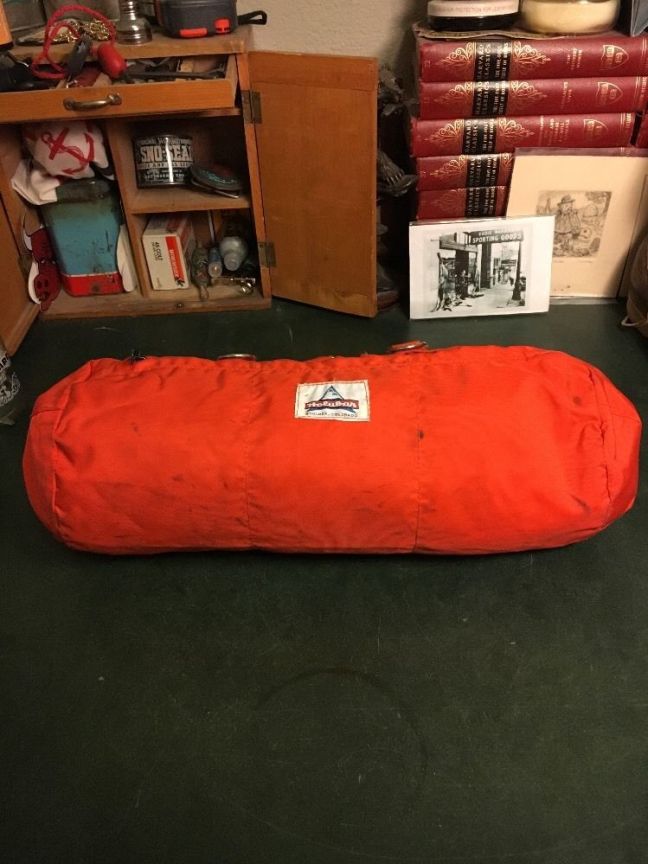
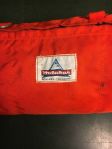
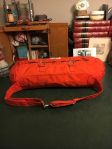
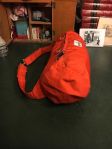
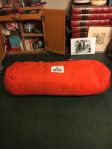
Unique tubular shaped Holubar waist pack. The pack is made of heavy orange nylon with straps constructed from the same material, doubled over for strength. The almost oddly long bag measures 18″ by 6″ high and 6″ deep. Where as most waist packs are relatively abbreviated in width to sit either squarely in front or behind the user, the length of this bag would cause it to wrap around most users. To battle this, the straps are inset on the bag as opposed to attached to the ends of the bag. D rings at the top could be used to secure rolled items such as a jacket to the outside, or possibly even to attach the pack the bottom of a day pack with corresponding lashing squares.


 Basecamp Vintage & Archives