Danner Light Insulated Gore-Tex 60630 Boot

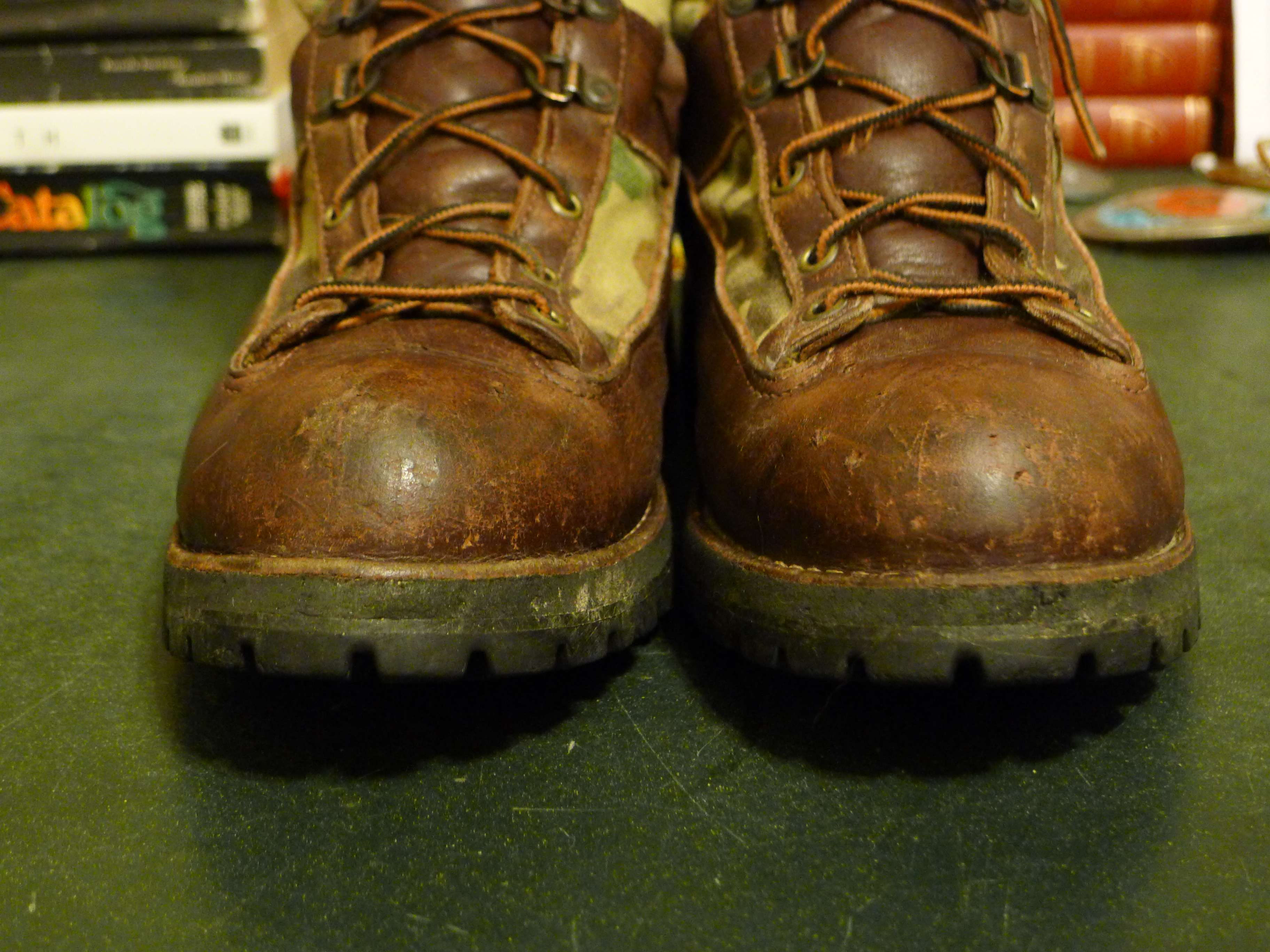
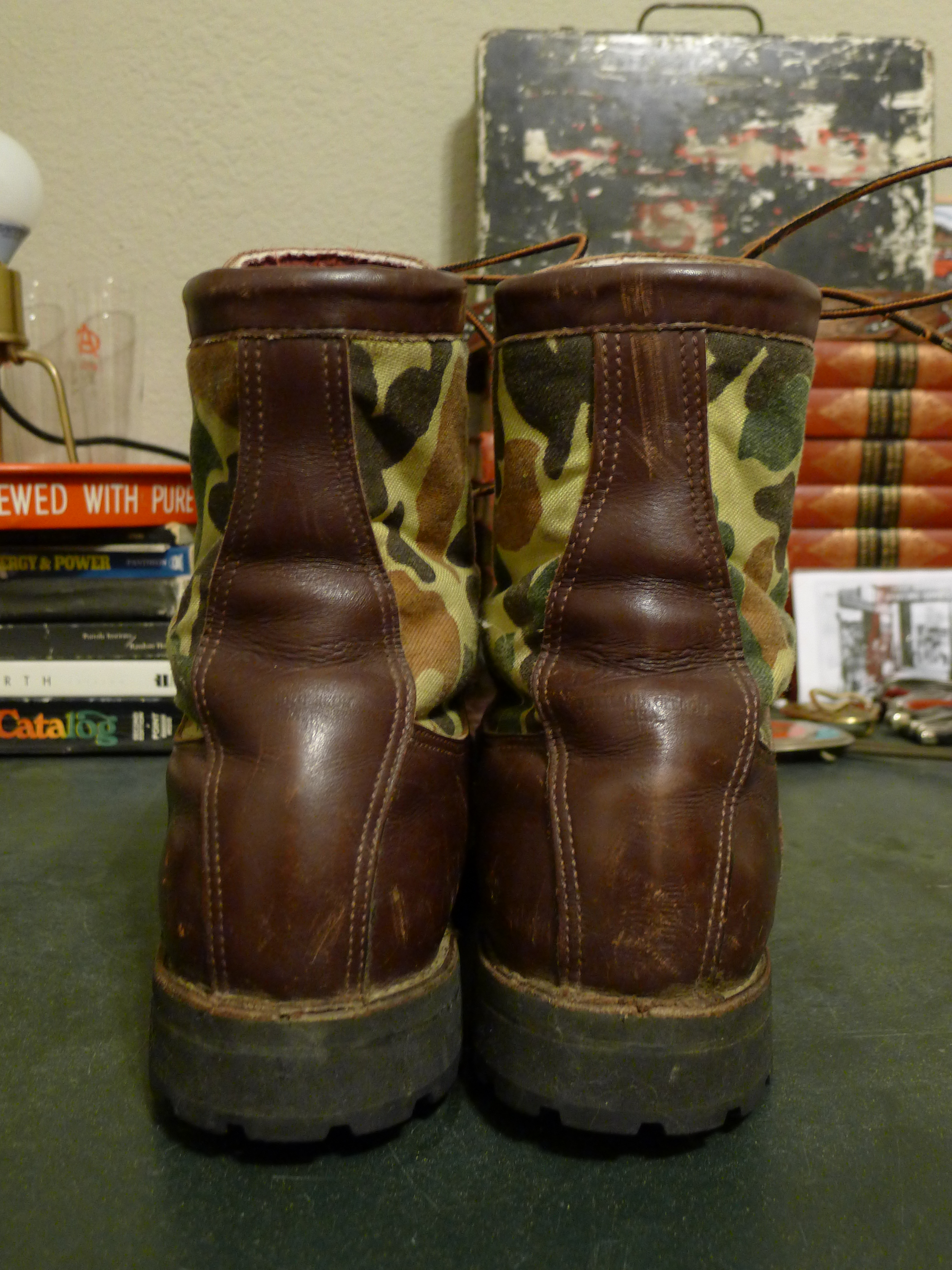
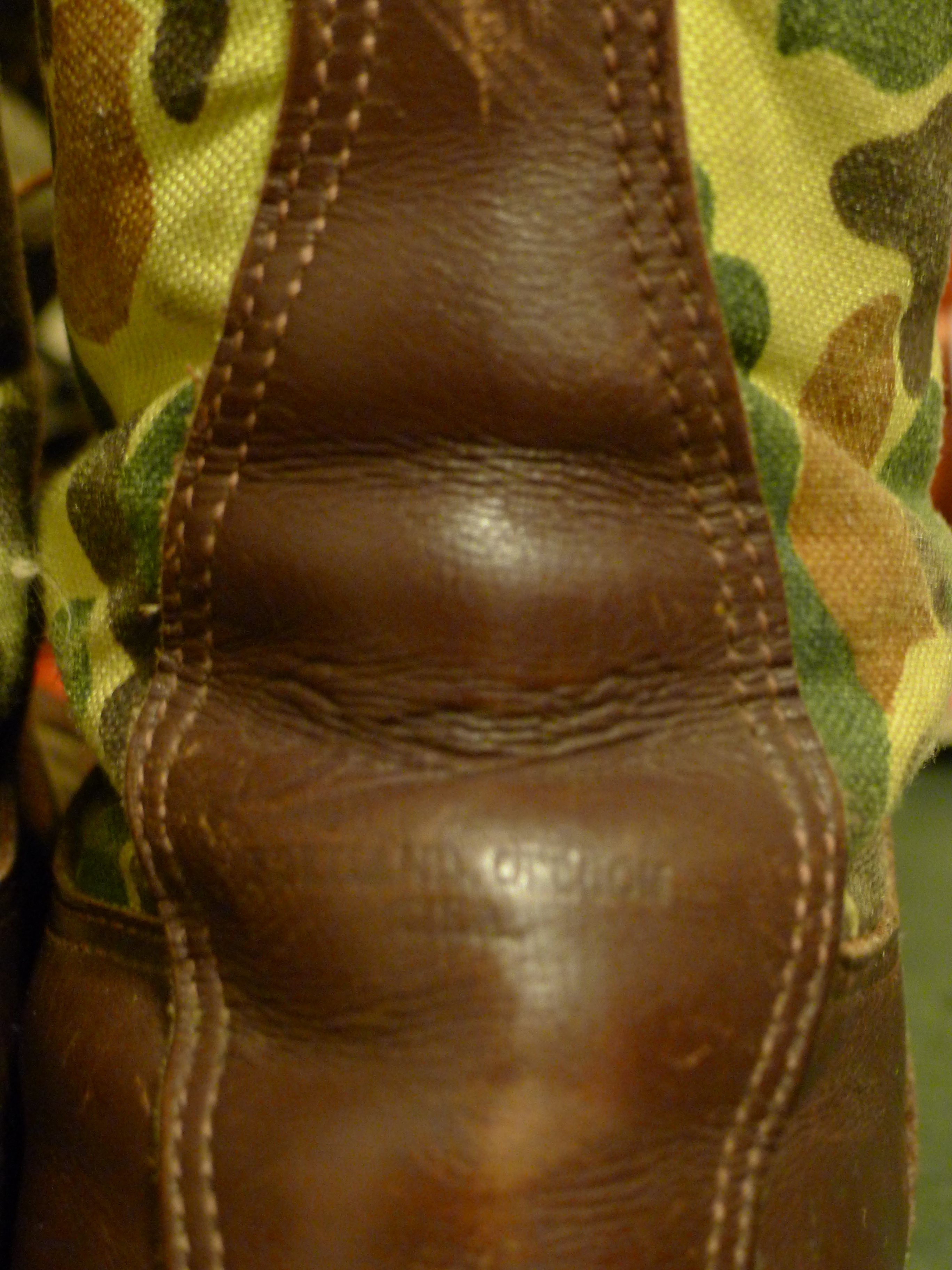
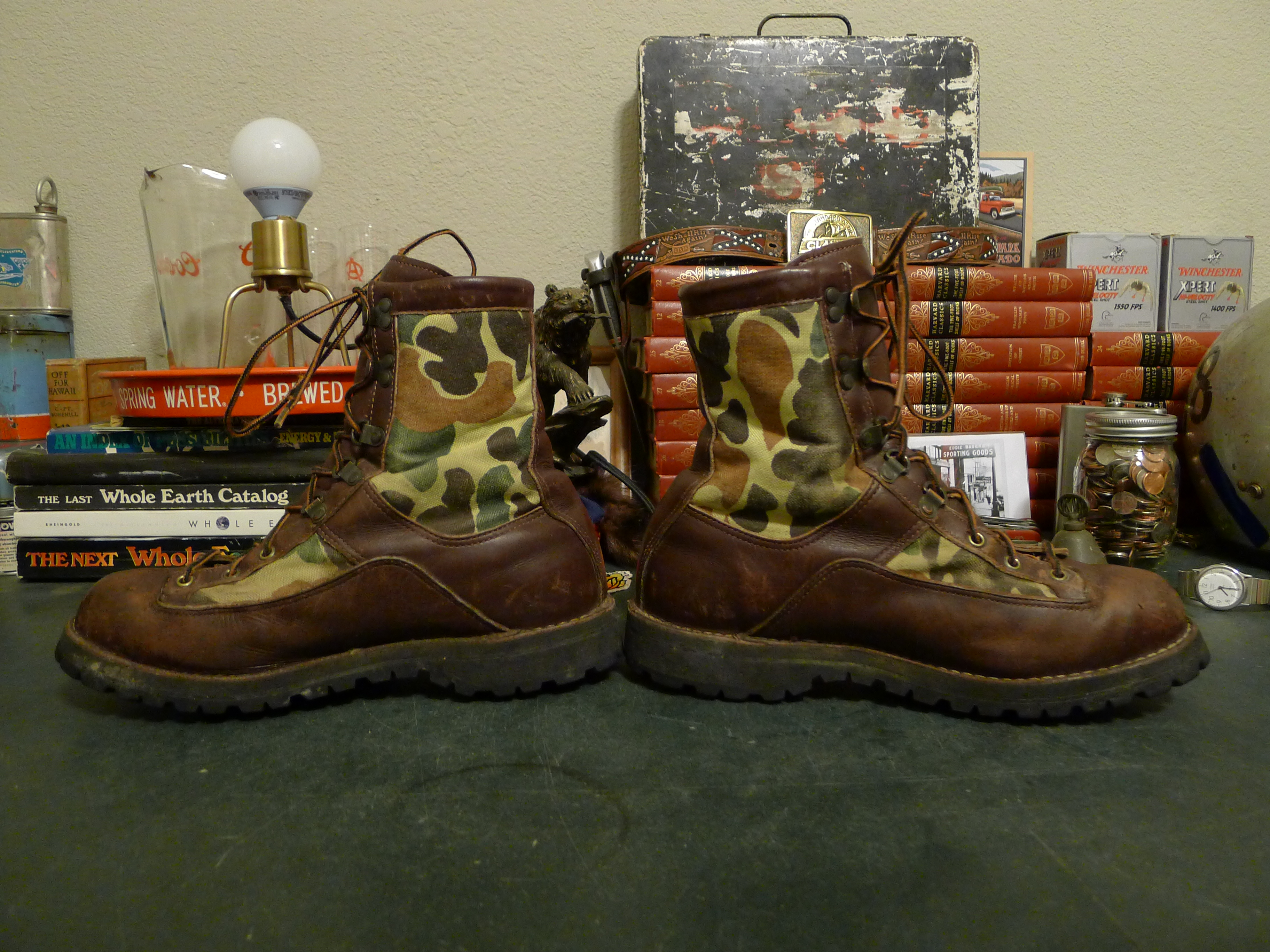
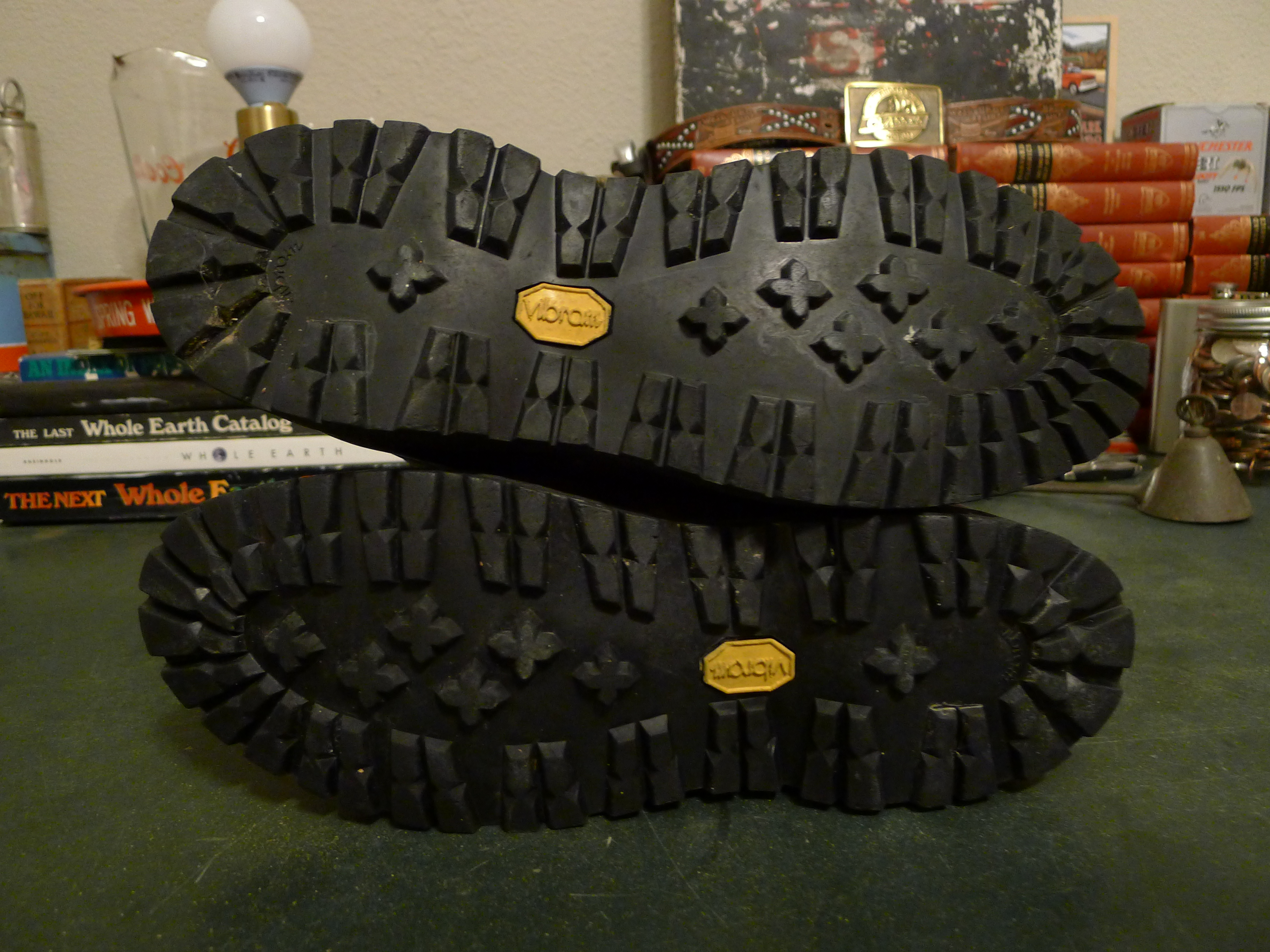
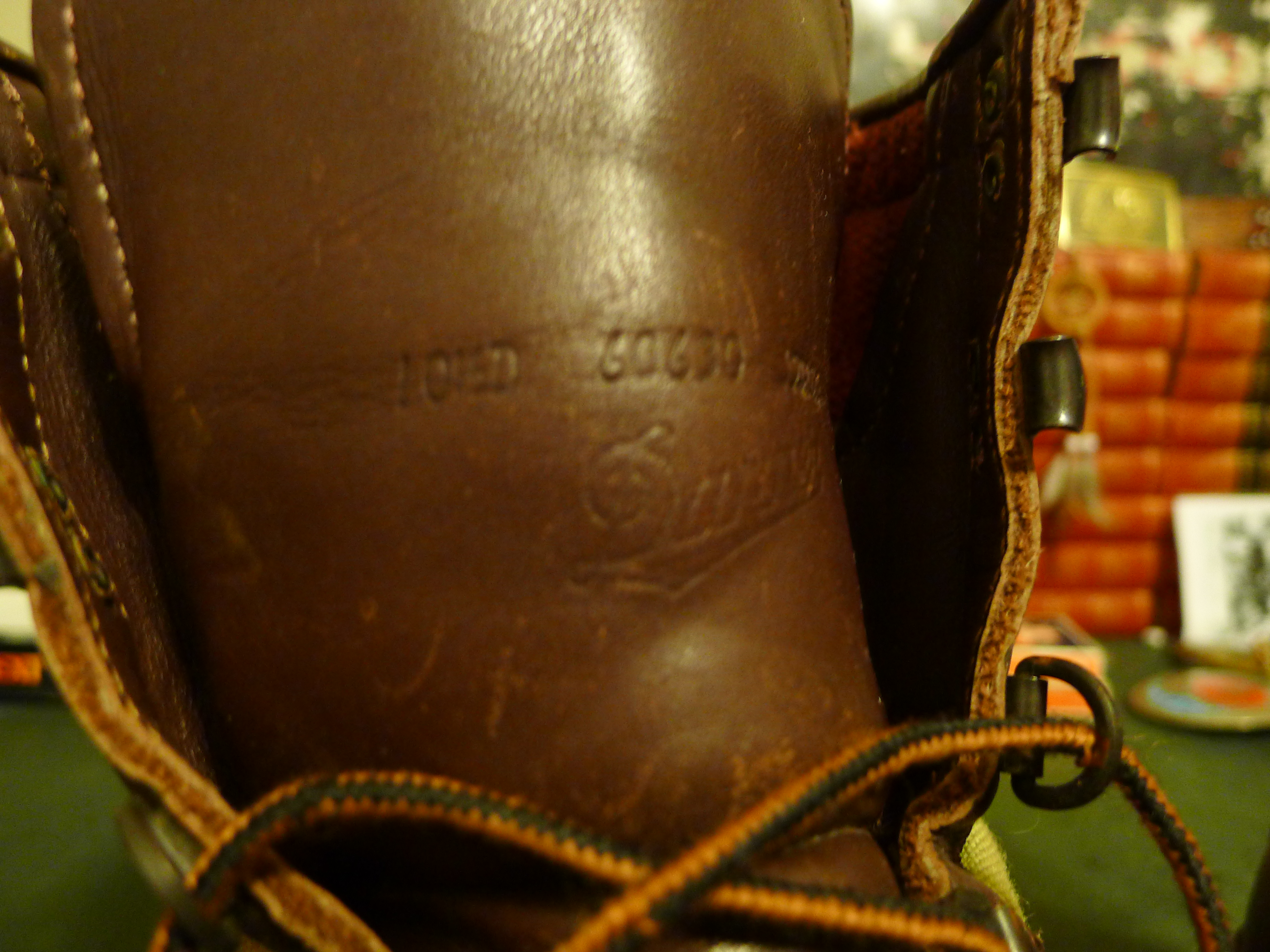
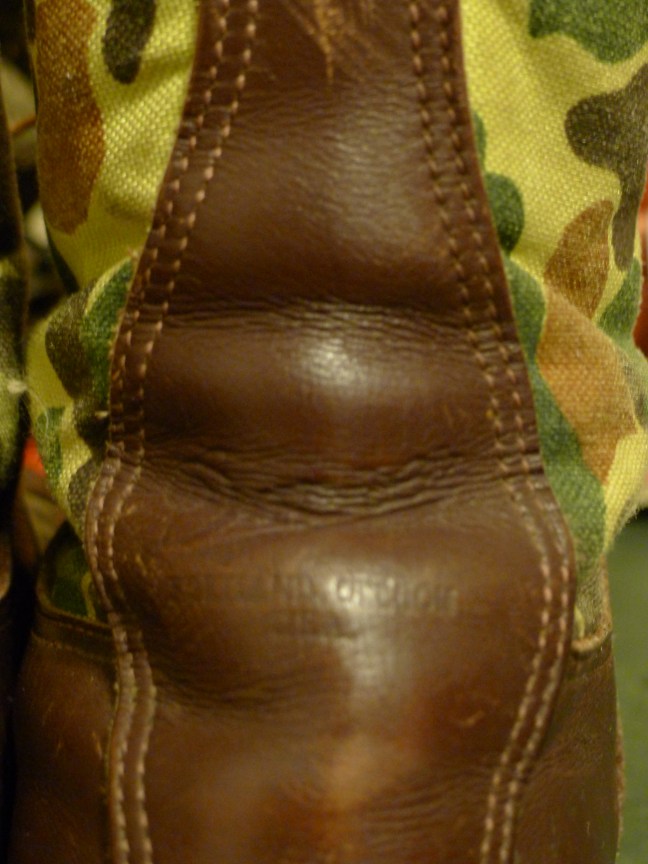
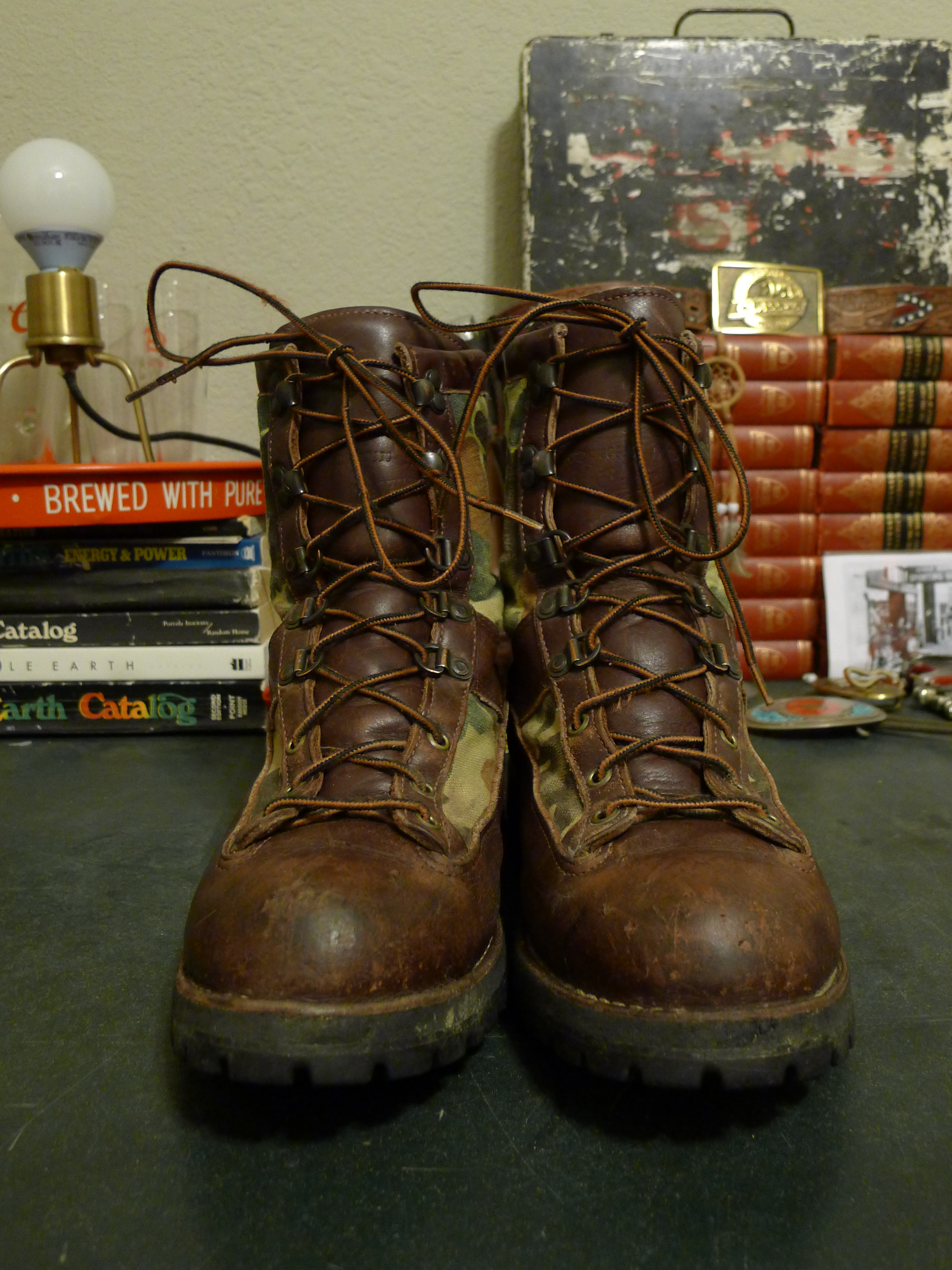
Seen here is a great pair of older Danner insulated and Gore-Tex lined hunting boots. Tongue stamped 60630, a style number no longer in production, but the styling is very similar to what’s known now as the Sierra GTX, Style 63100. The boot consists of a multi panel leather and Cordura upper. Fully attached tongue construction along with the Gore-Tex lining ensure the elements stay locked out. A light quilted insulation on the interior makes these a good boot for almost any season. Old style duck camo  on the Cordura works well in the field or on the streets. In fact, Danner has recently collaborated with modern-american outfitter, Ball and Buck on a very similar, updated version.

Other details include an 8″ shaft height, Vibram soles, 8-eye lace up consisting of eyelets, D rings and hooks.

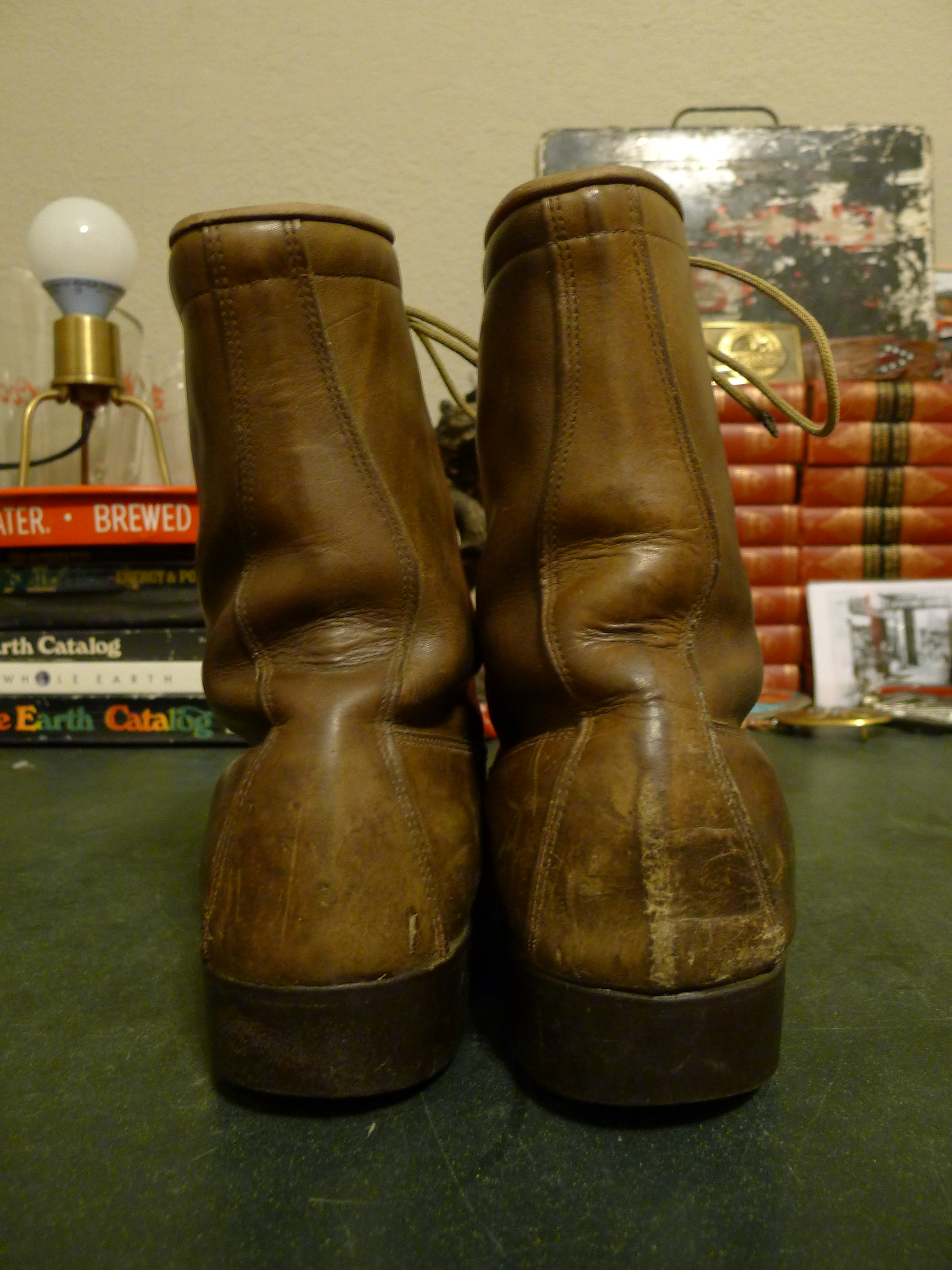
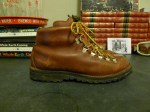
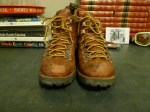
Herter’s Hudson Bay Hunting Work Boots

You are looking at the very finest pair of boots known to man. These Herter’s Genuine Hudson Bay Boots are fit for queens and kings alike, but made so that the lowly peasant can afford them.

This may have very well been how George Herter described these boots in one of his many volume of mail-order catalogs. Herter, an avoid outdoorsman, entrepreneur, writer and all-around kook, wrote garish product listings with the same panache that he put into his numerous hunting, fishing, cooking and motivational novels. Beyond enjoying a semi-successful writing and publishing career, George Herter also operated one of the most successful mail-order outdoors catalogs since Leon Leonwood Bean. The Waseca, Minnesota based operation ran from 1937 until the early 80s.

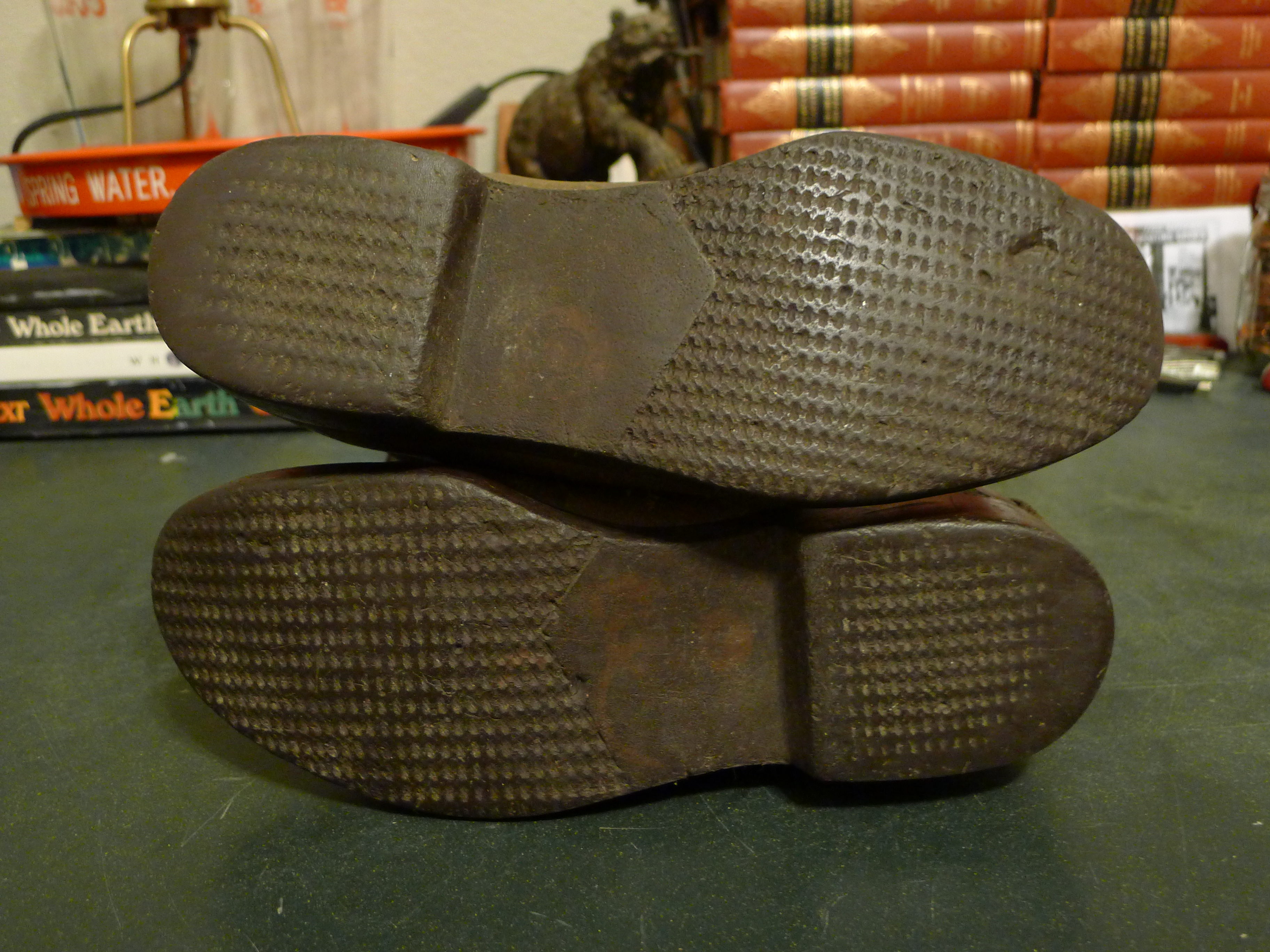
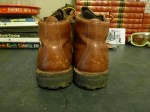
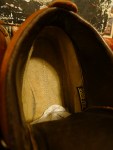
This pair of Herter’s Hudson Bay Boots is much like a plain toe hunting boot from Red Wing. The uppers are essentially made up of three pieces, the vamp extends from the toe around the lower areas of the foot to the heel of the boot. The upper connected along the side of the foot, then a back stay conceals the seam up the back. The tongue is solid across the front of the boot keeping the elements out and the boot is laced through a combination of D-rings and hooks. The boots appear to be fully leather lined giving them a little more insulation than a regular single walled boot.

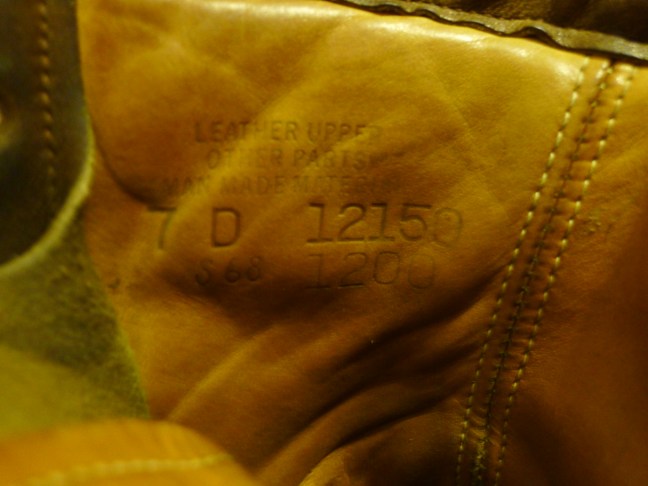
Inside Markings:
7D 12150
S68 1200

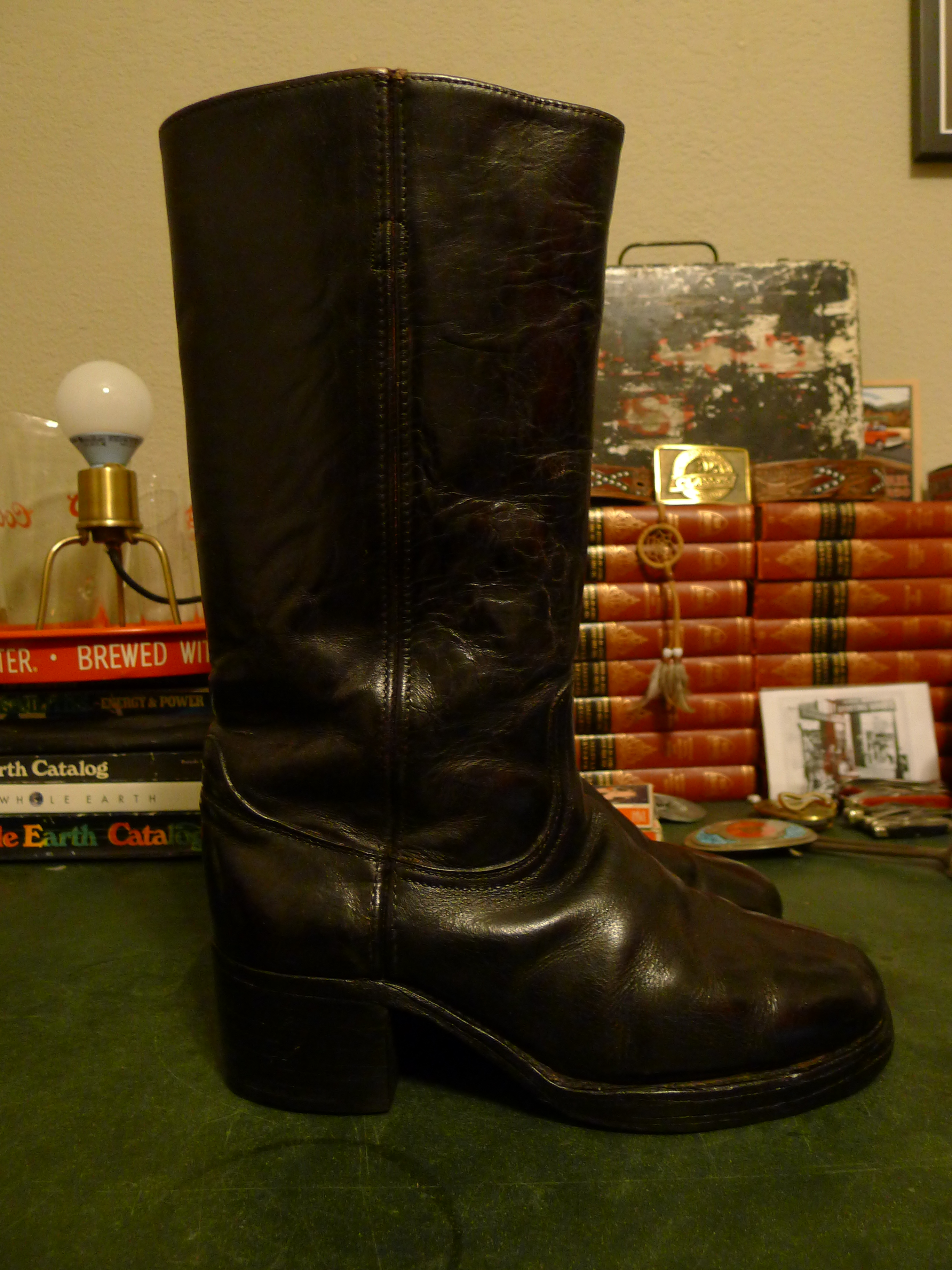
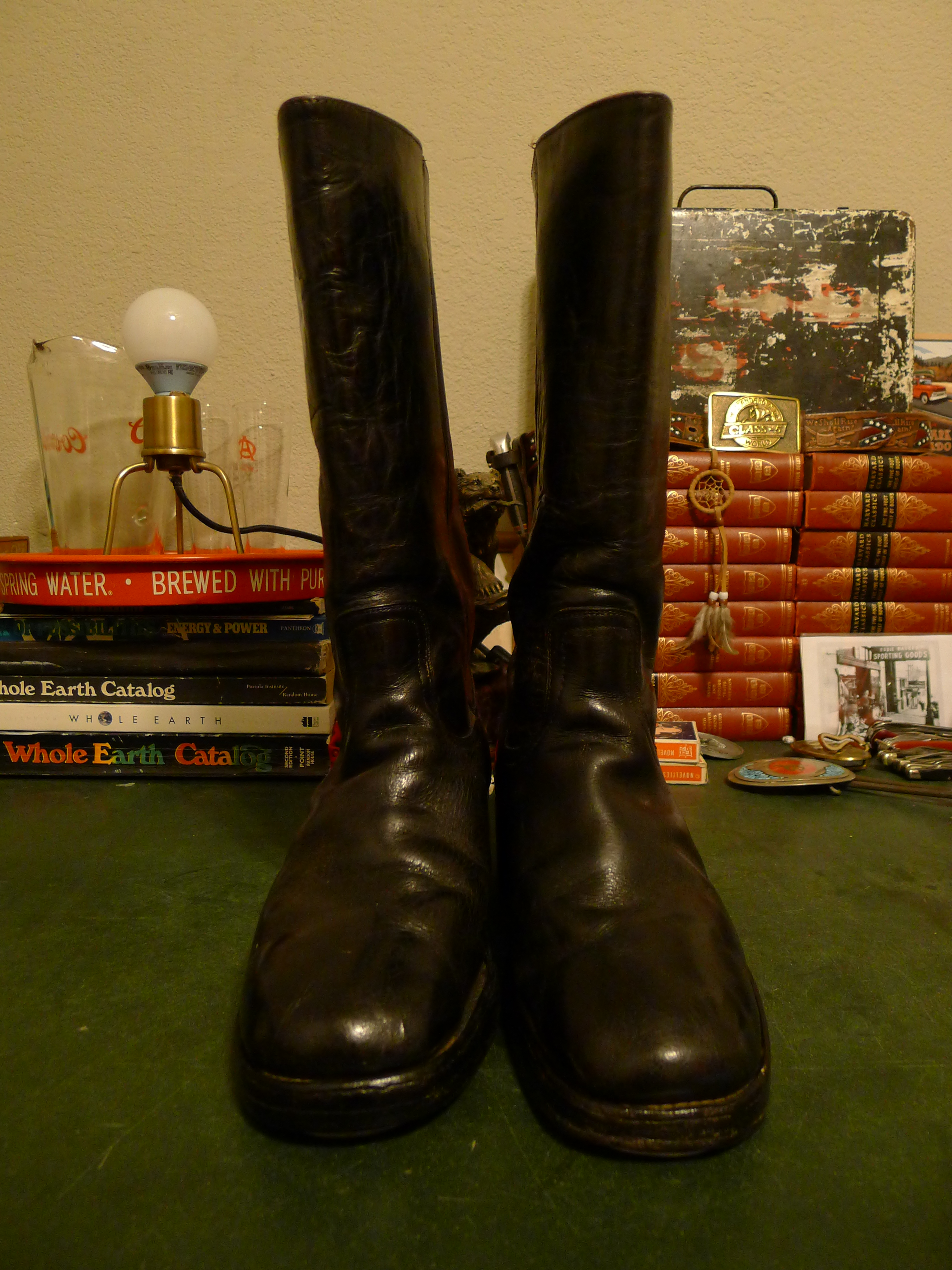
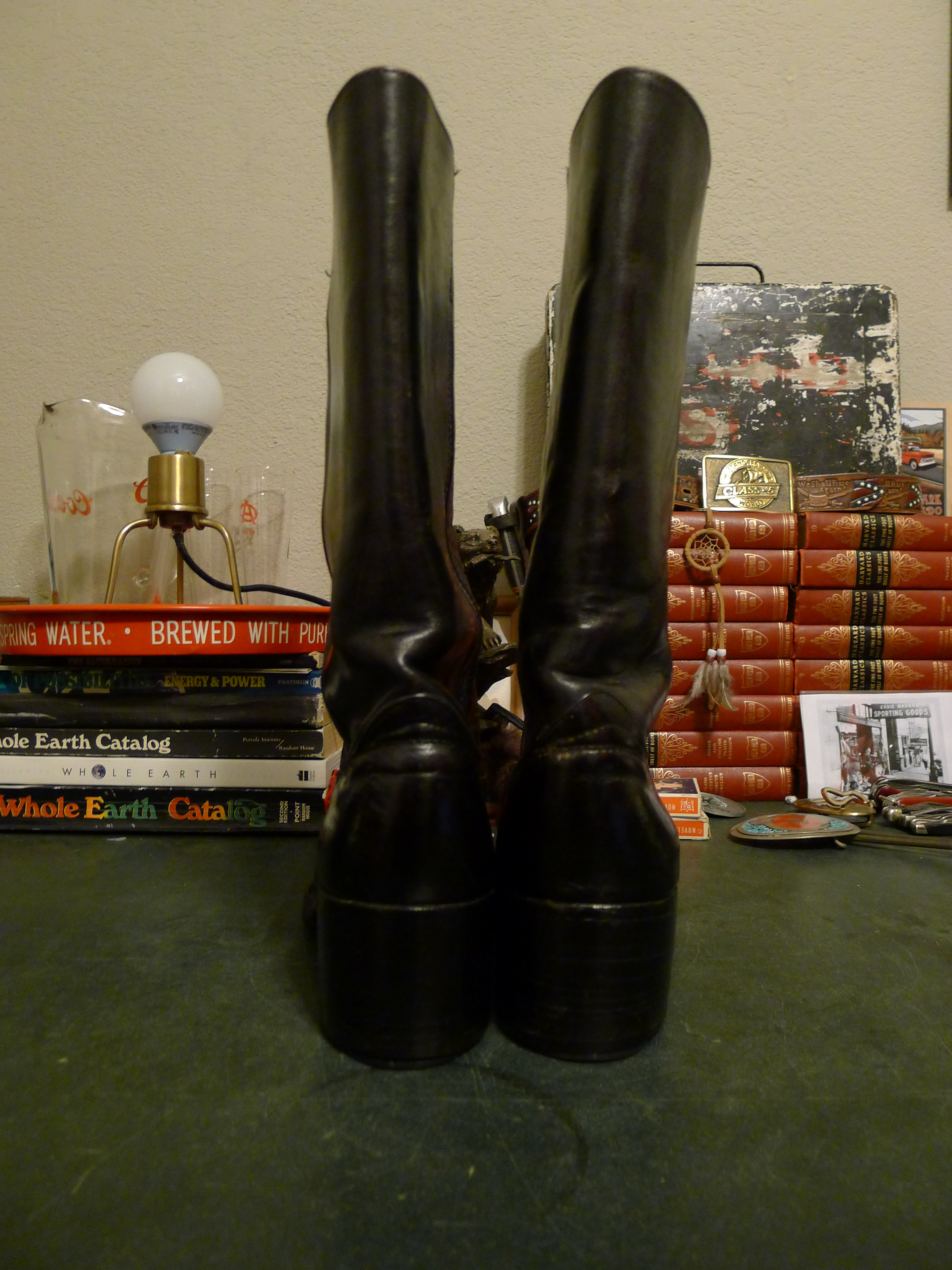
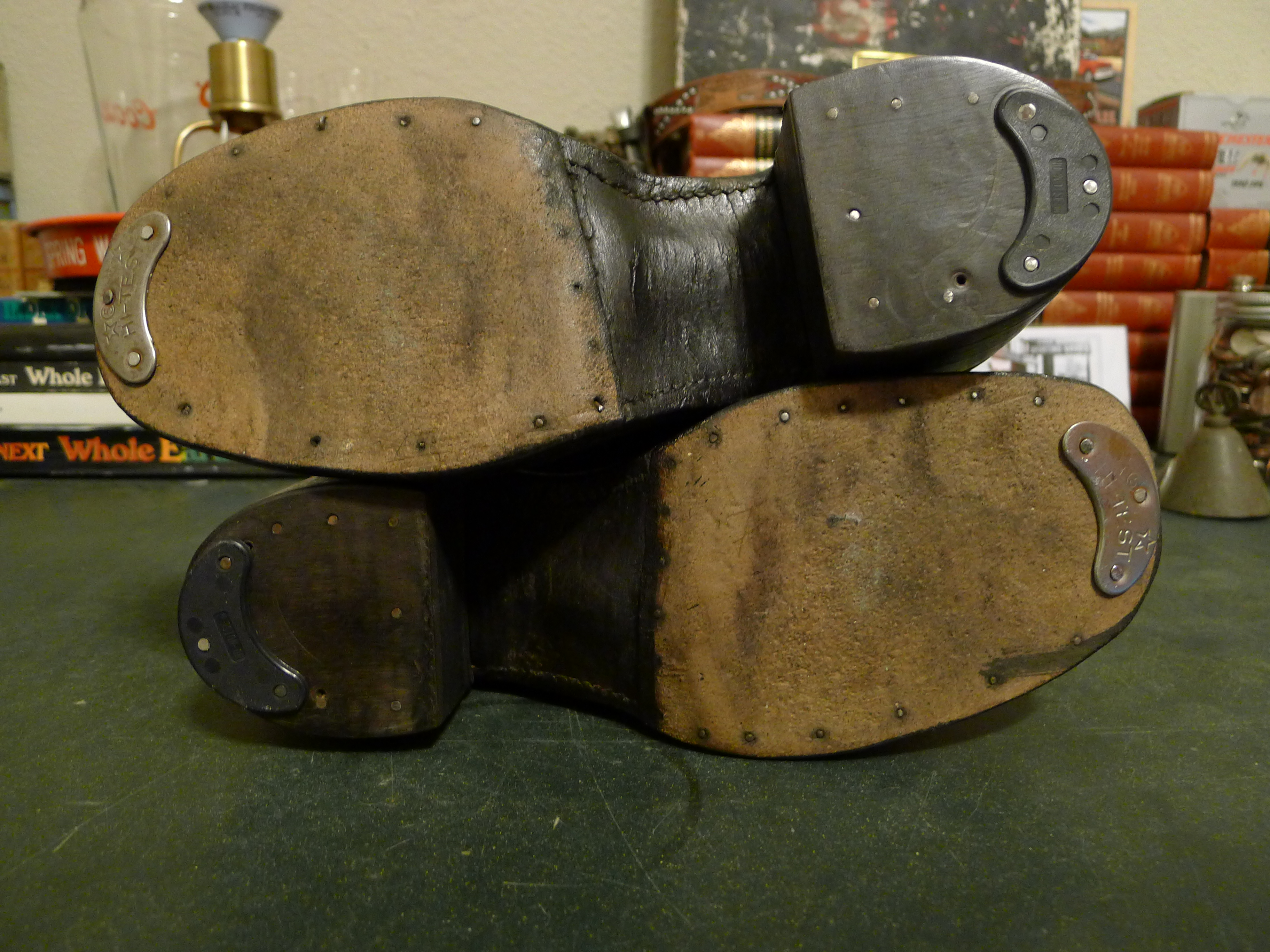
Frye Black Label 2550 Campus Boot in Black

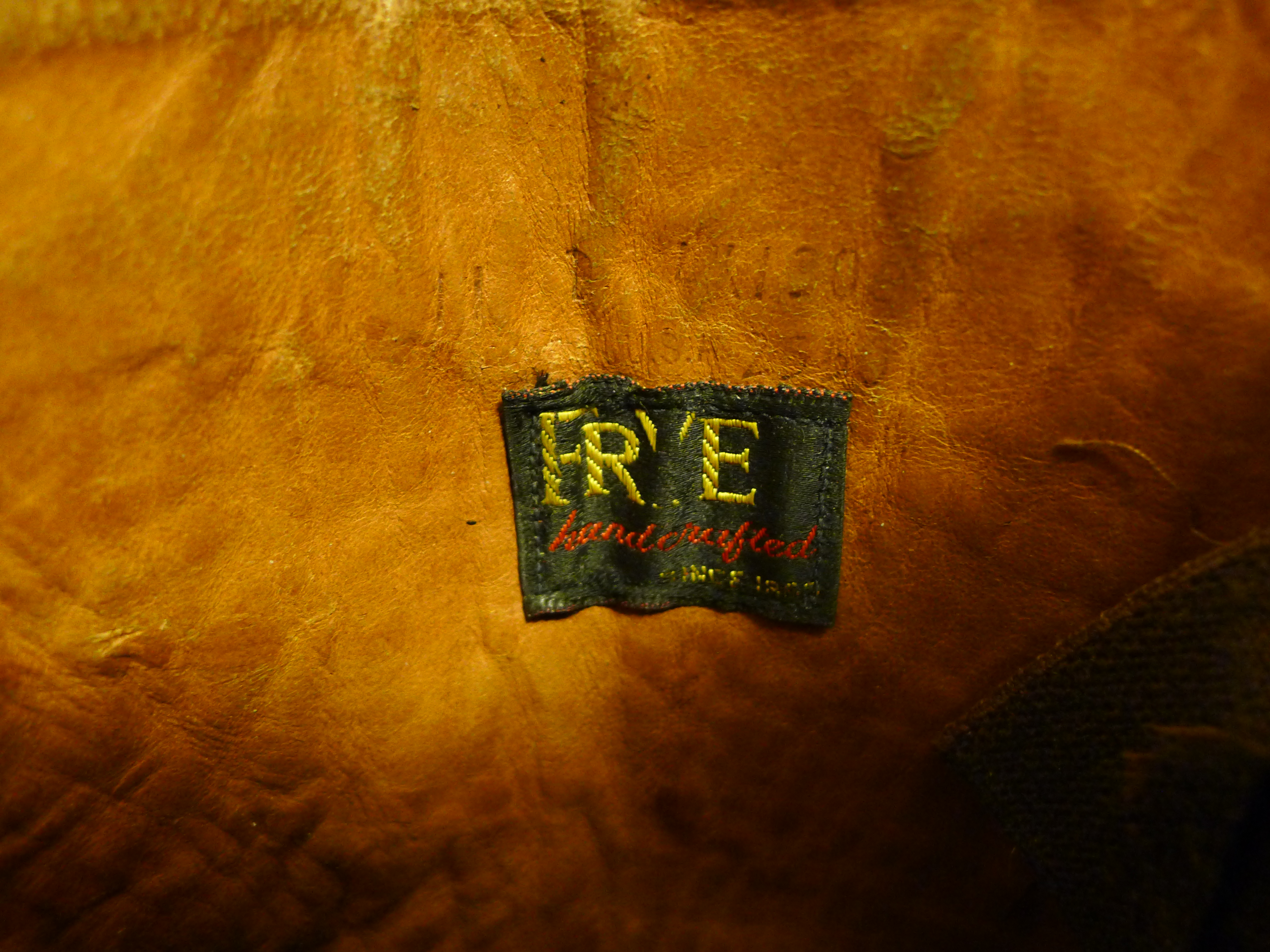
This is one beautiful pair of Frye Campus Boots in black.  This particular style of boot is indicative of the traditional campus cut popularized in the 60s and 70s.  The original Frye Black Label (black being the main color of the logo stitched in the right boot) verifies their authenticity. Around 1979 the black label was discontinued and a white label was introduced. At this time Frye also started embossing the logo on the outside heel of the boot.
The “Campus” style is a take on a traditional western style boot but with a blunt, rounded toe, thick sole and block heel. These boots are usually seen with lighter, banana or medium brown uppers with natural leather soles and heels. This particular boot is midnight black top to bottom, but maintains the natural undyed leather inside. In my researching these boots I found that the 2550 was show as ‘hand stained brown’ in an old Frye ad. I have no knowledge of whether that leather color may have varied in the model number 2550, but given that all other colors of the boot are assigned their own number, It is quite likely that these boots started their life as brown boots and were later dyed, or by some other means made black.

13.5″ shaft
2.25″ heel

Inside Markings:
11 D 4K13068
Made in the USA

These boots are currently available on the BCV eBay store

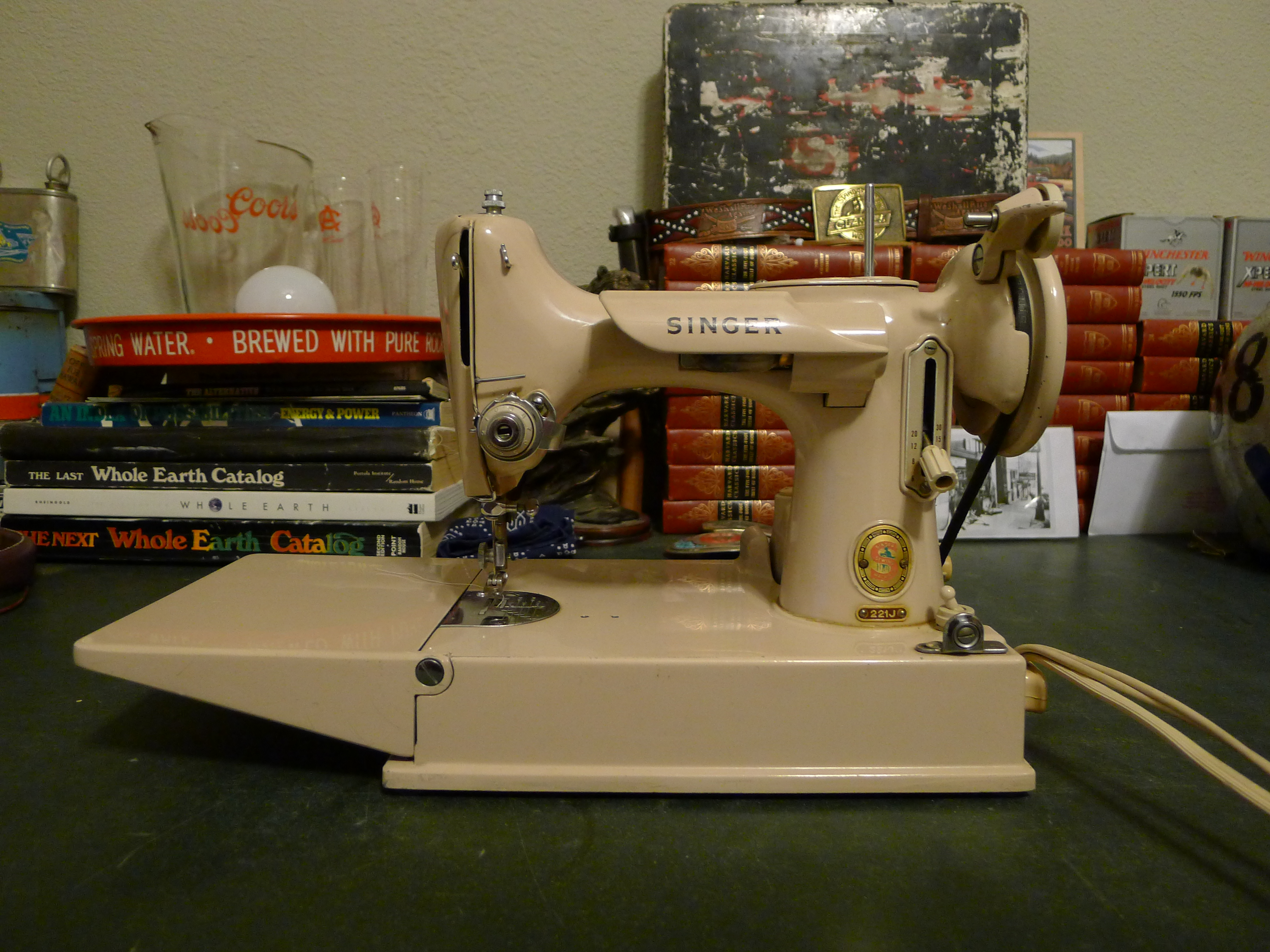
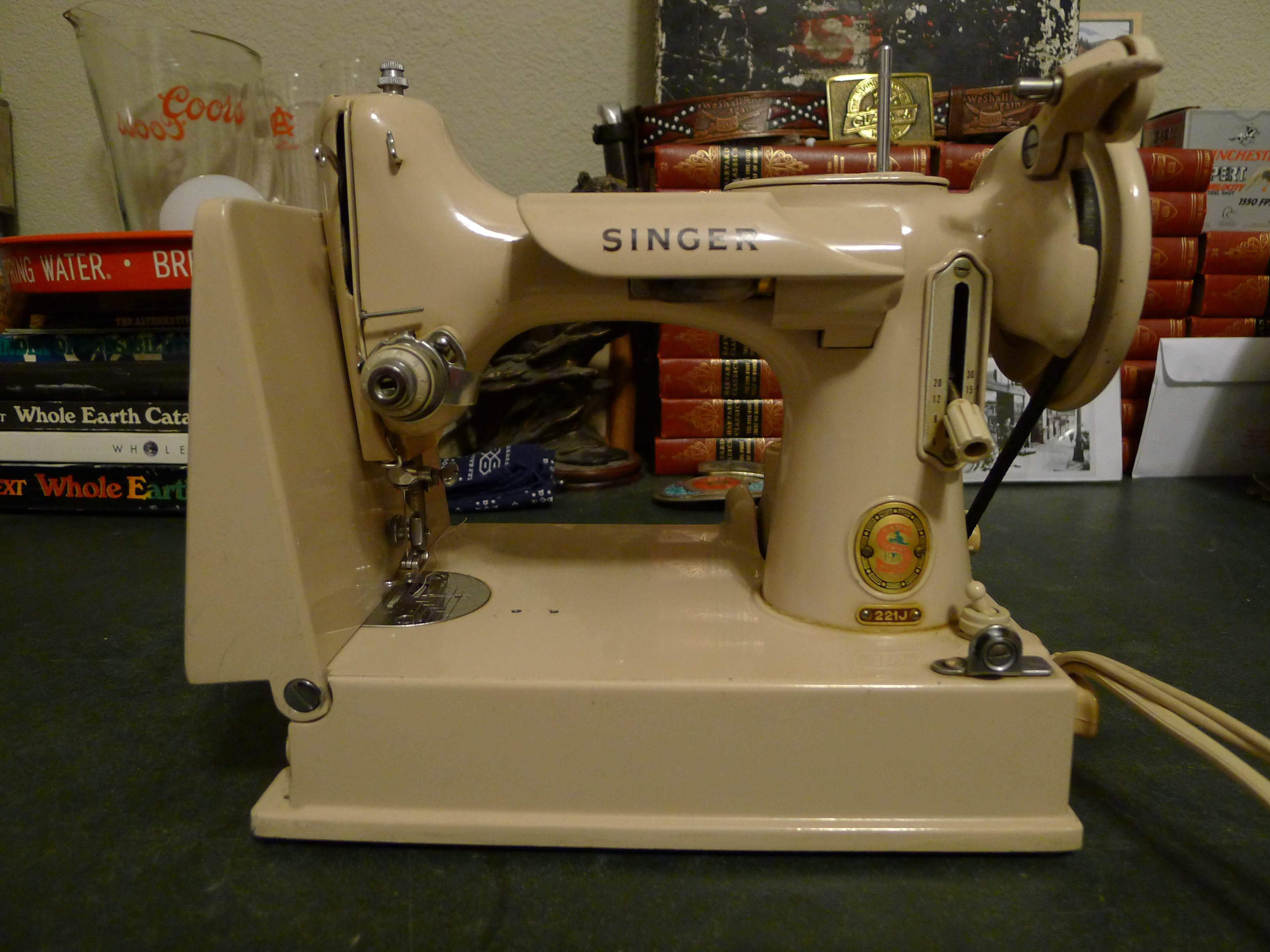
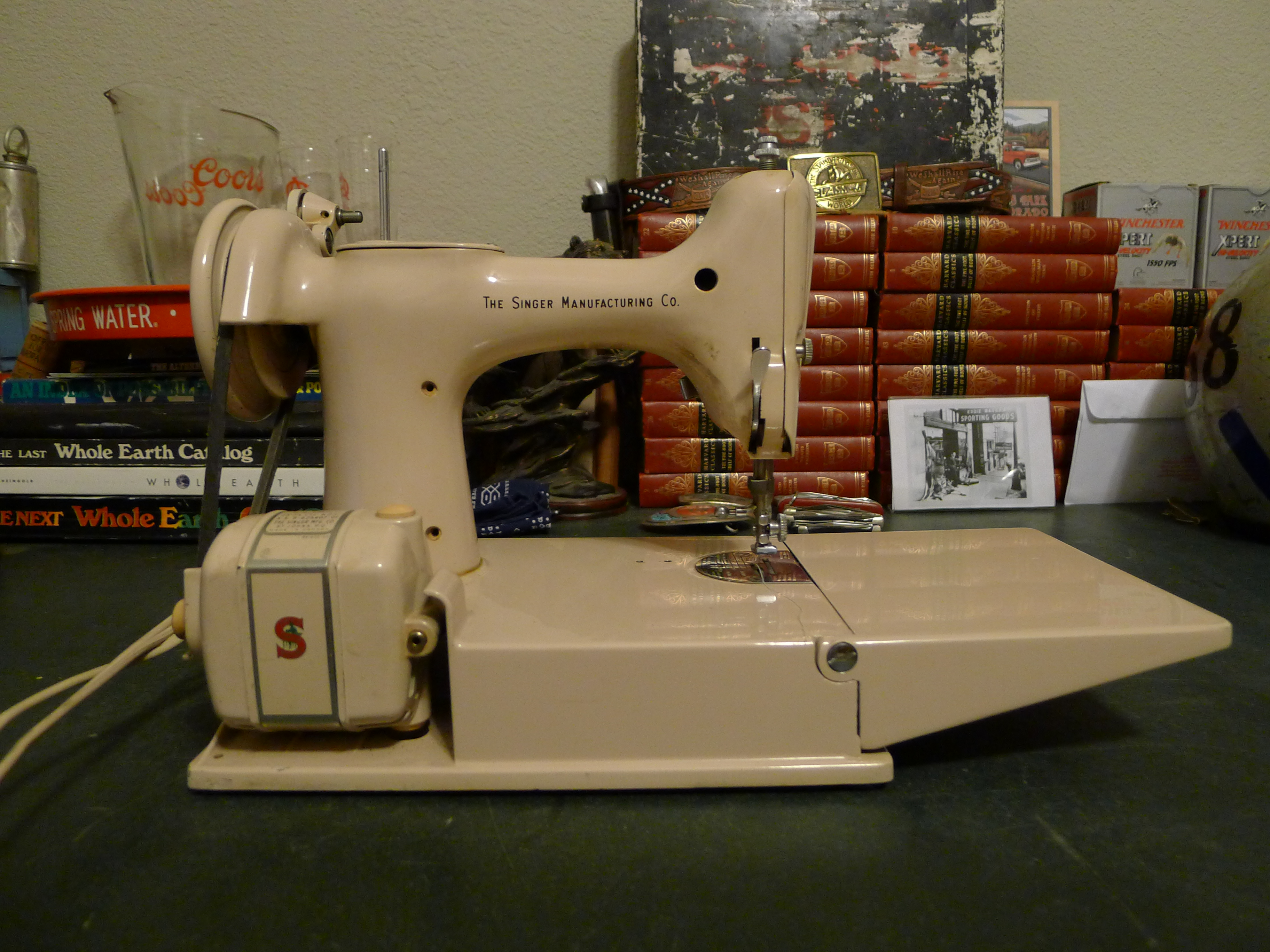
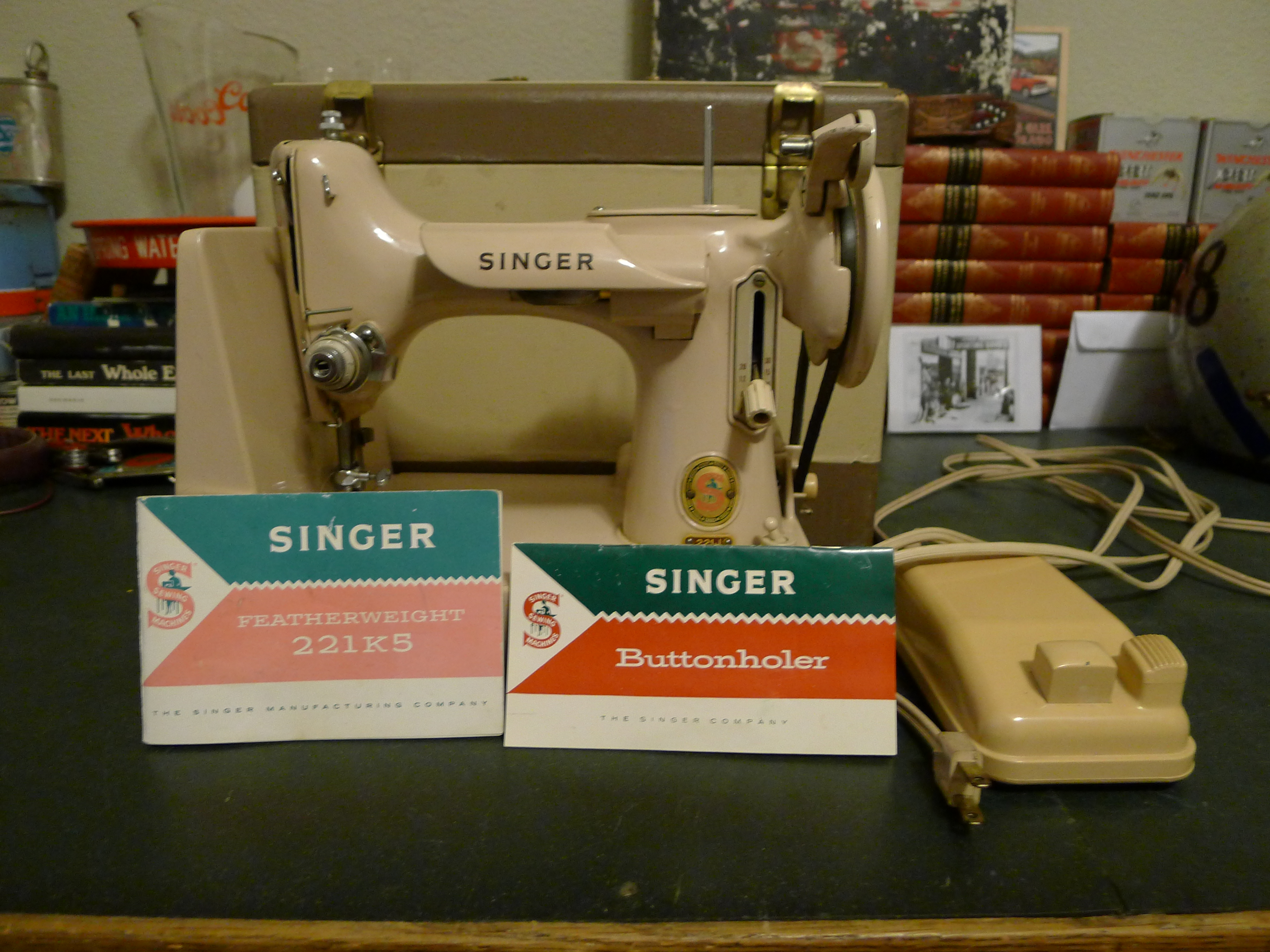
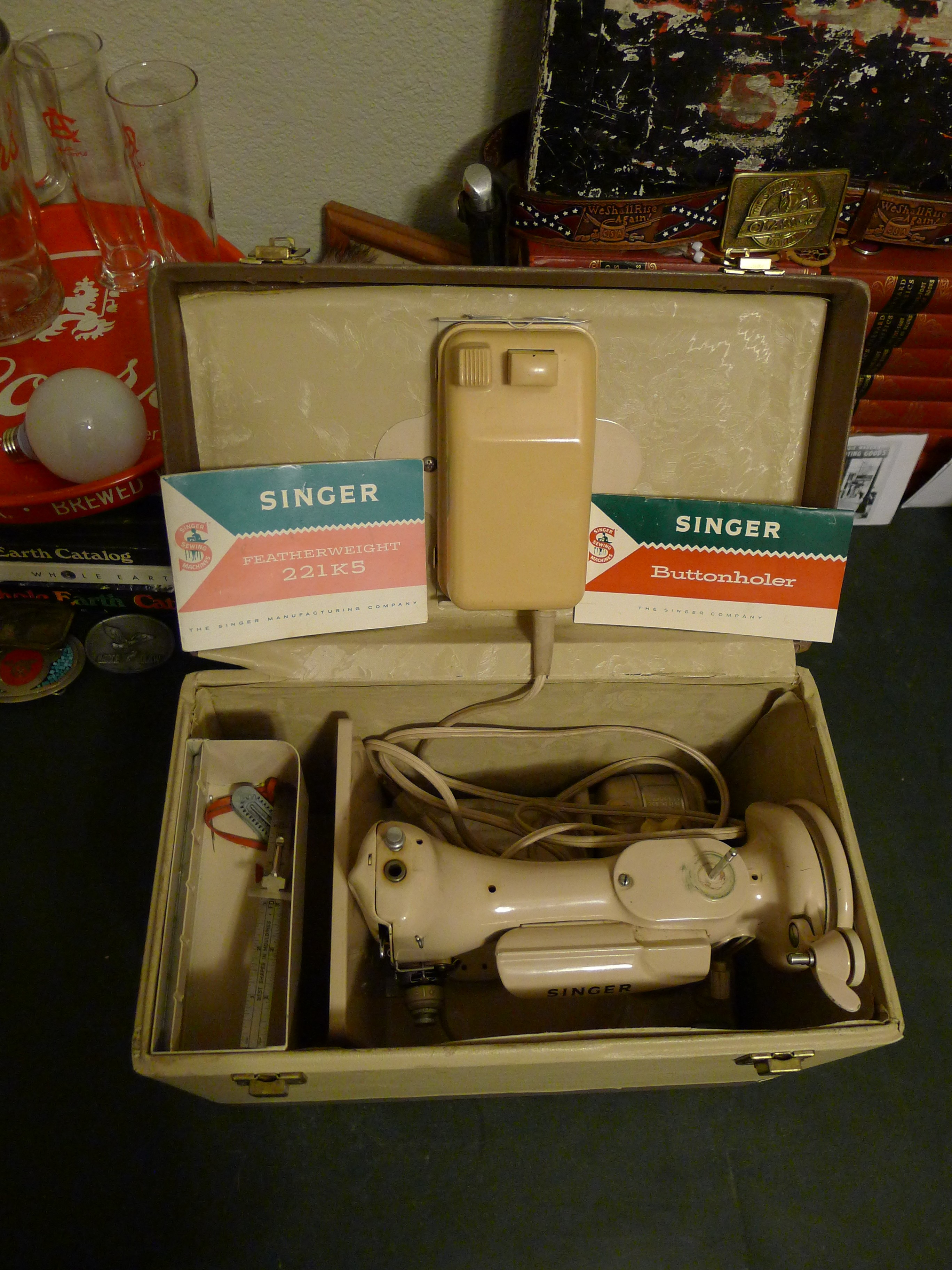
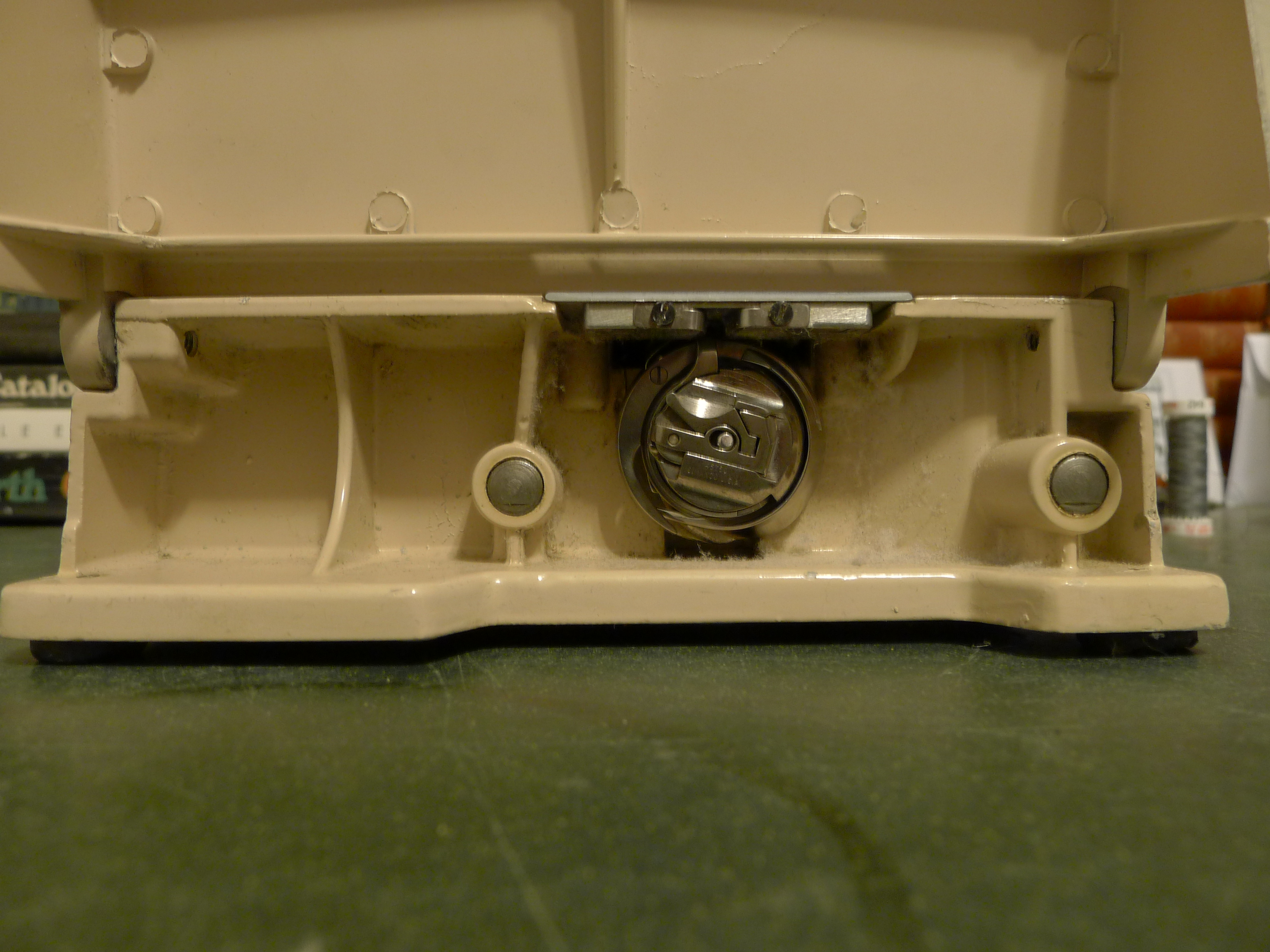
Singer Featherweight Travel Sewing Machine Model 221J

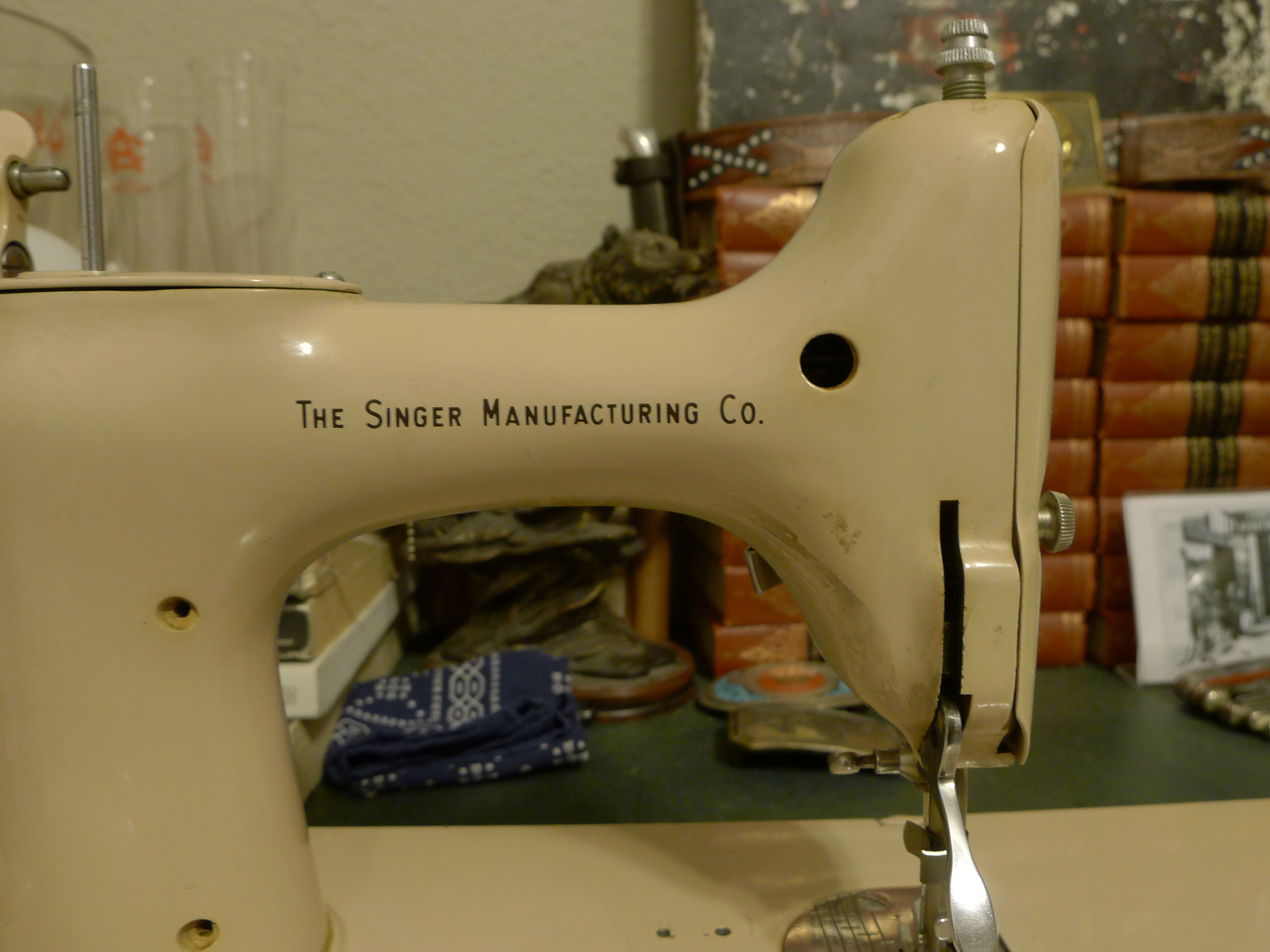
This is a Singer featherweight model # 221J made in St Johns, Canada 1961. Serial # JE154076.  Numbers starting with JE were among the last to come from the St. Johns factory which operated from 1904 – the early 1960s. There’s a myriad of history and information on the web around these machines as they’re highly prized and collected. As far as I could tell the 221J is a version of the 221K, the third iteration of the machine.  221 were and still are prized for having the capabilities of a full size machine, including attachments, in a relatively light and compact piece. Traveling seamstresses, club quilters and collectors still covet these machines today. I am not a sewing machine expert, but  know enough from growing up with a mom who sewed everything to thread and run this machine. It threads much the same as larger, later model Singers.

Danner 30520 Hiking Boots

Danner 30520 Leather Mountain Light Vintage Boots

These older Danner 30520 hiking boots are the bases for what is now known as the Mountain Light 30876. Though not called the mountain light, this version was made significantly lighter than the previous 6490 version primarily from the move to a Gore-tex lining and lighter sole material. Danner was an early adopter of the revolutionary Gore-TEX fabric which made its entrance into outdoor market in the mid 70s. A similar boots marked 3052 was also made, I’ve not yet determined what the extra 0 found here denotes

Much the same as the current Mountain Light these boots feature:

GORE-TEX lining
Vibram Soles
5 D-rings, 2 hook lace-up
Danner tri-fold tongue
5″ shaft
Are Made in the USA and Recraftable

Tongue Markings:
10 D 30520 23A233
Danner

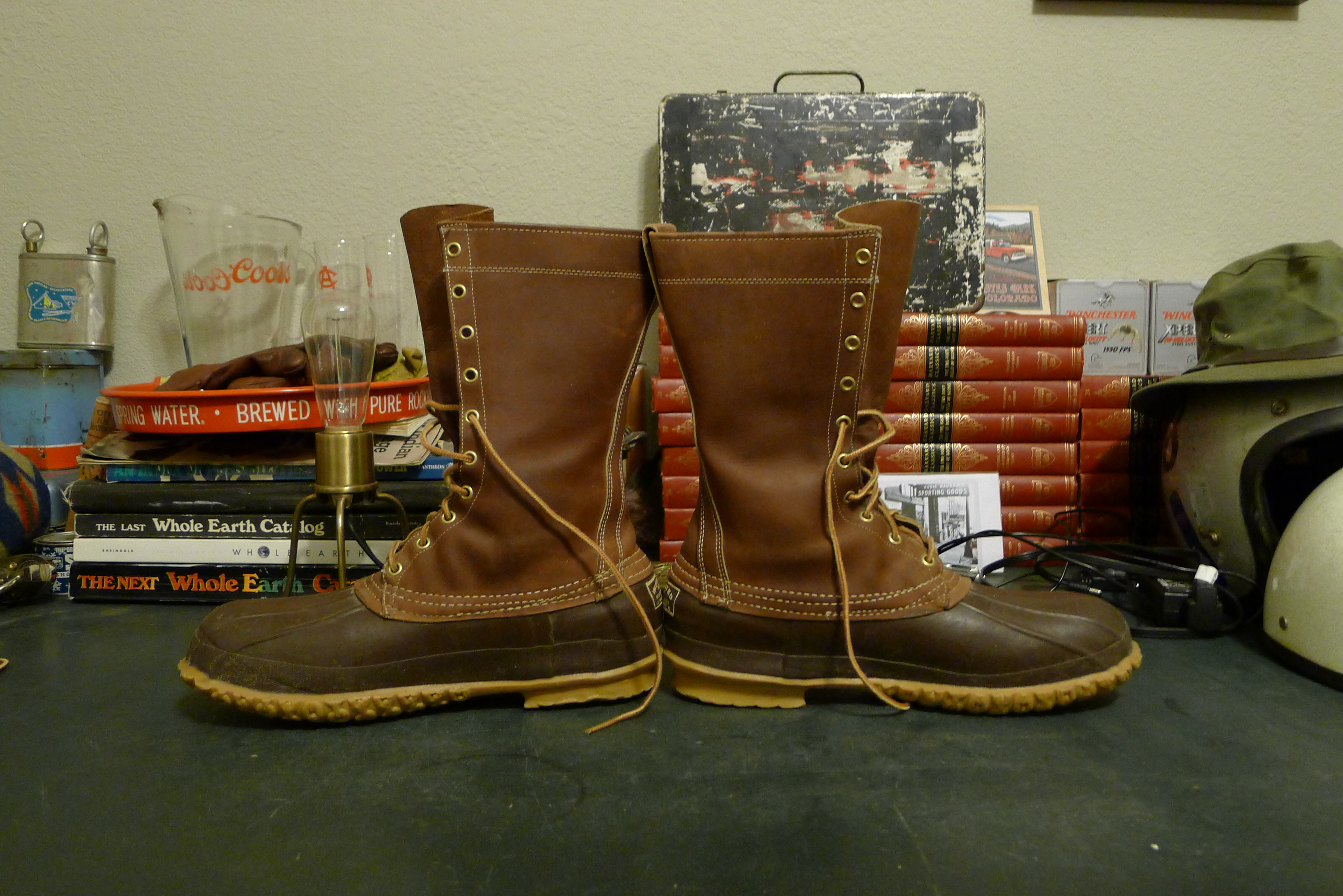
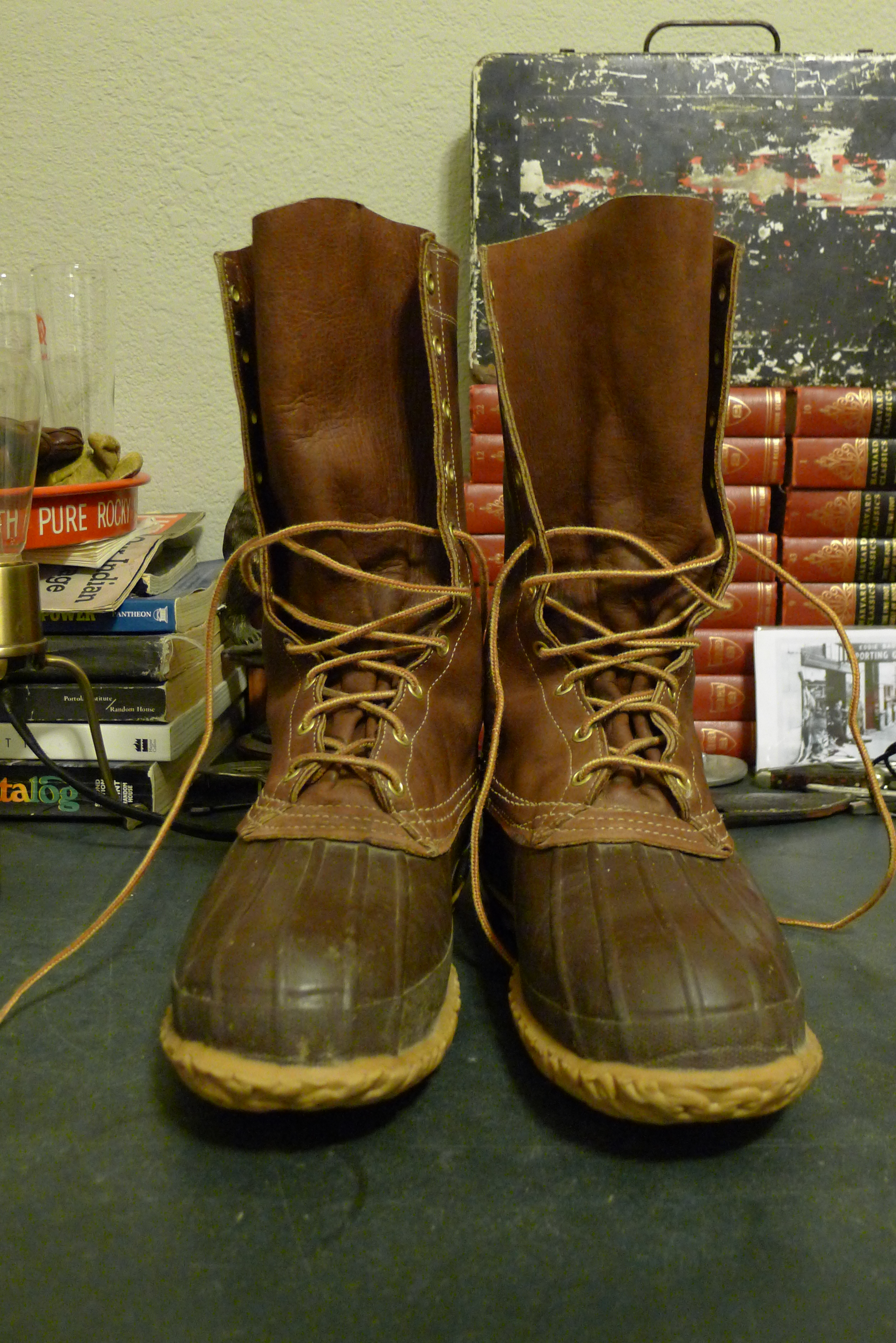
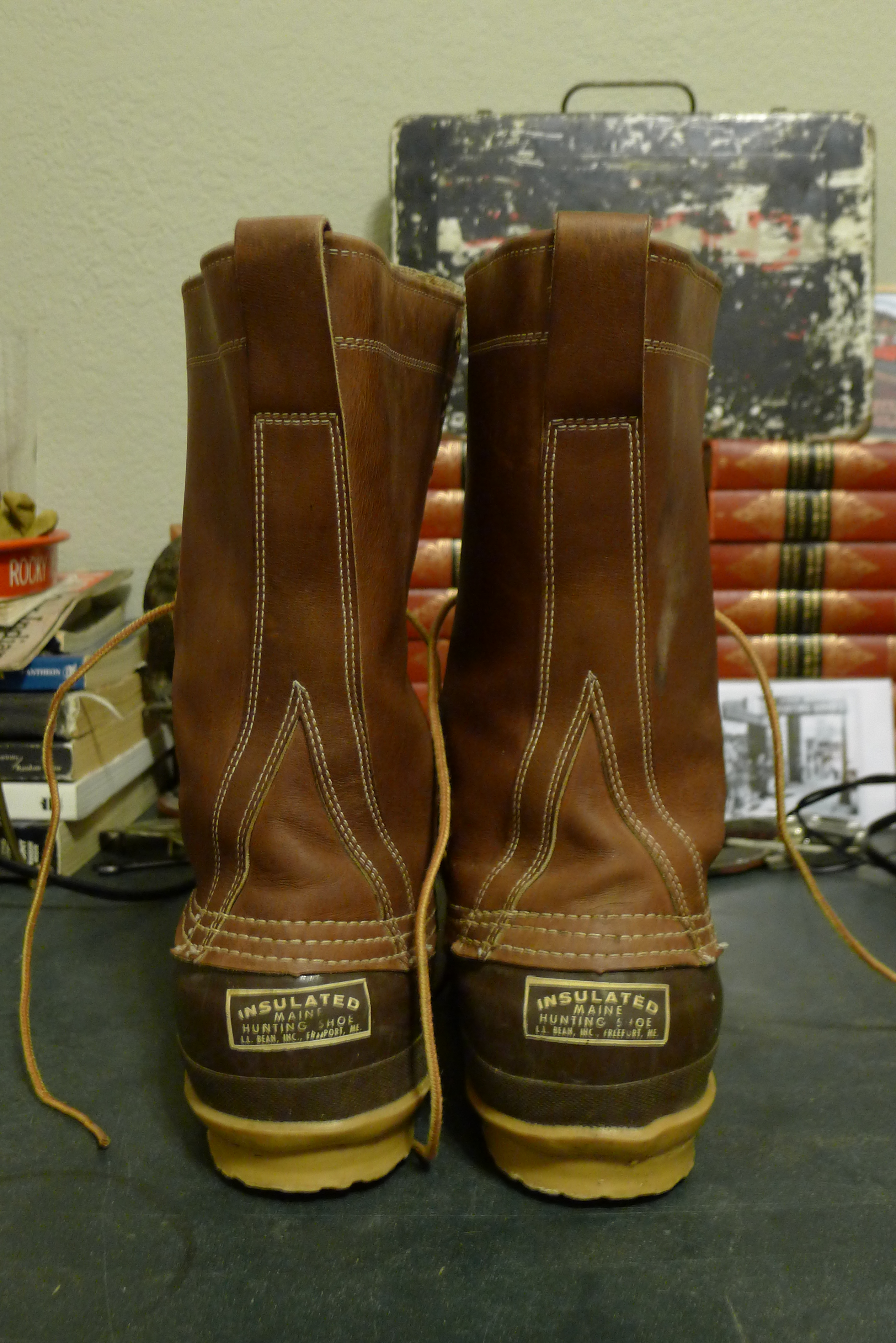
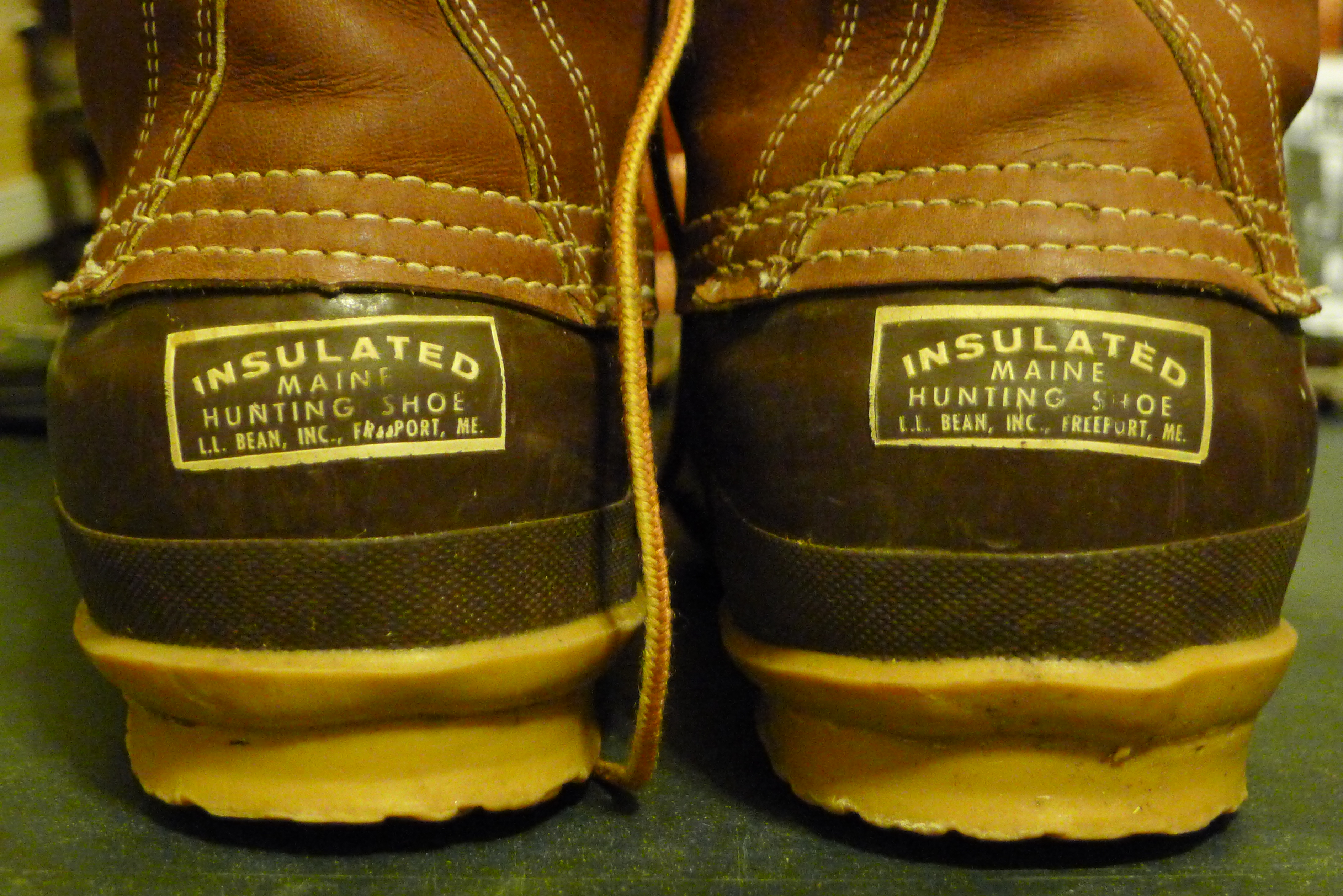
Tall L.L. Bean Insulate Main Hunting Shoe

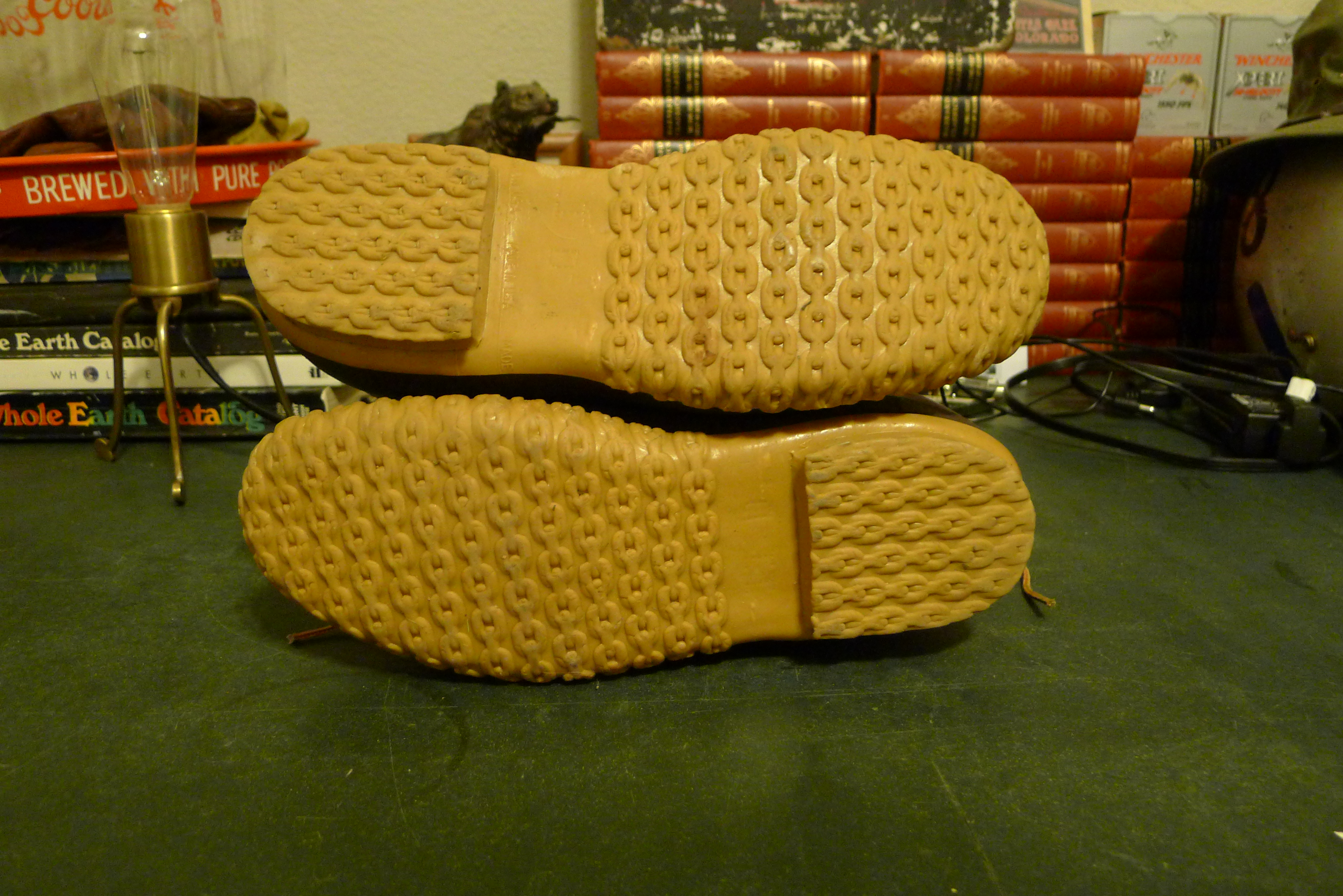
Based on the original boot created by Leon Leonwood Bean in 1912, this 1970s version of the boot maintains the character and functionality that launched the brand. Leather uppers and rubber bottoms these boots were meant to lend a good foot feel of the terrain to hunters in soggy lands. This 12″ tall insulated version offers a little more protection from the cold in the form of a lightly lined rubber bottom.  Other past and present iterations of this boot range in height from low-cut shoes to 6,  8 and 10 inch versions and up to 16 inches. Triple stitching attach the uppers to bottoms while double stitching throughout makes for a rugged classic. The hand written font on the label denotes these are an older version from before the company switched to a block font sometime in the 1970s.

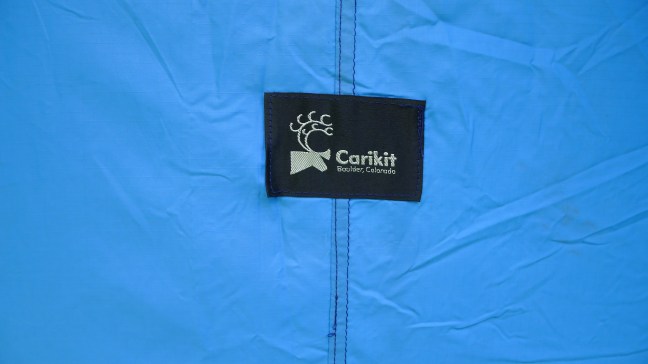
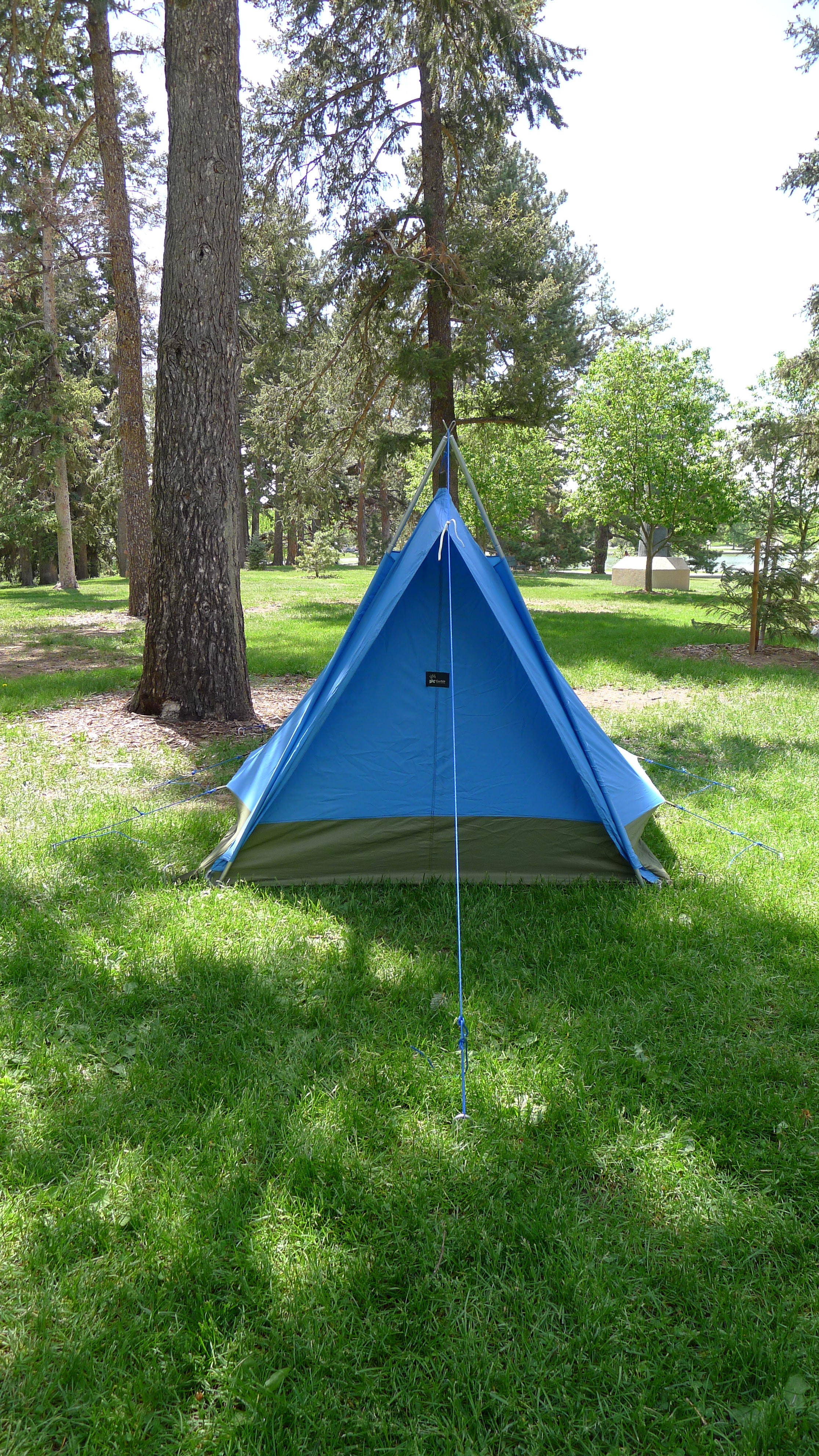
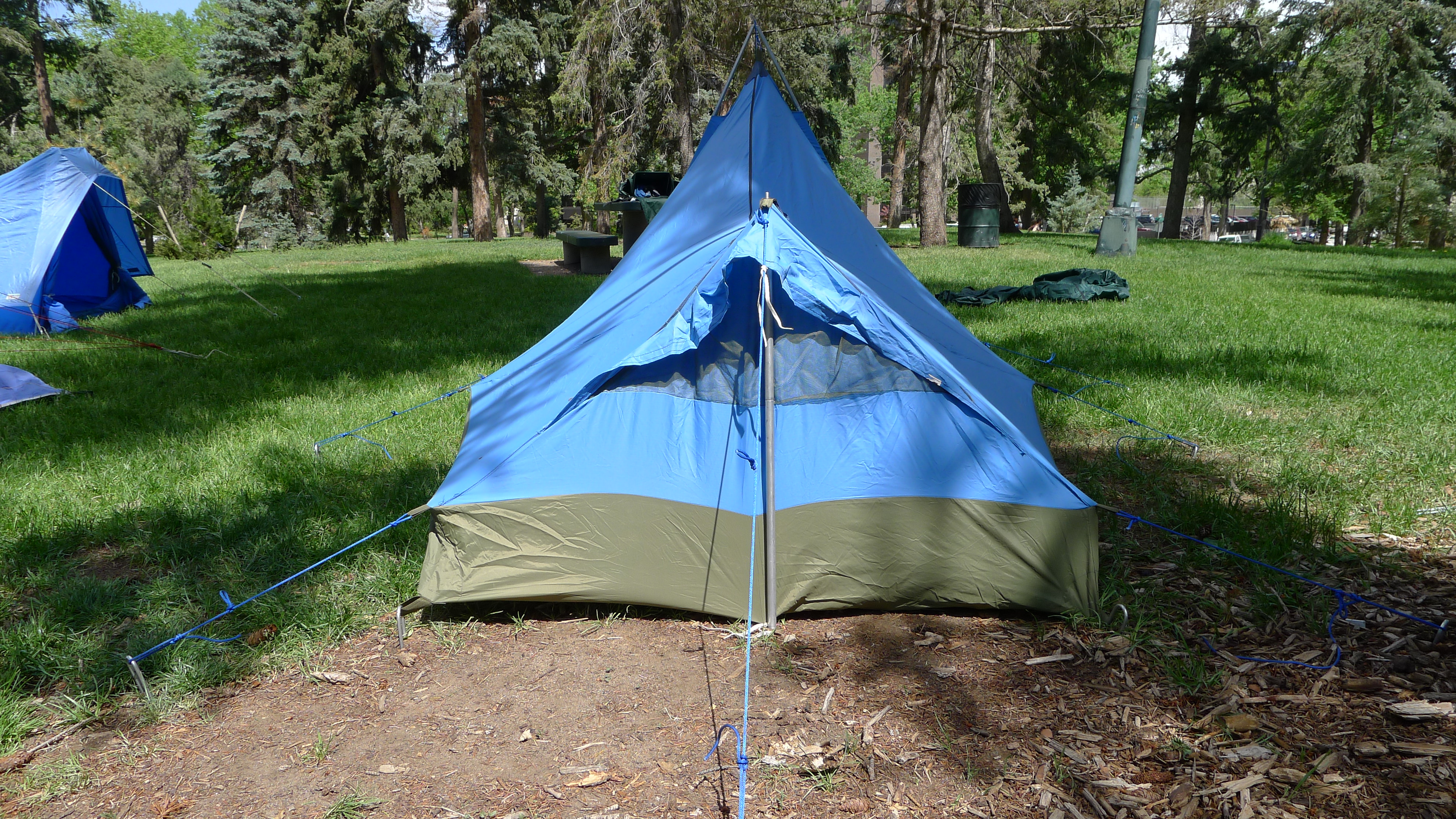
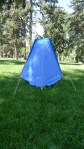
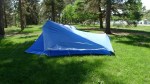
Cari-Kit Two Man Backpacking tent – early 1970s

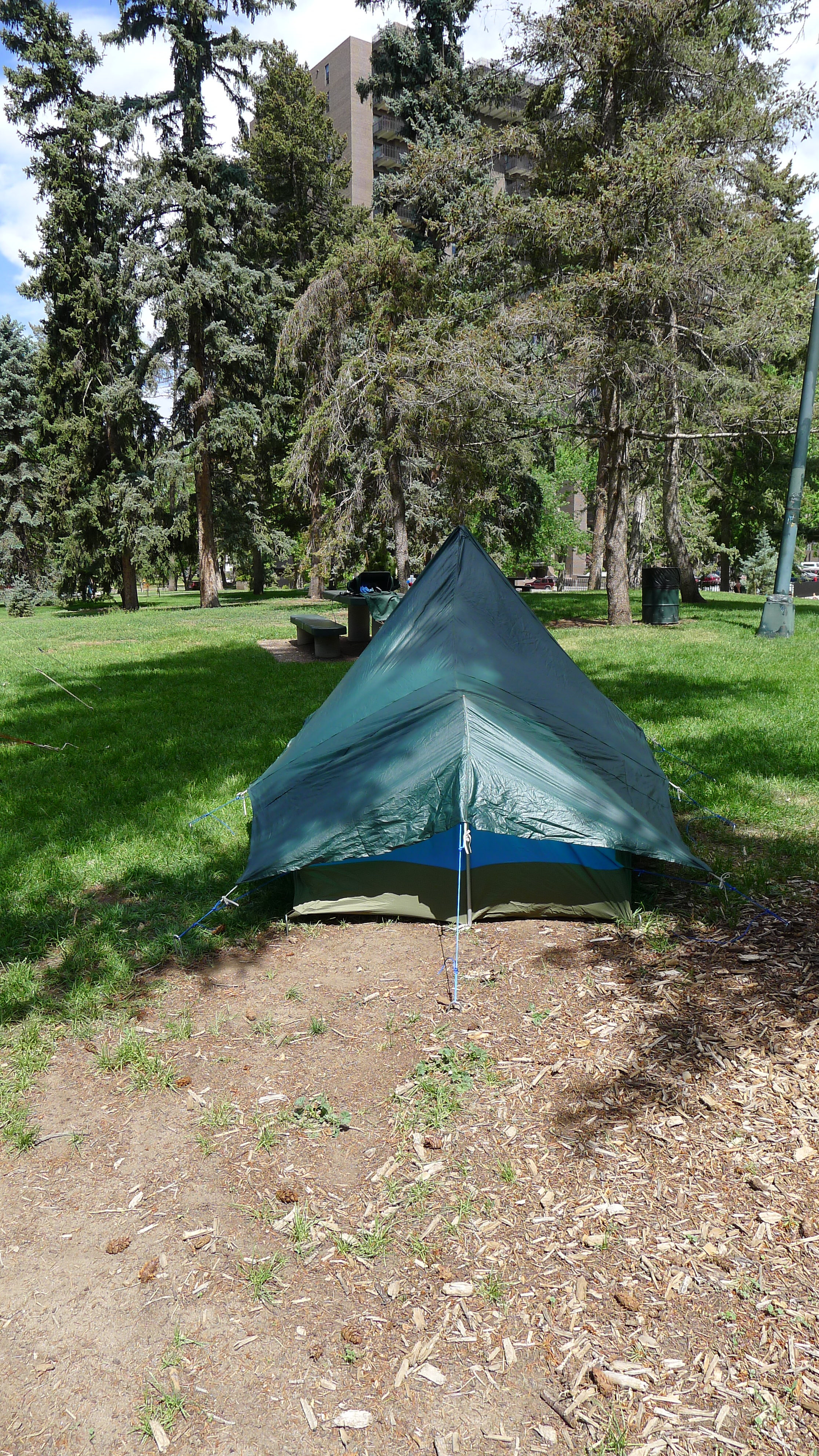
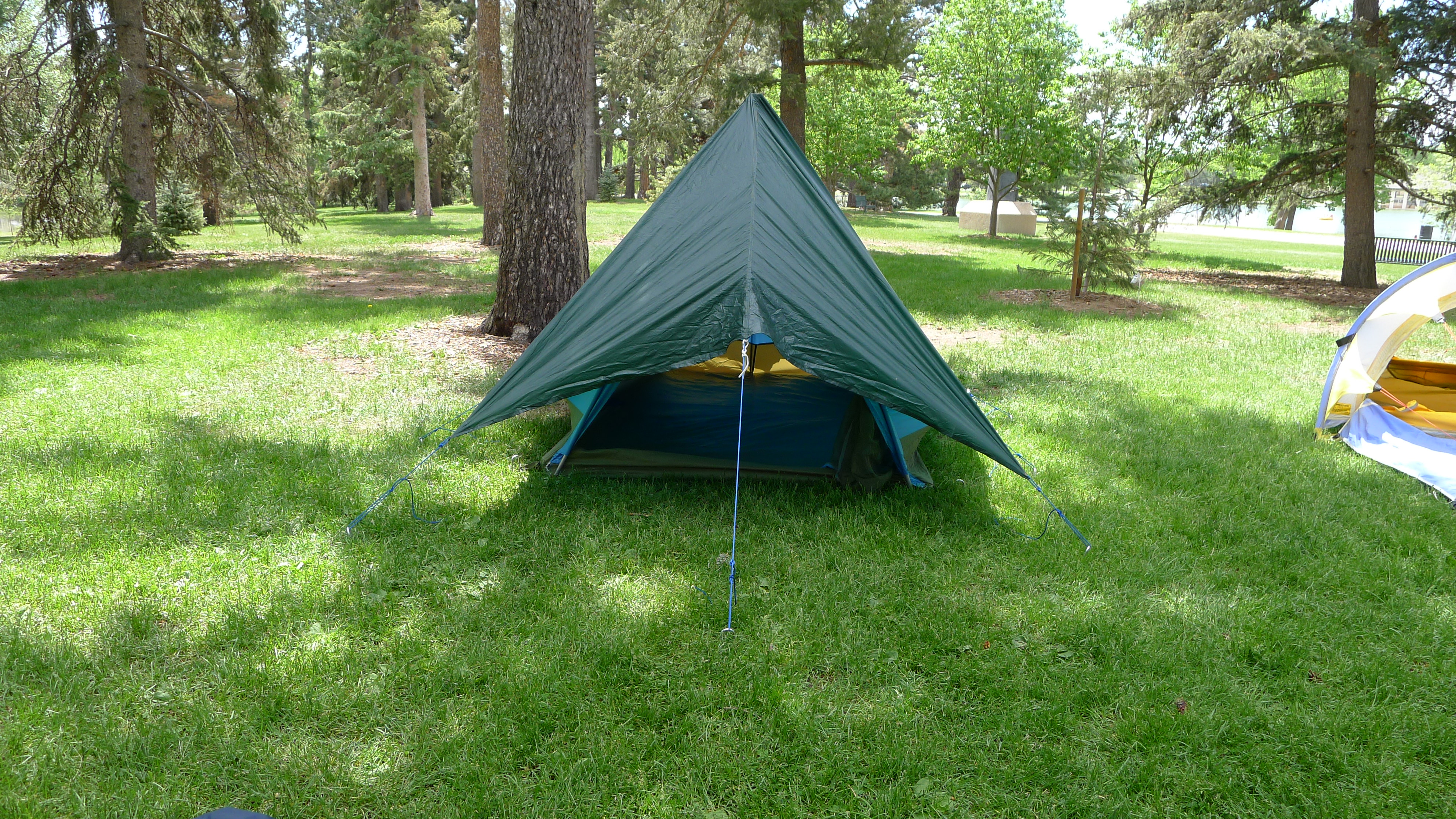
 This two-man  tent is constructed using two poles at front one at rear. The front poles fit together with loops at the top and support the tent body which is ran up over the crossed loops and pulled taut with a staked cord. The single rear pole is shorter and is secured by top and bottom grommets and staked down with a cord. The tent comes to a high point at the front and is only about half as tall at the foot. The tent has a rain fly, but does not offer  a fully enclosed vestibule. It would most likely be considered a two or three season tent.

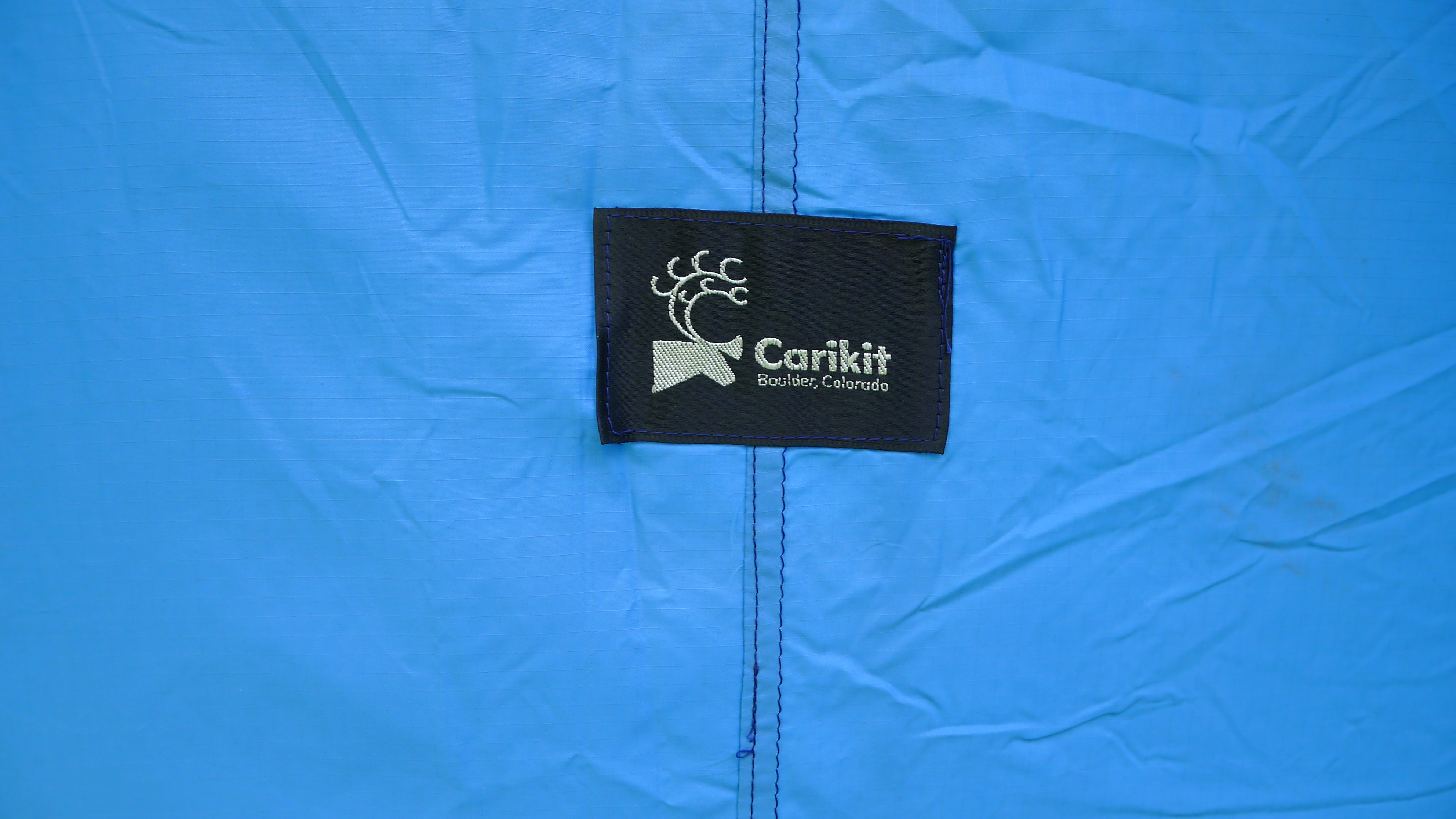
I received this tent from the original owner who said it was purchased from the original Holubar store in Boulder, Colo. in the early 70s. The tent bears a similarity to Holubar tents of the era and has good reason. Cari-Kit was the label originally used on Holubar’s line of sew-it-yourself products in 1972.  The name was later abandoned and the kits rebranded as Holubar Sew-It-Yourself Kits.

Other popular kit producers of the day include: Frostline, Altra, Eastern Mountain Sports, Country Ways, Mountain Adventure, Sundown and Plain Brown Wrapper. EMS enjoys continued success though the production of kits has since ceased. A newly resurected Holubar label produces fashionable and functional pieces in homage to the company name

Measures approx:

90″ long
60″ across
51″ high at front

Weighs approx:
6.5 lbs

This tent is available for sale.

Lee Riders Sanforized, Union Made Selvedge Denim

Lee Riders, also known as the 101Z debuted in the 1950s and represent  a transition from the company’s work wear history in to more casual, mass appeal wears.

On this particular pair the inside Tag is marked: Lee Riders Sanforized Waist 32 Union Made in the USA.  The Button back is stamped: R.  Zipper is made by Talon. Lee riveted front and coin pockets. “lazy S” stitched on rear pockets.  The “branded” Lee patch is long gone. You’ll notice on Lees, unlike Levi’s the selvedge denim self edged appears on only one side of the outer seam.

As with most items from  time and place predating the “throw-away age”, these jeans are well-worn and have been mended multiple times. There’s a bout a 4.5″ x 6″ patch on the  right thigh.  A 2″ x 3″ patch on the left side below the rear pocket. A hole and repair with red thread on the left knee, a small hole forming below the zipper on the right side front, and a 4″ hole in the left cheek with additional wear below.  Some white paint and other darker stains. Round out the patina that only time can create.

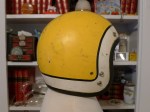
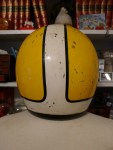
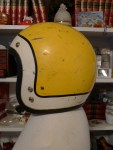
1976 Bell RT Helmet

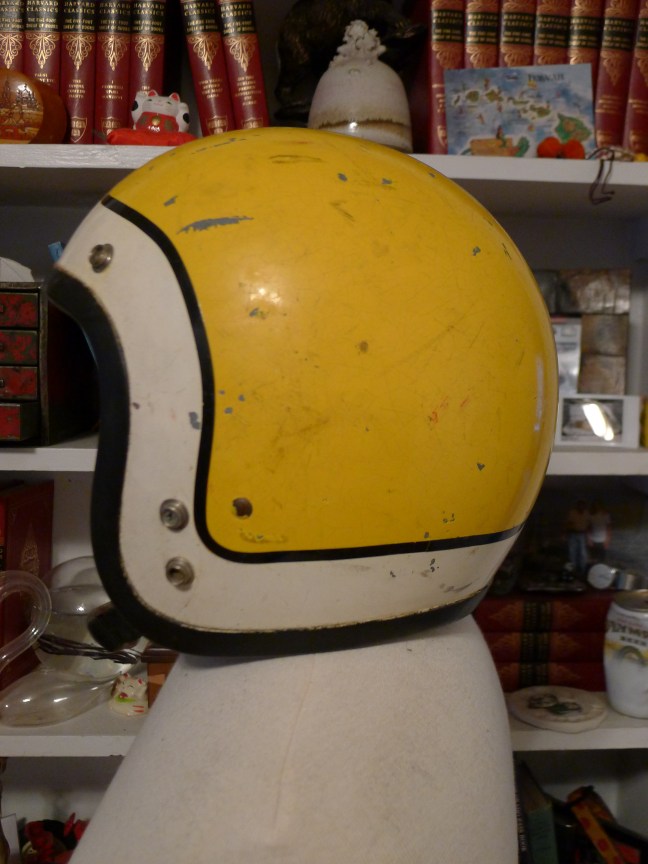
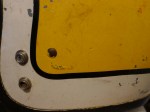
This is one cool old Bell R-T helmet with a unique paint job. The Yellow and black appear to be part of a customization. The white around the perimeter and down the center was most likely the original color. The black striping is actually a decal of sorts and not paint.  The color scheme and layout hearken the Yamaha YZ of that period and my explain why this particular helmet has extra snap heads have been added around the jaw area, perhaps for a face mask?

Sticker size 7 1/8 or 57cm in place as well as SHCA approval. Chin strap stamped BELL R-T 10-76.


1960s Gerry Single-man Backpacking Tent

Gerry Cunningham is arguably the father of light weight camping and that’s the slogan used on this 1960s single man tent. The company he founded lived light weight, innovation and quality and proudly displayed this on their products, books and in their marketing. “warmth without the weight” is another slogan displayed on products of this era.

This innovative-for-its day tent is constructed using piece-together aluminum poles, two front, and one rear. The poles do not use shock cords. Front poles fit into a looped cross member at front and grommets in the rear. The tent goes up easily, but is not free-standing like later dome tents so it’s staked down at the corners and with front and rear guy lines. Includes rain fly and has a front vestibule on the tent body making it good for three or four seasons depending on the type of climate the user was in.

It packs up small at just over 12 inches in length and weighing approximately 5 lbs. Constructed it measures approximately:

78″ long
48″ wide
43″ high at front