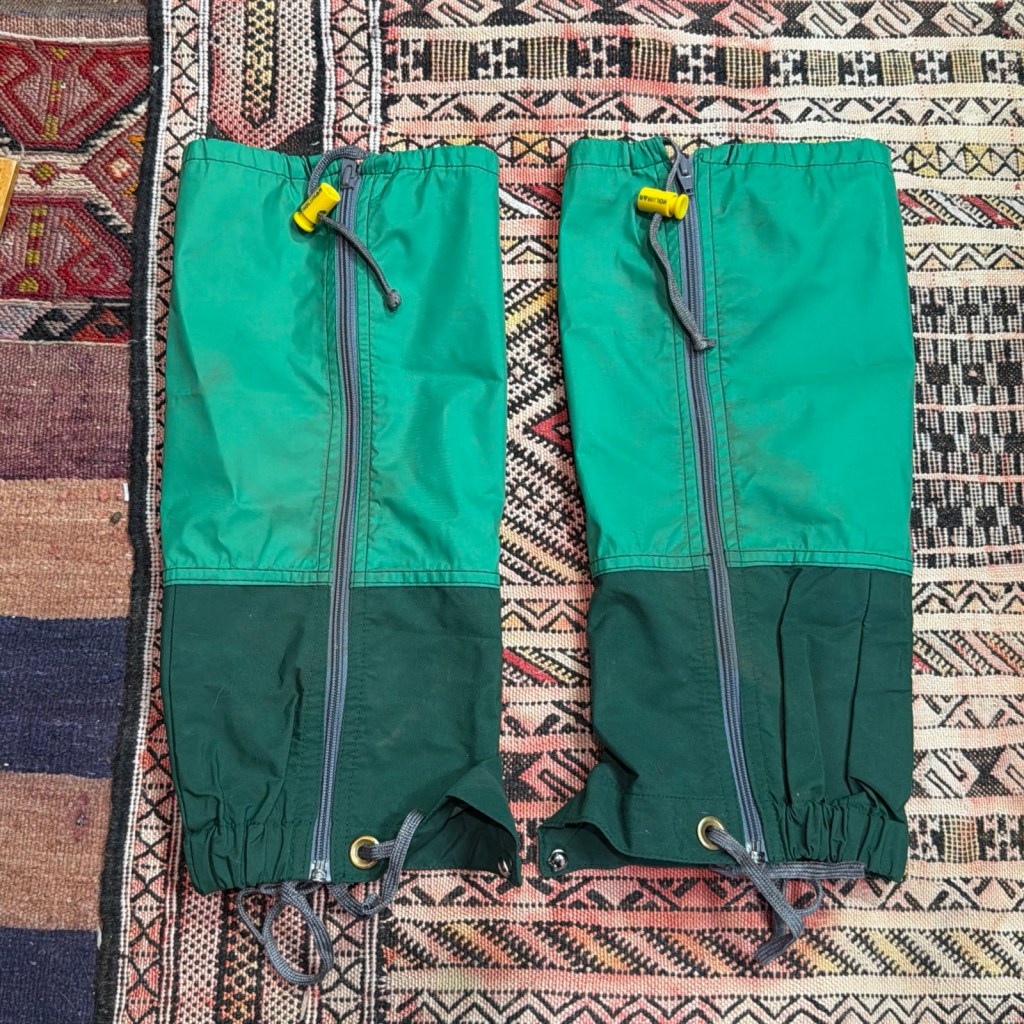
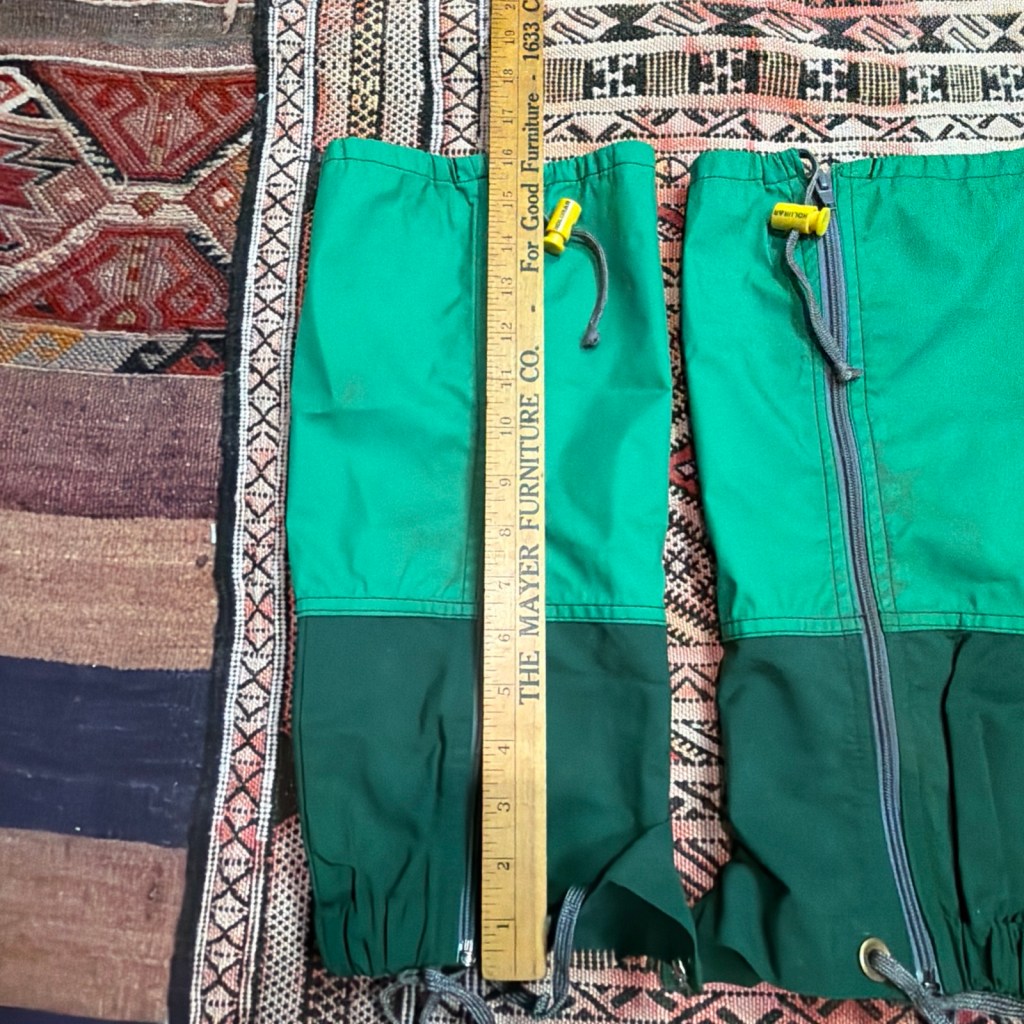
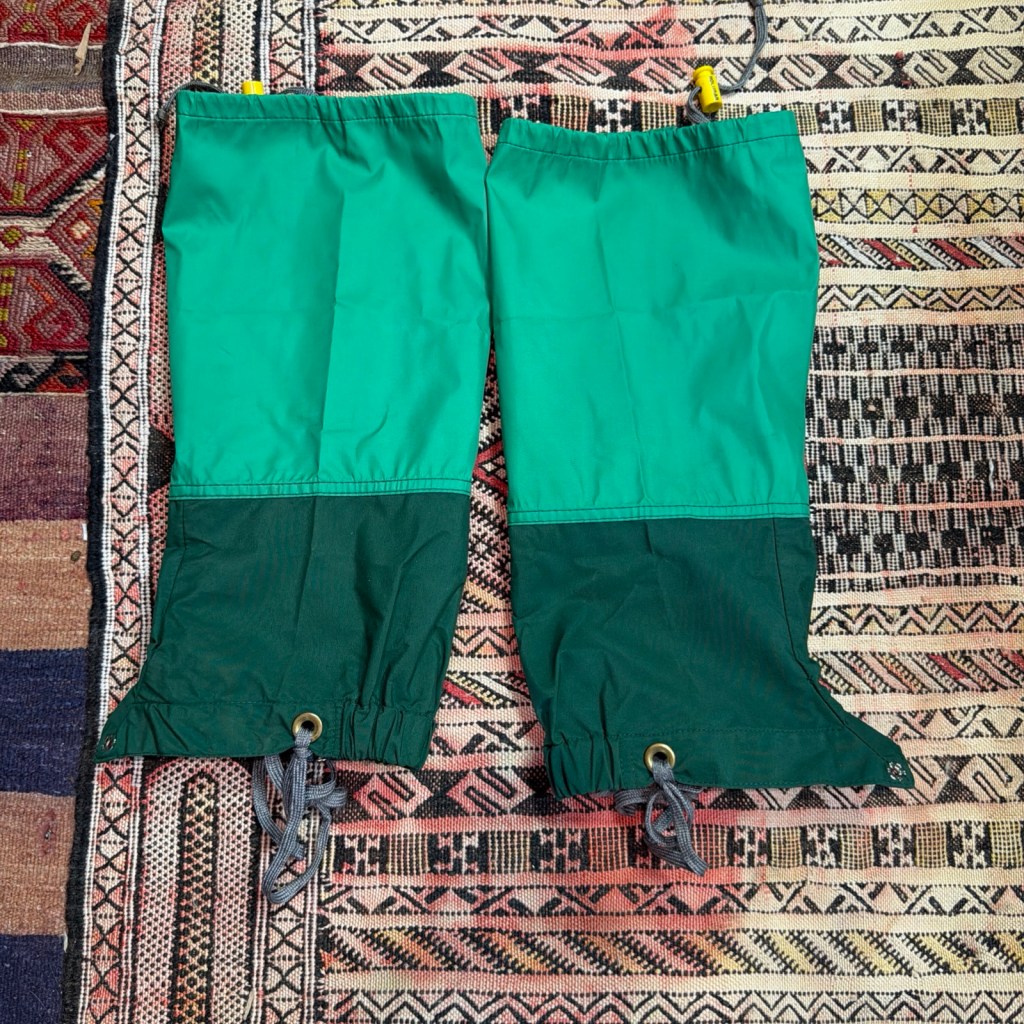
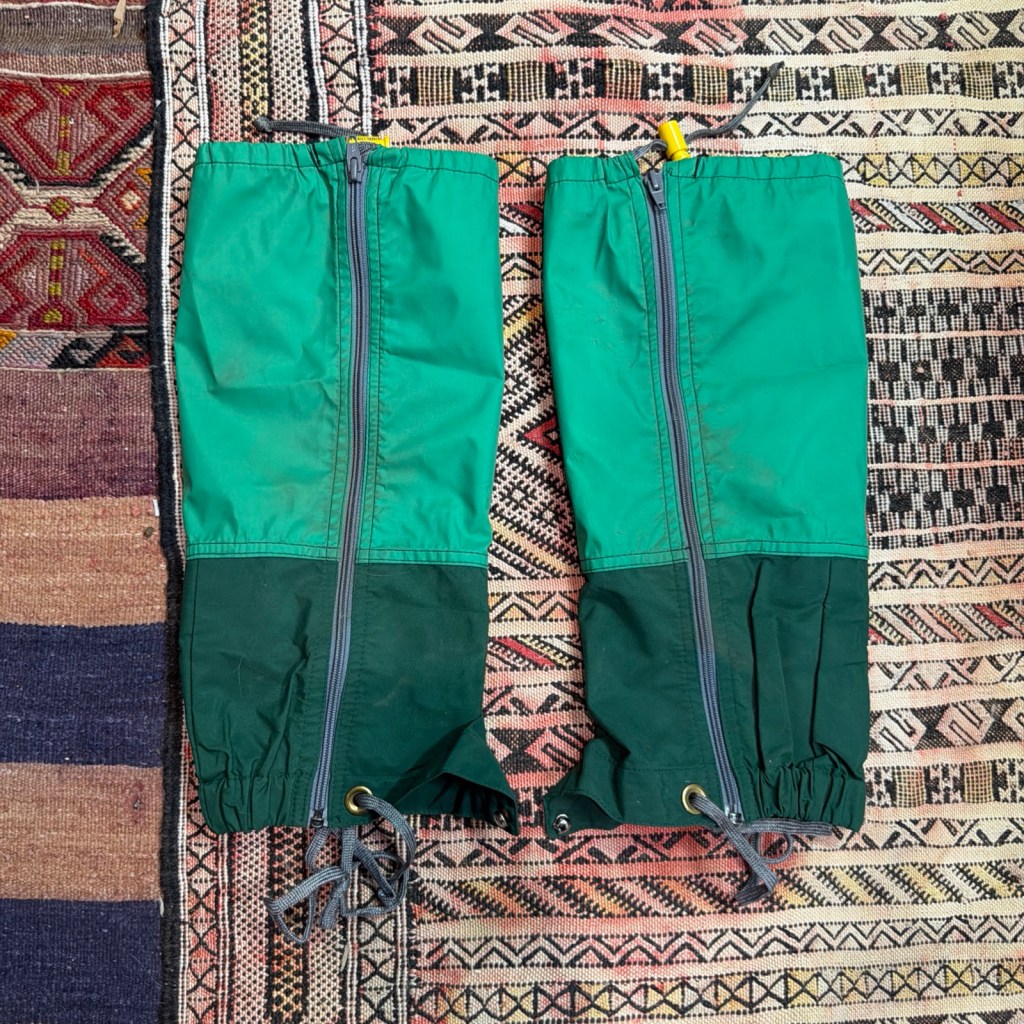
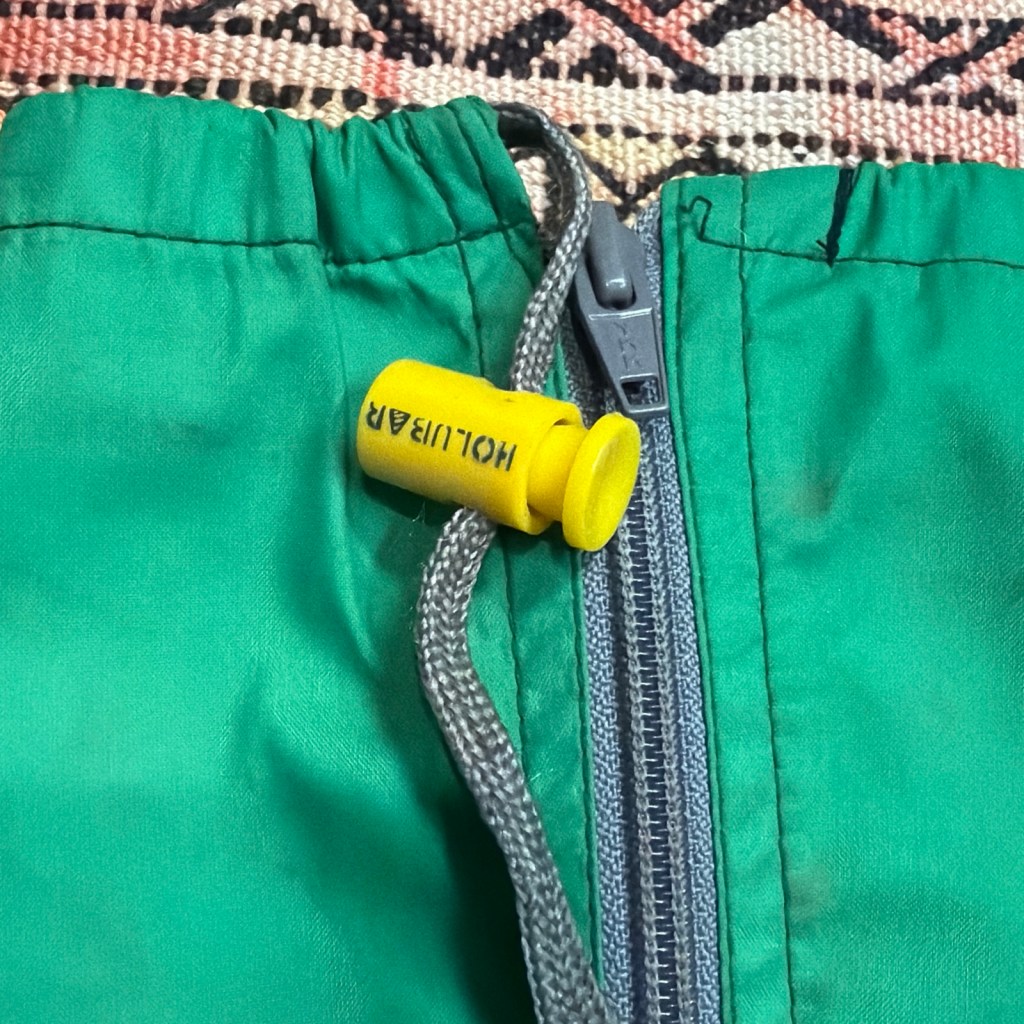
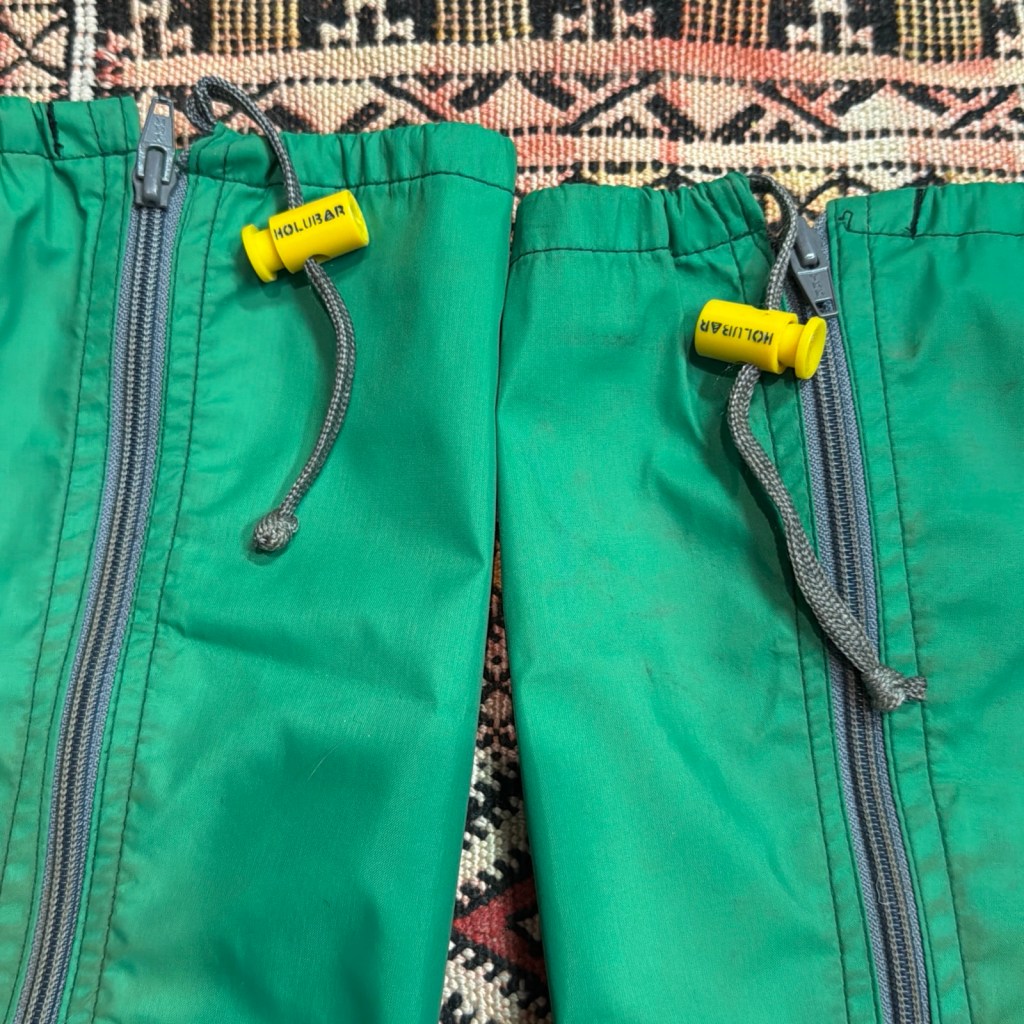
1980s Holubar Gaiters

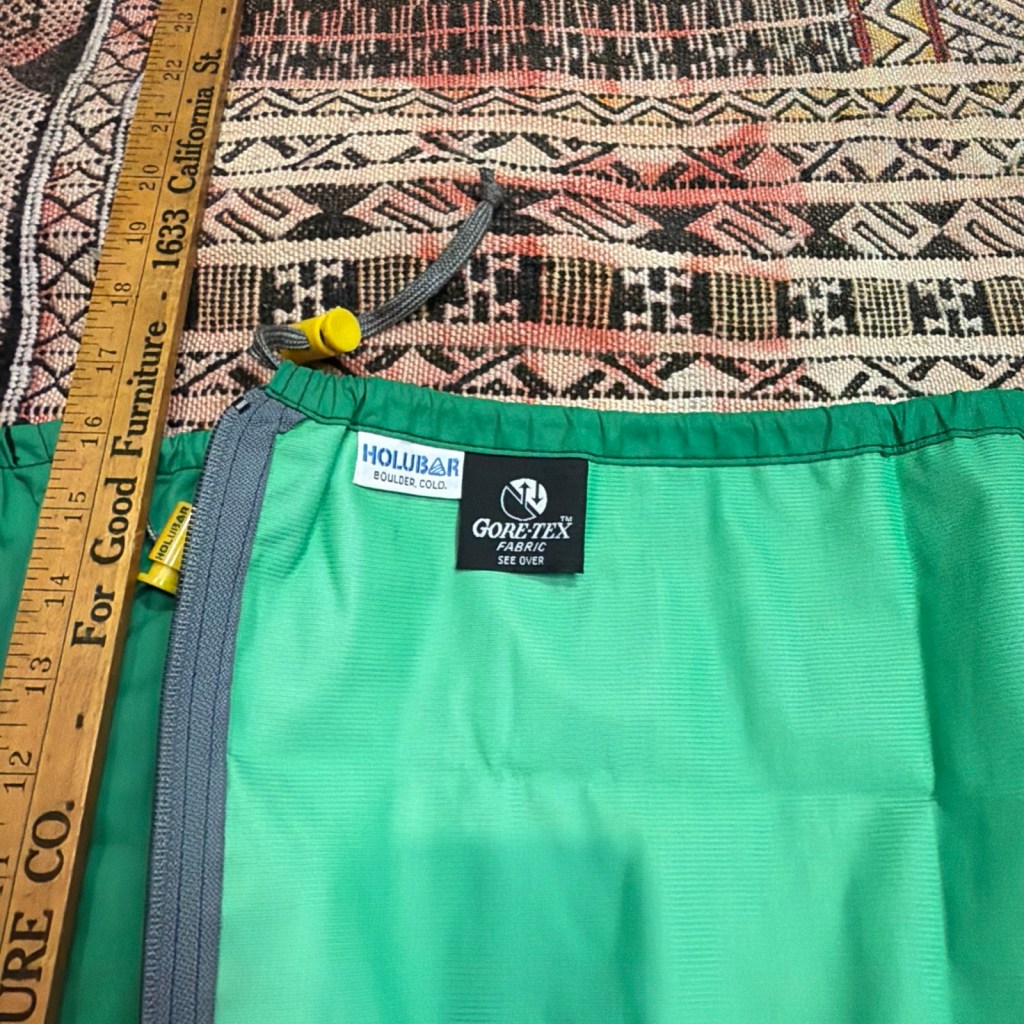
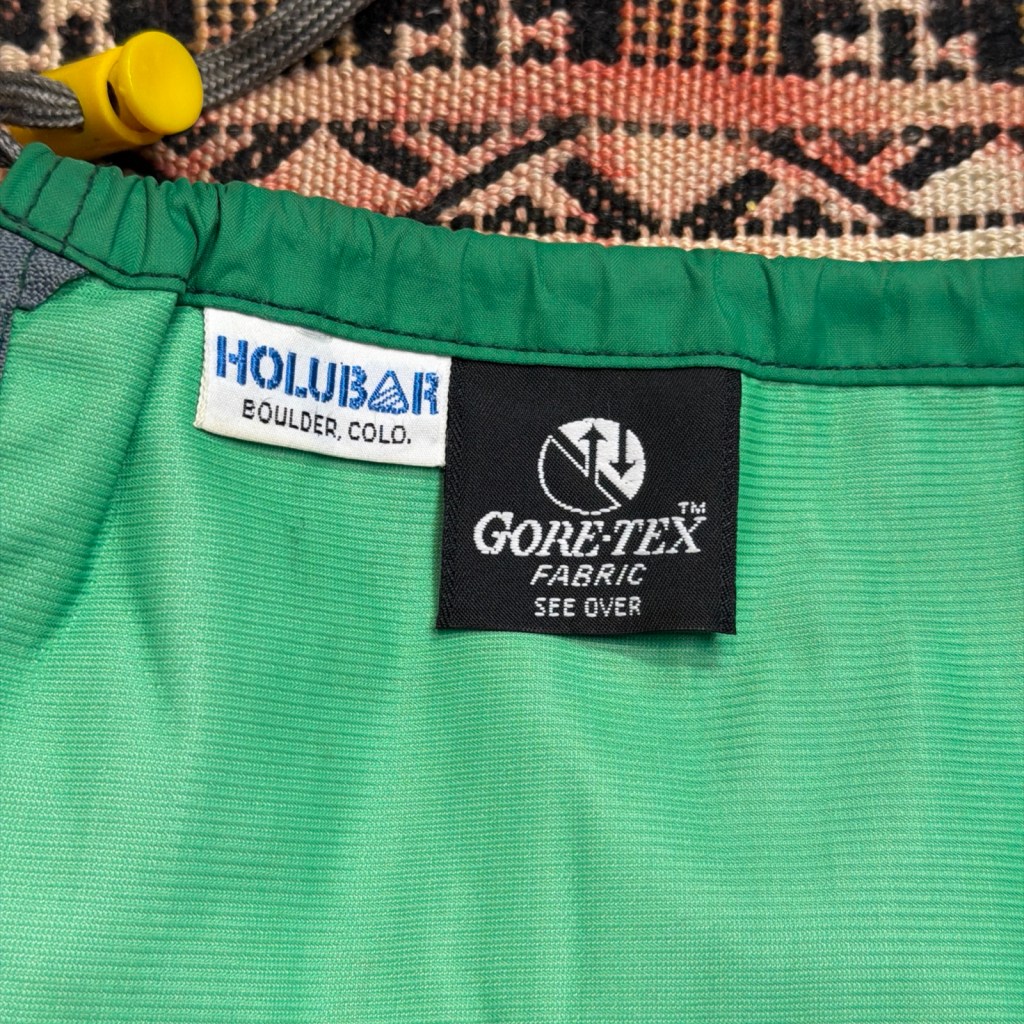
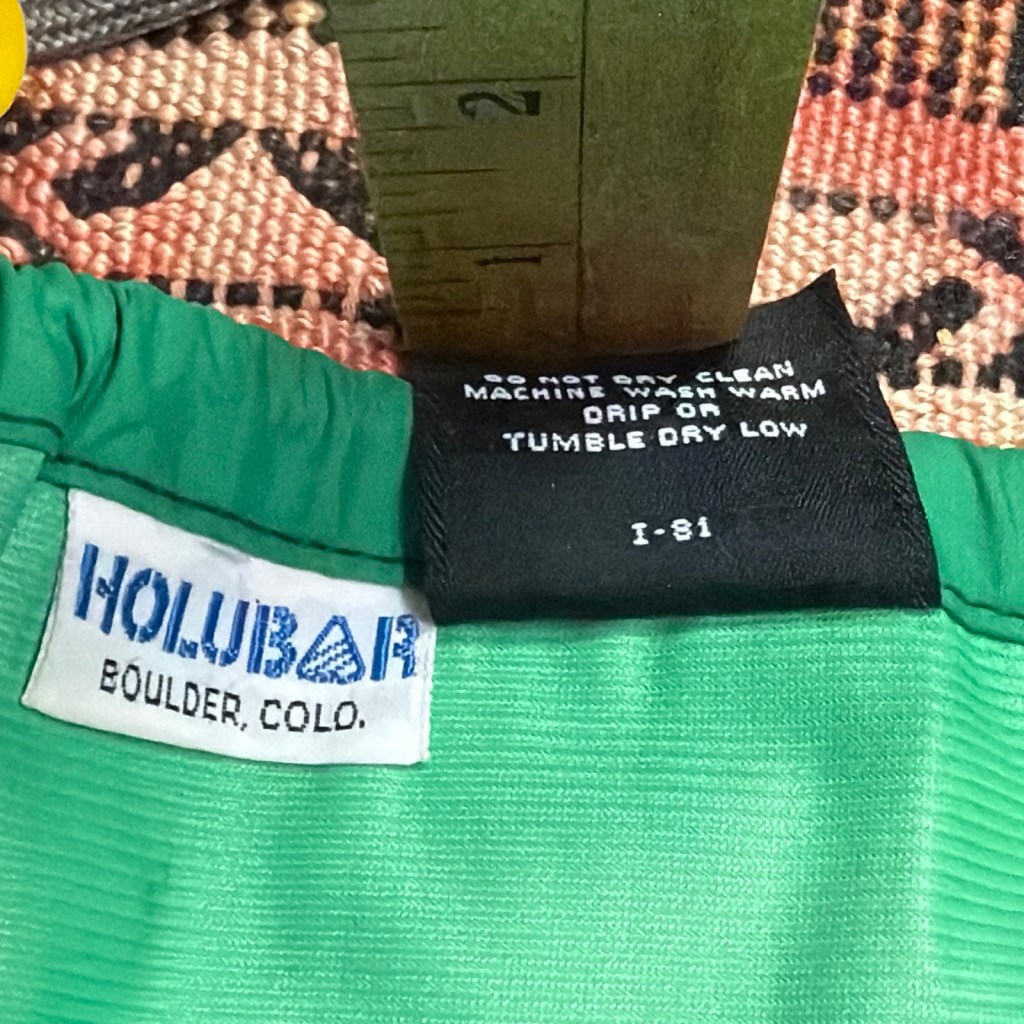
Recently acquired these late model Holubar Gaiters. I’ve seen this simplified logo prior and recognized it as being from the tail end of the brand’s initial run. The Gore-Tex label indicates a production date of 1981, which would roughly coincide with when the brand was acquired by TNF.
Holubar — The Later Years: A Timeline

1975 — The company was purchased by Johnson Wax around 1975. Despite an attempt to transition from a high-cost manufacturing model to a lower-cost design and manufacturing approach, Holubar failed to meet the business expectations of its new owner. Wikipedia

1981 — The September 1981 “North Face Newsletter” proudly announced The North Face’s acquisition of Holubar from Johnson Wax, with Hap Klopp himself signing the landmark newsletter. The nine Holubar stores across three states, the Holubar name, and all inventory became North Face’s. Oregonphotos

1981–1983 — The North Face swiftly established itself at the original Boulder store on 30th Ave., but left all the Holubar signs in place. Employees received North Face payroll checks, but their signs all said “Holubar” — no one would have known of the ownership change unless told. Sometime in 1981, a planned shopping mall forced closure of the original store, and it moved to South Broadway St., still using the Holubar name into 1983. What appeared to be “Holubar” labelled garments were actually being made by North Face in Berkeley, in gradually diminishing numbers. Oregonphotos

Late 1980s — The North Face eventually stopped producing the Holubar brand altogether. The brand had not been active in the U.S. since the eighties. WWD

Late 1990s — An Italian group led by entrepreneur Alberto Raengo purchased Holubar from The North Face. WWD

2012 — The Italian group reintroduced the Holubar brand to the European market. WWD Today, Holubar is sold in more than 500 stores in Europe and Asia, including Le Bon Marché and La Rinascente. WWD

2019 — Fashion Box USA, a new business created by Patrick Nebiolo, the former managing director of Woolrich Inc., acquired the North American license and relaunched the brand for the U.S. market. The fall collection centered around parkas and mountain jackets intended to compete with Moncler, Stone I
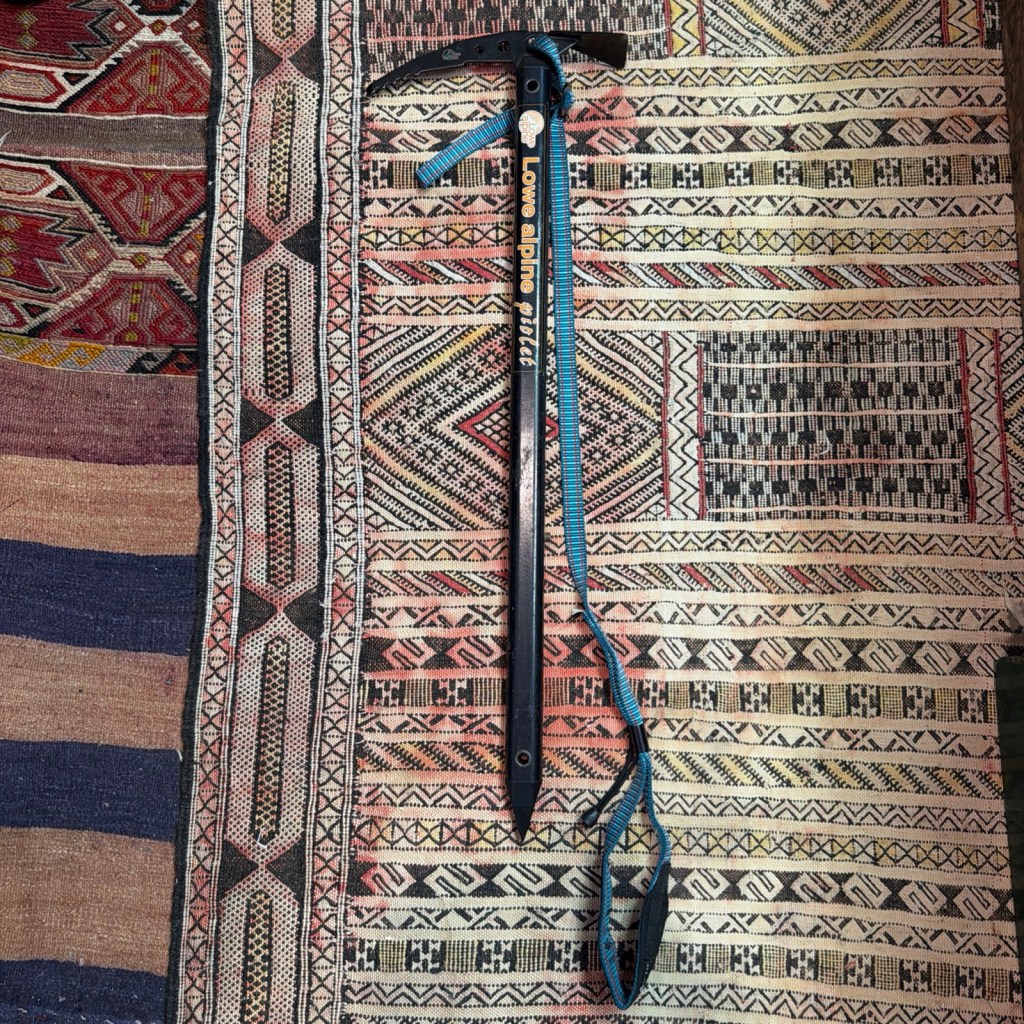
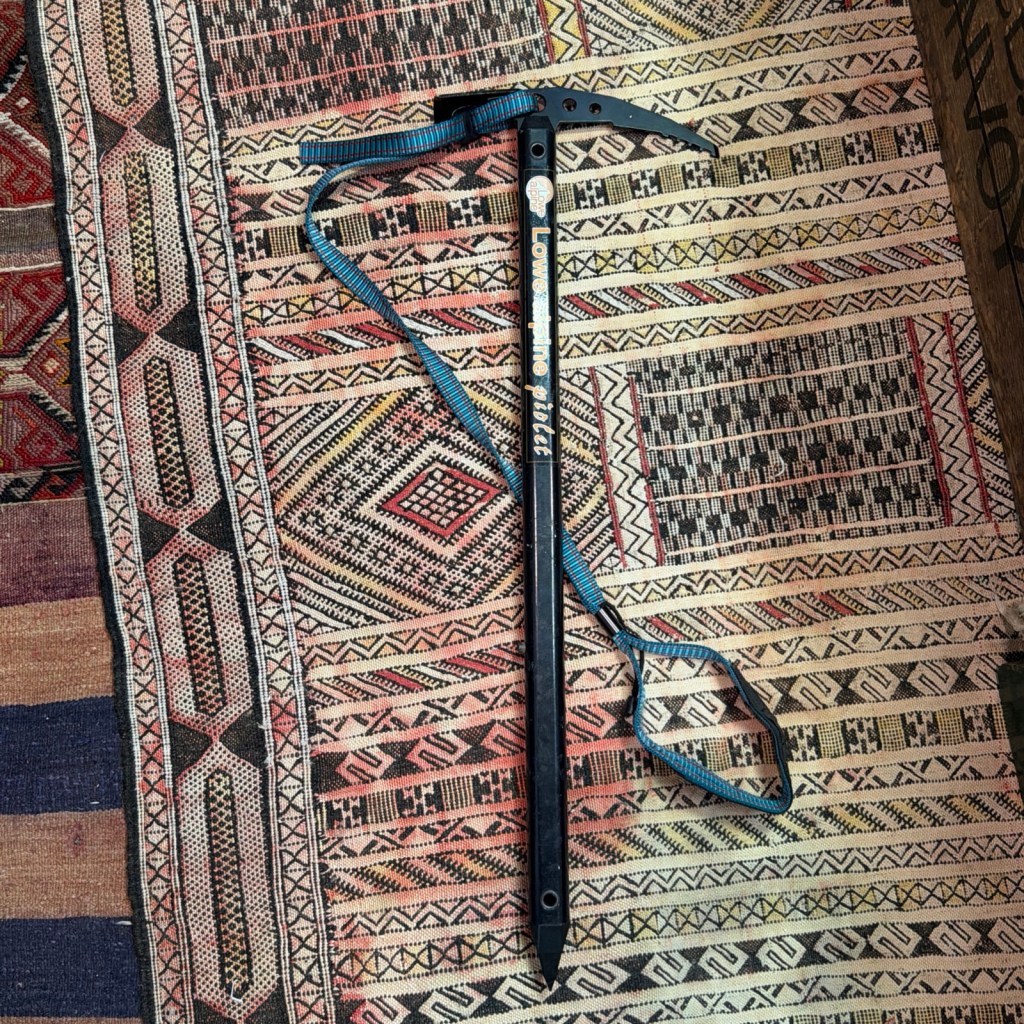
Lowe Alpine Piolet Ice Axe

When I think of Lowe Alpine, I think of their packs and photo bags which I’ve come across countless times of over the years. Besides maybe some of the early examples I don’t get too excited when encountering the soft goods. Hard goods on the other hand are much fewer and further between. Coming across this ice axe was a rare find and one that made me want to dig deeper on this often overlooked (by me) label.

The story of Lowe Alpine begins in Ogden, Utah, where brothers Greg, Mike, and Jeff Lowe grew up climbing alongside legends like Royal Robbins and Yvon Chouinard. When the available gear couldn’t keep up with their ambitions, they built their own.
In 1967, Greg descended into the family basement and invented the world’s first internal-frame backpack, the Expedition Pac one that quietly rewrote the rulebook for pack design in the process. By 197 Lowe Alpine Systems was incorporated. The innovations came fast: the first spring-loaded camming device (1973), the first step-in crampons with anti-balling plates (1974), the first plastic buckles on rucksacks (1980), and the first softshell garment (1984).
Jeff, meanwhile, was becoming one of the greatest alpinists of his generation. Credited with inventing mixed climbing, with over 1,000 first ascents, and a solo of a new route on the Eiger’s North Face in 1991 (Metanoia) that went unrepeated for 25 years. He was awarded the Piolet d’Or Lifetime Achievement Award in 2017 and passed away in 2018.
The brand was eventually sold and acquired by Rab in 2011, where it continues today as a pack-focused label. The hardware era the axes, crampons, and raw alpine tools — belongs to history.

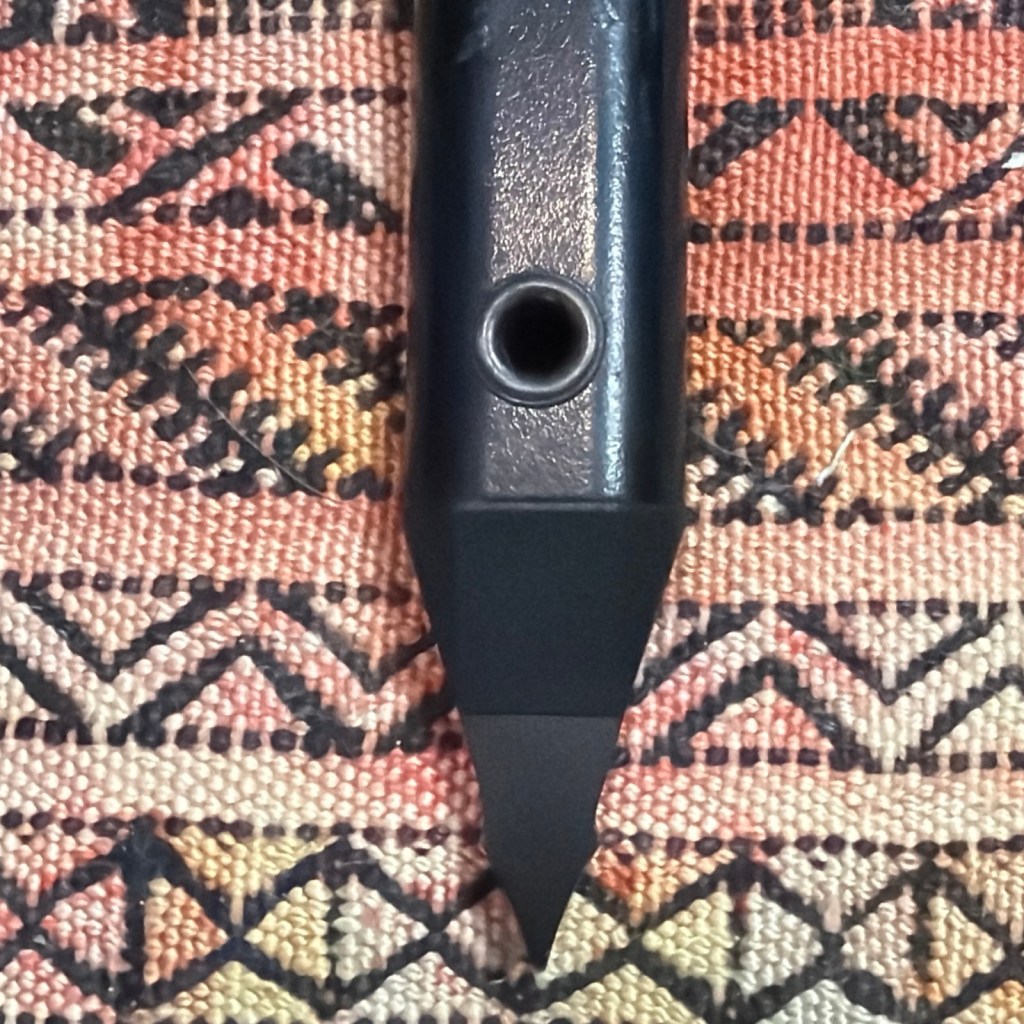
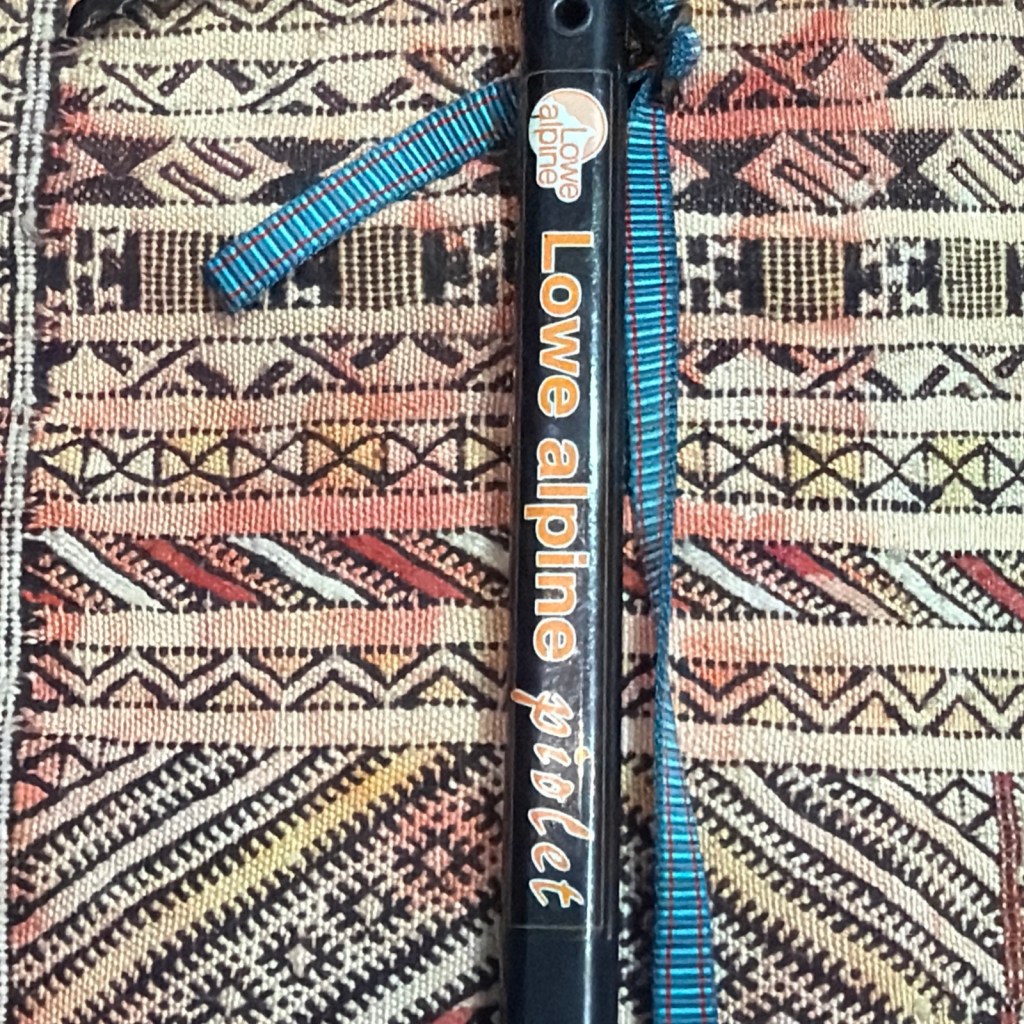
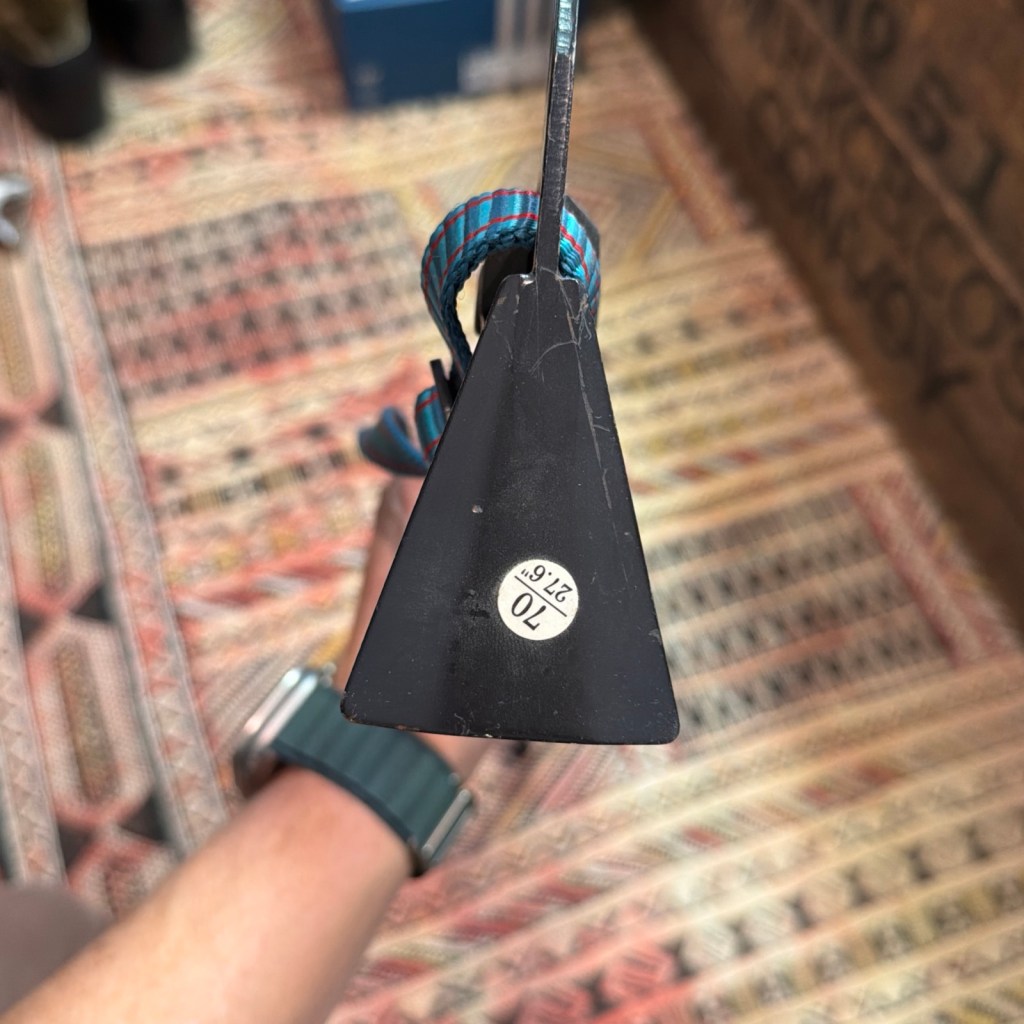
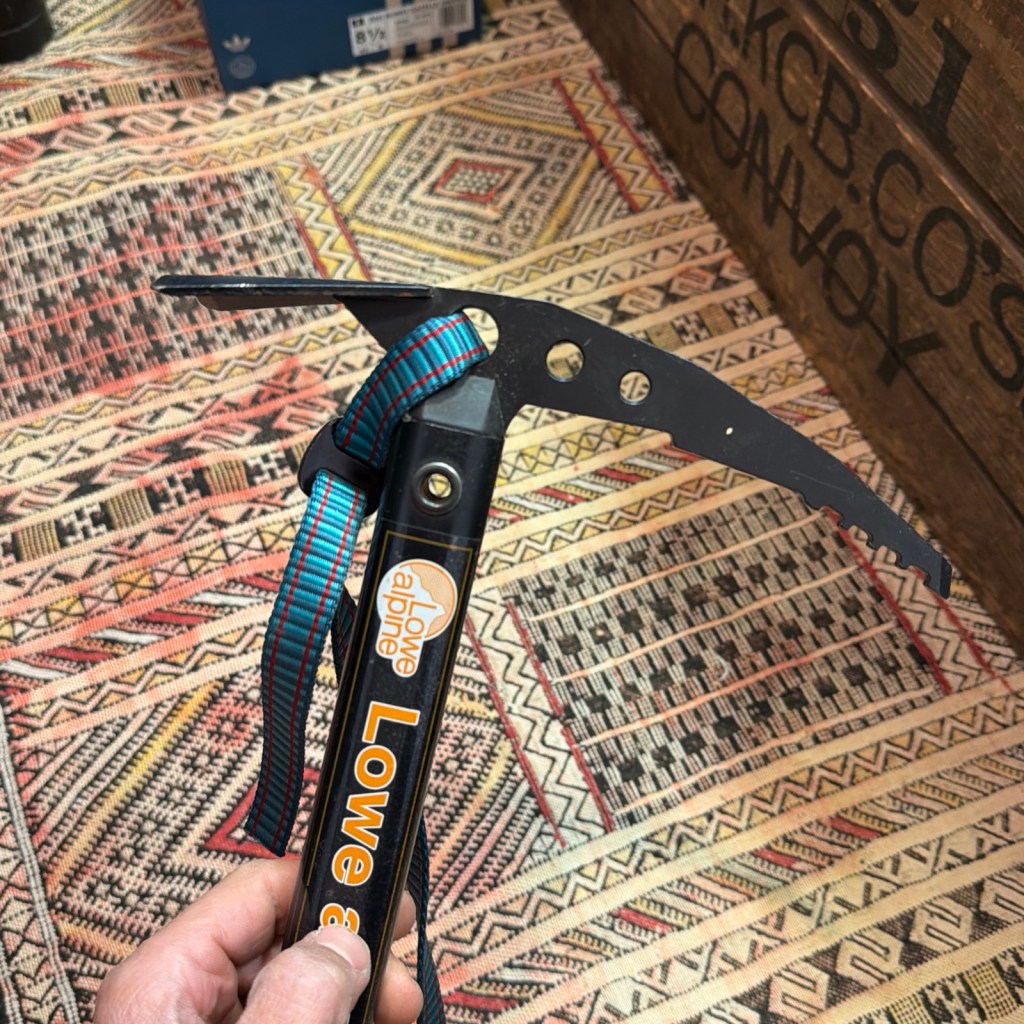
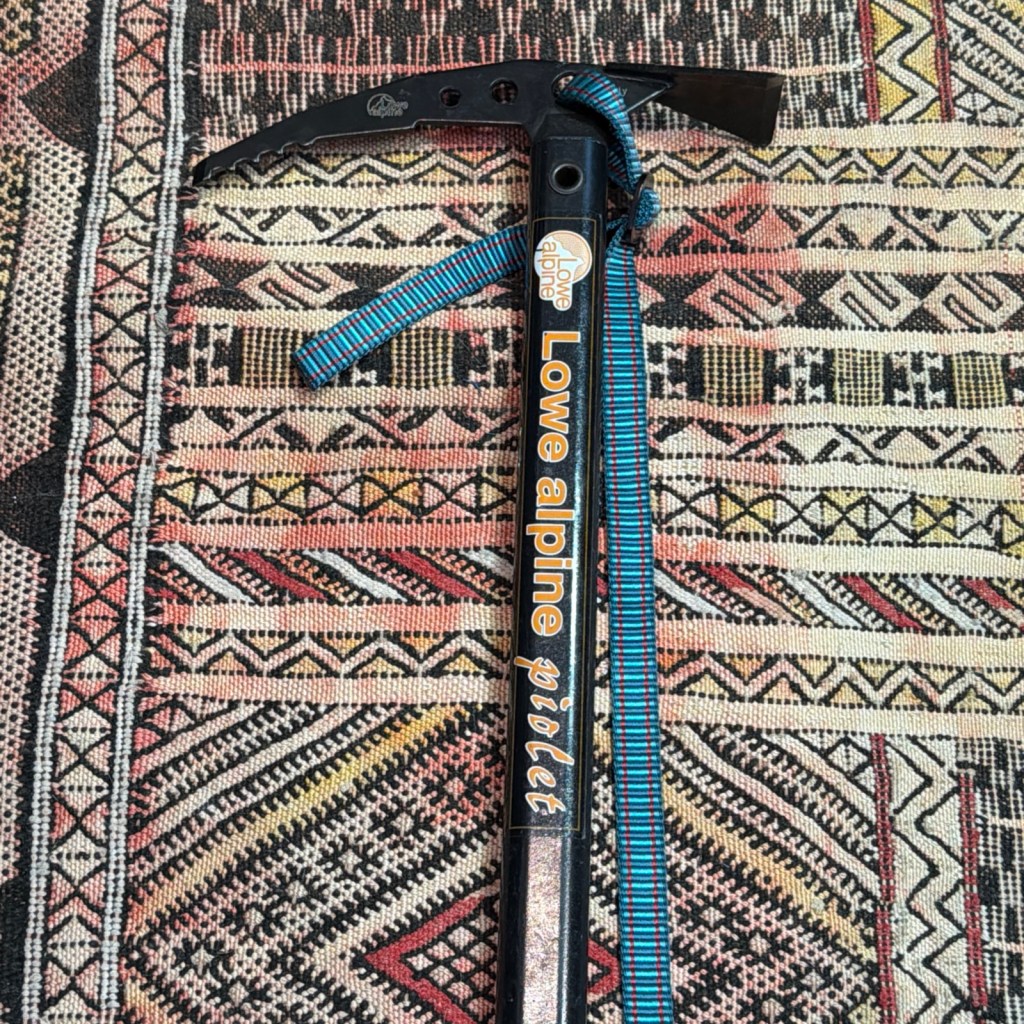
This 70cm (27.6”) Lowe Alpine Piolet is a classic straight-shafted mountaineering axe from the brand’s hardware period. The black aluminum shaft is clean and purposeful, the pick carries a classic mountaineering curve built for firm snow and glacier ice, and the broad adze is made for step-cutting and self-arrest. The spike is sharp and true.
Ice axes bearing the Lowe Alpine name rather than their hardware sub-brand, Latok Equipment are uncommon. This isn’t a mass-market tool. It’s a genuine relic from a company that didn’t just sell gear to mountaineers. They were mountaineers.
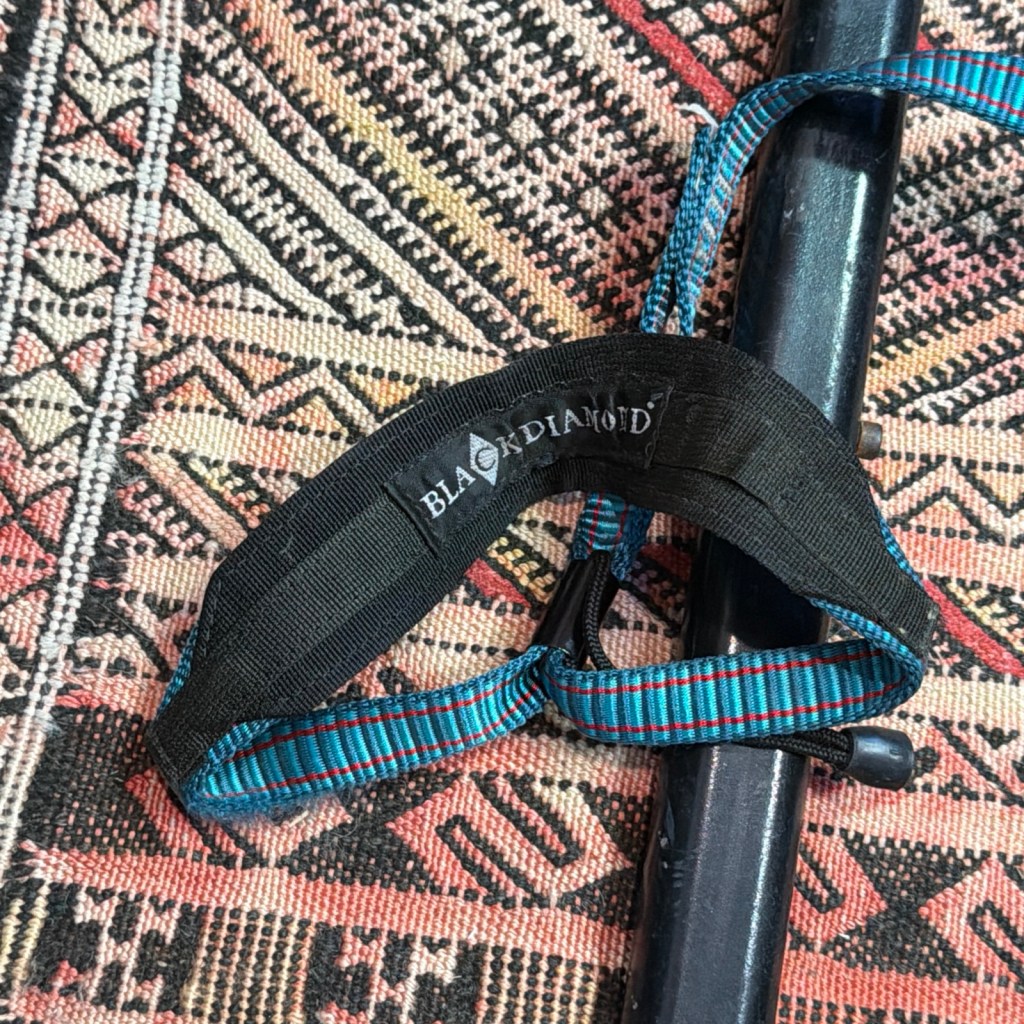
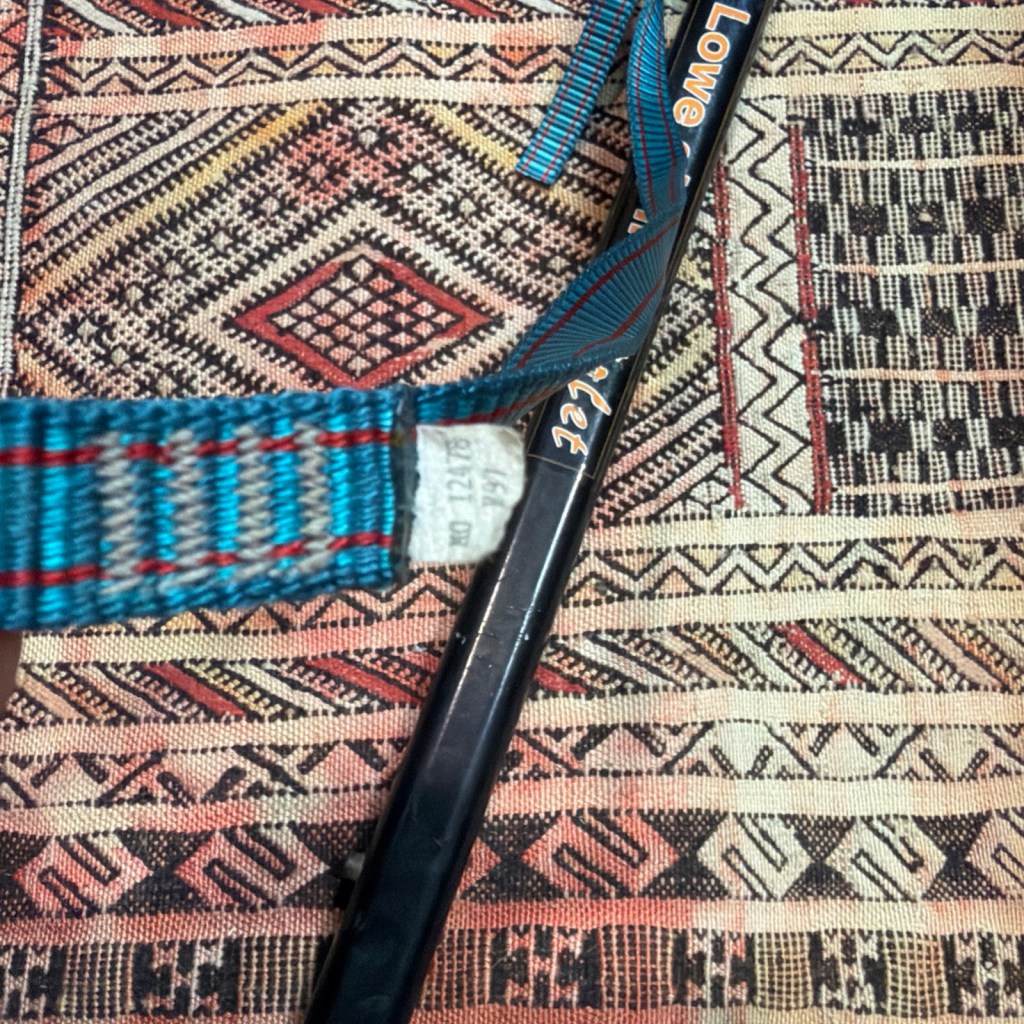
The Black Diamond wrist leash is still threaded through the shaft appears to be dated 1997.

1973/74 The Great Pacific Iron Works Ultima Thule Pack

After over a decade of looking for packs at thrift stores, garage sales and flea markets I finally found a piece from The Great Pacific Iron works. I was relatively quick to discover the model of this frameless backpacking unit as the Ultima Thule. Digging further into some of the nuance of this bag compared to others, I believe its 1974 model. 73 would coincide with the first year of the shop label, but a catalogue for that year states the pack has a yellow duck canvas back. The difference between this and later models being the conjoined top flap strap. The two-to-one design is replaced by two individual straps for the 1975 catalog.

The early 70s were a coming of age period for backpacking and backpacking gear. While most other pack makers were designing and developing lightweight aluminum frame packs for multi night use, Chouinard and co were already bucking the trend. The Ultima Thule was designed for use to, from, and on the crag and slopes. For this reason, they forewent the frame and instead made a pack that hugged the wearers body to help maintain balance and center of gravity. If you’ve ever donned a loaded up frame pack you know the feeling. Load’s sit comfortably off your back but the slightest tip or tilt can have you quickly repositioning your feet below to keep from stumbling. For Chouinard, this instability simply wouldn’t due on the talus and slopes.

What looks like an over-sized day pack is thoughtfully designed with the wearer in mind. The bottom compartment, opens all the way around the waist into what are referred to as “dewlaps”. This compartment was meant to be stuffed full with a sleeping bag and other soft goods to create a firm base for the rest of the load to sit upon. The Velcro belt, enables a nice cinch around the waist and allows the load to ride on the wearer’s hips. “Let your hips shoulder the weight” one pack maker said in their advertisements. The top compartment is separated into to side-by-side silo pockets which is nice for equipment containing fuel, or anything that best rides upright. Reinforcing via rivets and nylon webbing ensured you could stuff this thing like a turkey without it splitting. When packed thoughtfully, it also helps maintain that center of gravity the company was going for. The top flap offers a good amount of space, but has no side gussets, so more practical for maps and smalls. An intentional design meant to keep from top loading weight of the pack.

The material on the pack is pretty standard for the time. A heavy, coated nylon in a royal blue. Perhaps the biggest wow factor, aesthetically at least, comes from the green duck canvas backing which extends from just above the shoulder straps down to the inside of the “dewlaps”. With this pack adhered to he wearer’s back, I am sure the duck canvas offered at least some sweat absorption. Shoulder straps are reinforced with a riveted leather backer and feed down into the body of the pack. There’s an ergonomic crescent shape to them and they’re lightly padded. Standard leather lashing points adorn the body of the bag for side canister compartment attachments, axes, skis, poles or whatever else one would need for the adventure.

This example is rather clean for its age. There’s some dust externally I haven’t quite removed, but the true mark is the condition of that inner nylon coating which breaks down with wear and improper storage. In this pack, it’s about as good as you could hope for. The Rocky Mountaineering cord lock is a fun add-on, probably deserving of some investigation of its own write up at some point.

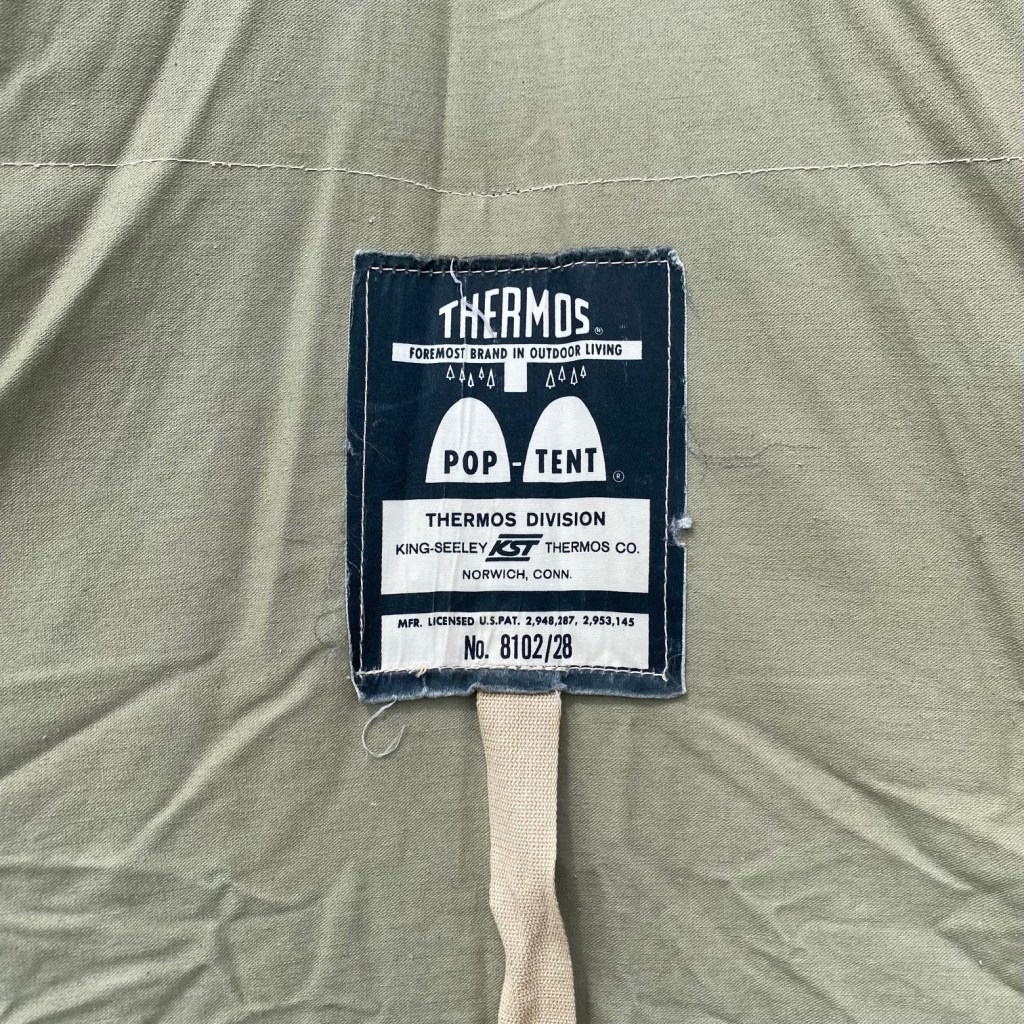
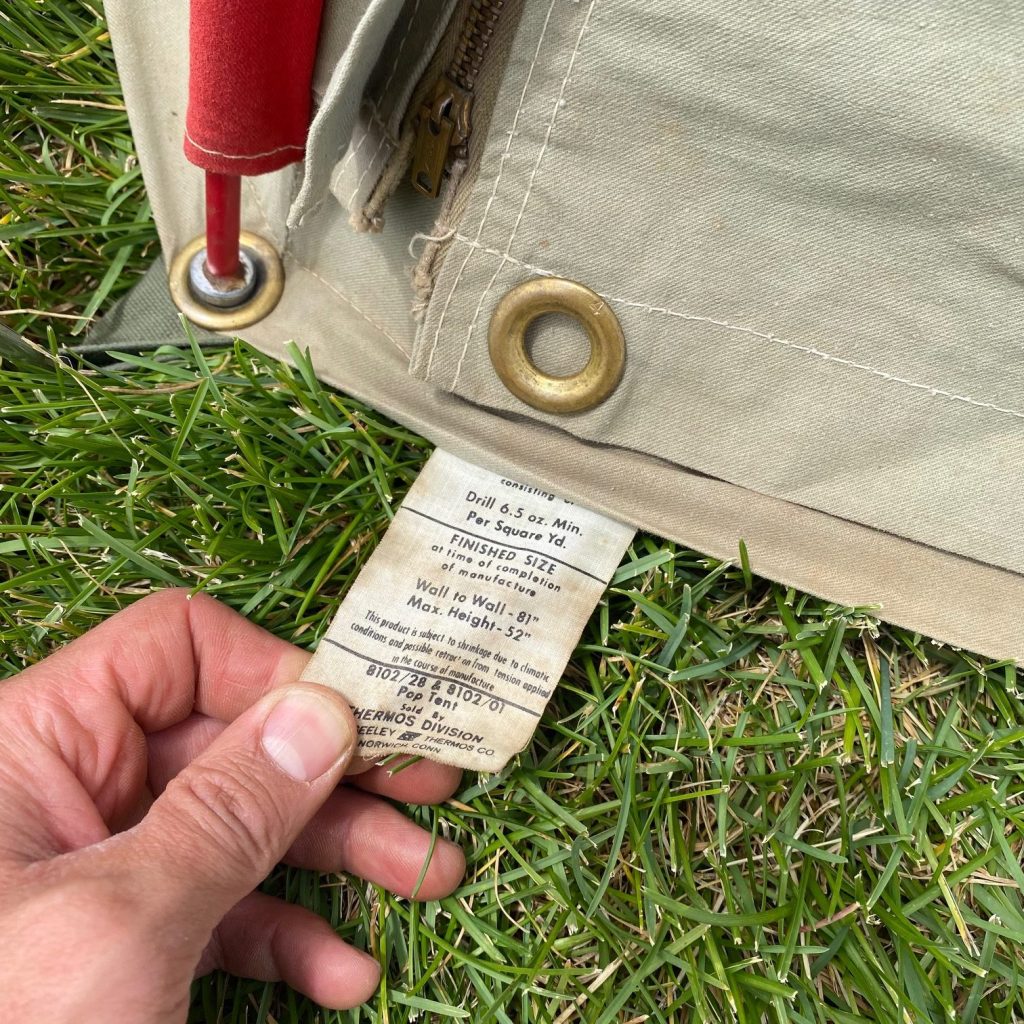
King-Seeley Thermos Co. Pop Tent – Designed by Bill Moss ~ Early 1960s.

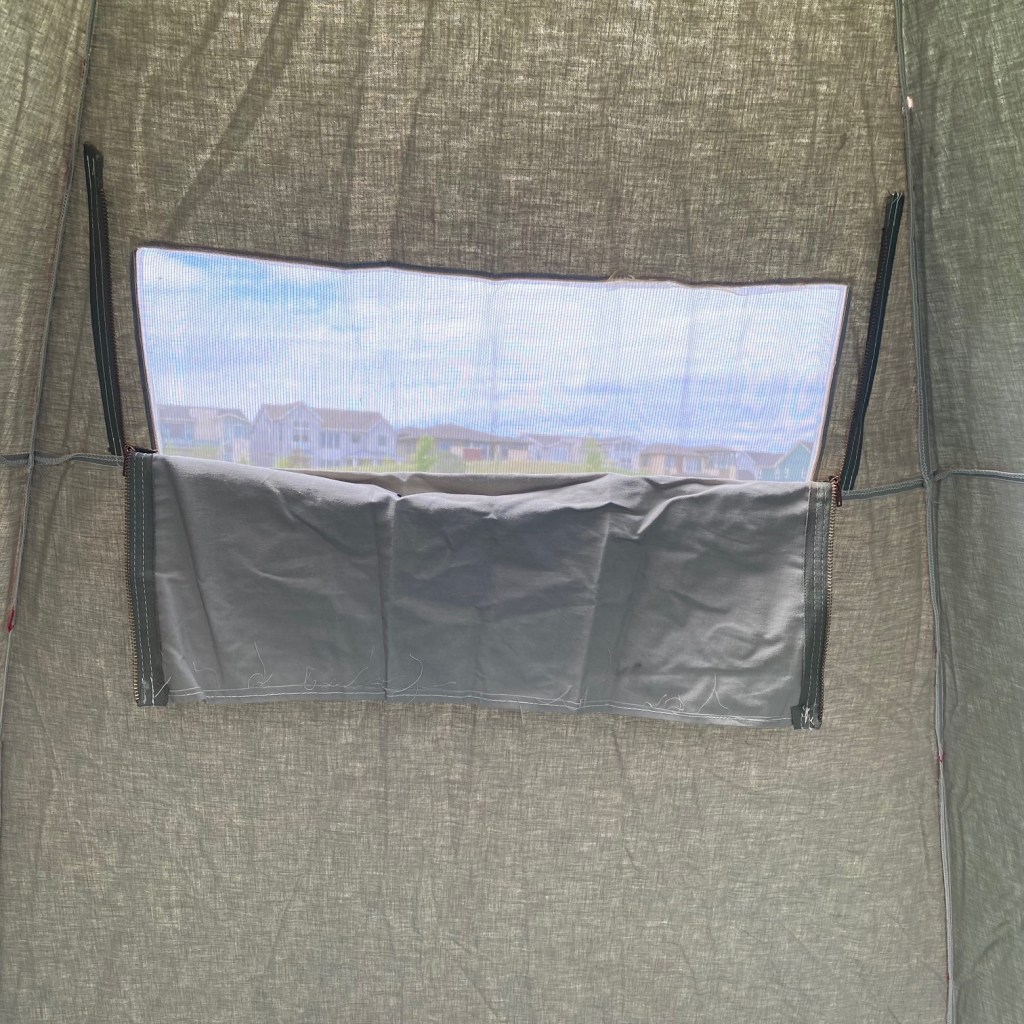
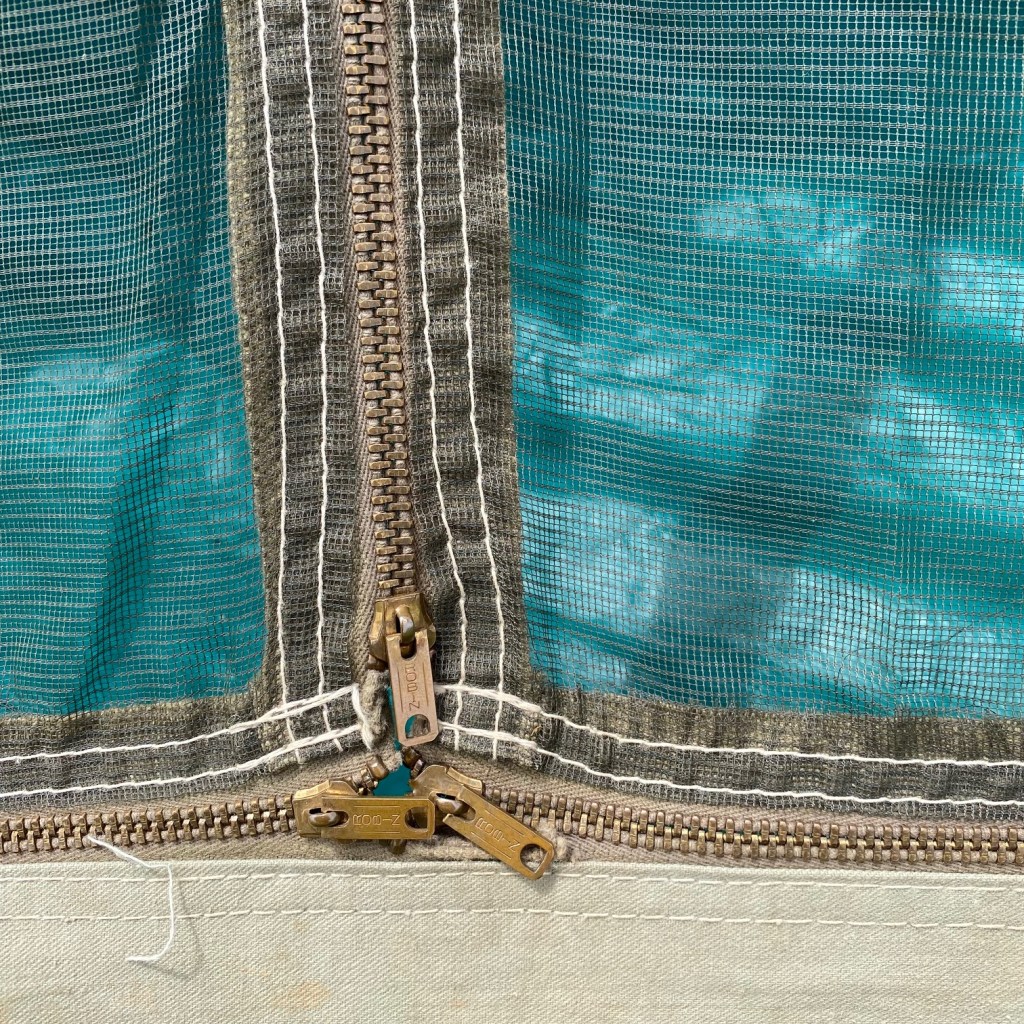
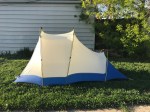
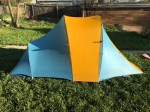
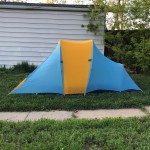
I haven’t yet found a lot to support this other than similar tents listed as such, but should the internet turn out to be telling the truth, this here is an early Bill Moss designed tent. I see this tent at the crossroads of traditional and modern camping. That intersection being the use of old school materials such as heavy canvas and vinyl, with modern construction of slim, adjoining poles creating a freestanding structure.

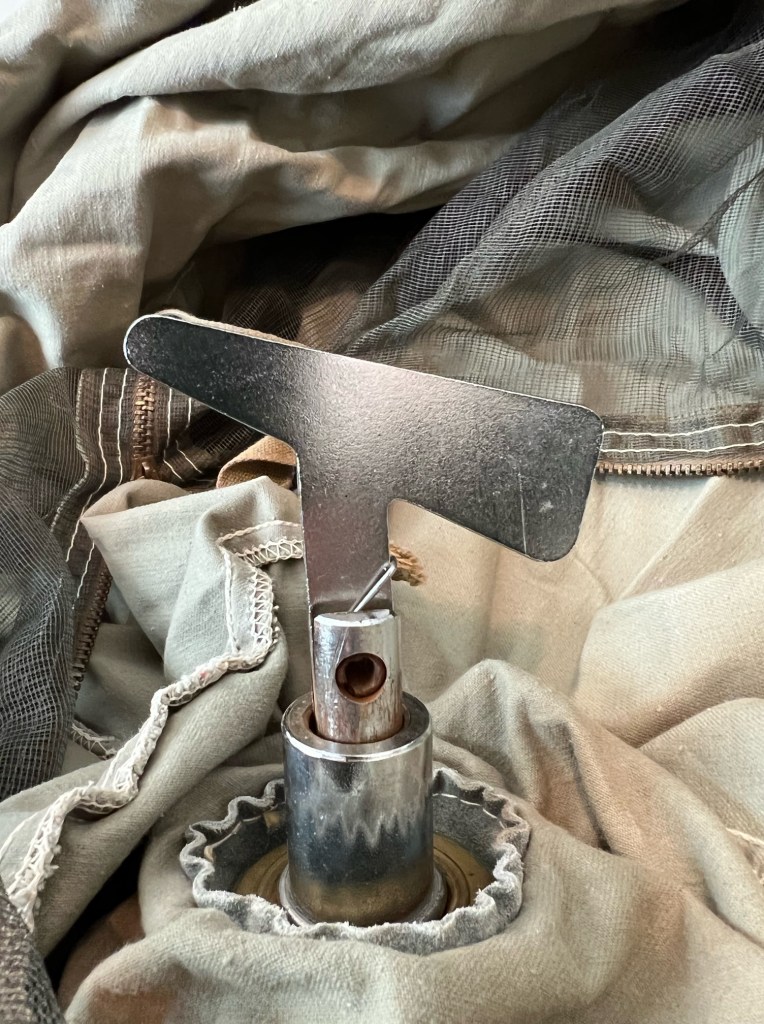
Construction of the tent includes interlocking six fiberglass poles, the top piece fixed into a mount, that when compressed, bows the poles outward into grommets at the bottom creating a freestanding dome tent. A large bolt at the top along with the internal locking lever, provide the stable tension and a means of adjusting it ever so slightly.

It’s easy to see early flashes of Moss’s legendary design in the construction and maybe the beginnings of a signature red color in the pole sleeves.

Back Country, Buena Park California Tear Drop Back Pack

Rare label I don’t have too much information on. After scanning old Backpacker Magazine issues I can say that Back Country was like many of its contemporaries a store that both created it’s own products and sold other company’s as well.  Earliest mention I’ve found of the shop is a 1976 ad for Woolrich with Back Country of Buena Park, as a retailer. I suspect they go back a little further than that though.

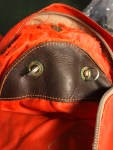
The pack itself is similar to the designs of others. It does have a few differences that I am a fan of. For one the leather seems to be of exceptional quality. It’s thick, yet still soft and malleable. I suppose this may have some to do with its previous owners treatment, but I have seen enough to know it was good quality leather to begin with.  Secondly the use of nylon on the lower straps and waist belt. where as Alpine Designs would have used leather throughout the strap,  Back Country save a tiny bit of weight and ads a little style of their own by carrying over the orange nylon to these elements.

Sierra Designs Superflash 2 man 4 season tent

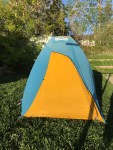
Good example of this somewhat iconic tent. Not free-standing but keeps itself up when staked at the corners. Very sturdy when rain fly is pulled over the top. Fly comes all the way to the ground. Guy lines provided added steadiness in any weather situation. Great shape. Allows two occupants to sit fully upright with plenty of room to spare over head. Tabs in the corners of the ceiling lead me to believe a gear hammock was available for inside. Not a ton of space for gear with tow occupants and only enough vestibule for the rain fly for boots, and other odds and ends not needed inside.

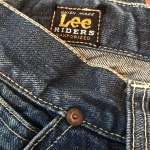
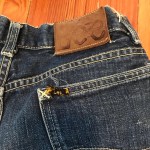
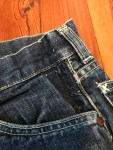
1950s Lee Riders Half Selvedge Jeans

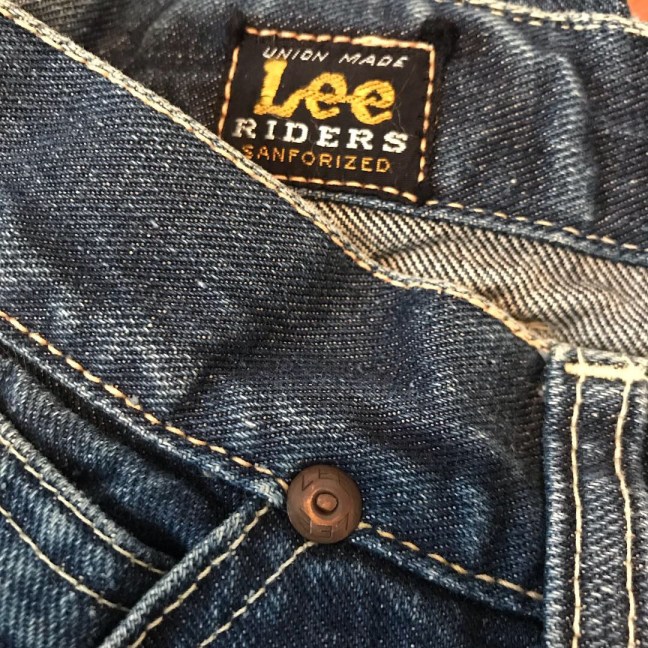
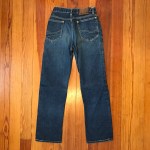
Vintage 1950s Lee Riders Half Selvedge Denim Jeans

Great 1950s Lee Riders. Half Selvedge denim construction with a Scovill Gripper Zipper zip. This particular pair of jeans measured about 28×28, but had been taken in at the waist and down the outer seams of both legs to construct a slimmer fit. The indigo was still dark,  a desirable trait for jeans of this age.  See my other Lee Riders post for an example of a slightly later pair.

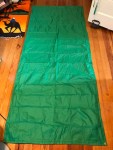
The North Face Brown Label Bivy Sack

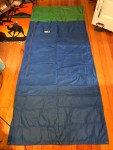
Vintage The North Face Brown Label Bivy Sack

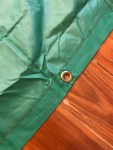
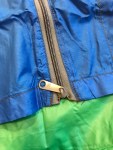
Unique early TNF Bivy Sack. Simple construction of one ply rip stop nylon in blue and green. Grommets at the corners for staking down. Not entirely sure if this was the complete unit or if there would have been a tarp or tube tent covering. Good for a layer of wind proofing and would keep your bag clean as is though.

Measures 92″ overall. 76″ foot to neck and 39″ wide.

Gerry Rucksack with Fiberglass Back Board

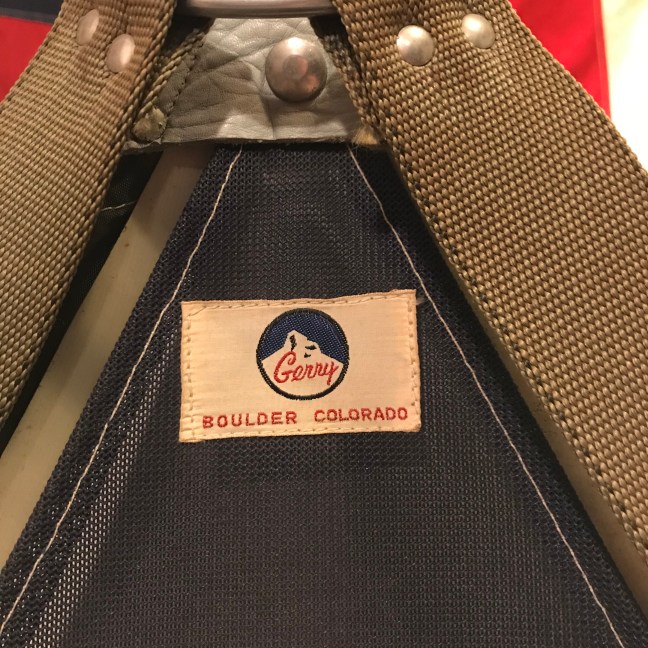
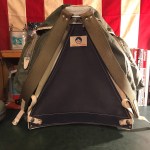
This is an early Gerry rucksack. As I’ve probably mentioned in other posts, the earliest outdoor gear was simply repurposed military surplus and this bag shares many characteristics.  Beyond the olive drab nylon the bag resembles very much a European military pack. Specifically one from a company called Bergans of Norway , which was made of more traditional materials, canvas and leather.

Though the design itself may not have been revolutionary or visionary the removable lightweight back panel is.  I believe the panel to be made of fiberglass, but may just be something similar. The removable panel replaces metal support systems used on earlier packs. The updated support system with the use of lightweight nylon saved this traditional design many extra pounds.


1950s Civilian N-1 Jacket

Vintage Civilian USN N-1 Deck Jacket

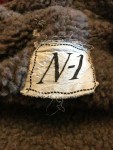
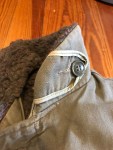
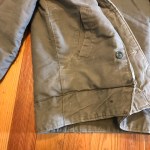
Example of a civilian model jacket design based on the N-1. The N-1, to a lesser extent of then the Air Force A-2, MA-1 and N3-B became somewhat legendary for being a well-serving, functional jacket. The problem is one had to enlist and end up in certain positions to receive one. Post WWII patterns and probably sometimes even surplus were converted for civilian use. Today you still see similar jackets being produced by everyone from Schott to Abercrombie and Fitch.

The Jacket seen here has a very similar cut and fabric composition as a Navy issue N-1. Unfortunately the liner is made up of a blended pile and not what would have been alpaca. Still the rugged cut and warmth make these civilian versions a great option for someone who wants the style at a fraction of the price for an original.