Meyer Schuchardt Leather Knickers – German

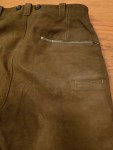
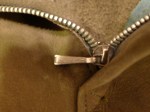
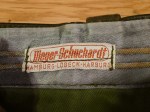
Solid built leather knickers by Meyer Schuchardt of Hamburg Germany. Constructed entirely of thick soft split grain leather with the split side facing in. Two pockets at the waist, one zipper closed rear pocket and a knife pocket on the side of the leg. 

Belted bottoms allow for secure closure below the knees. Waist and leg openings are lined with synthetic thread and raised surface to stay put by grabbing shirt or socks. (think of a rug mat) . Waist has loops for a thin belt or buttons for suspenders. Cotton pocket linings, except on knife pocket.

World War II Era US Air Forces Type A-1 Heavy Flight Boots by Bristolite

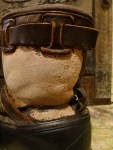
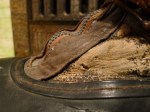
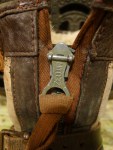
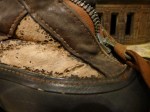
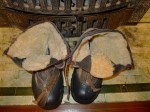
WWII era United States army Air Forces uniform A-1 shearling flight boots. The boots shown here are 10″ tall size XS and may actually be women’s boots.  Other pairs I’ve seen were larger and the tongue tag read Mens instead of Wos. Not a war historian, but can’t imagine too many ladies donned these boots in those days. Crown Zippers with ankle and upper belts and buckles for added fit. Shearling lining runs throughout the uppers except for the sole. In each of these boots are two thick wool insoles as well as a wool foot bed. Don’t know if the added soles were standard issue or later additions by the wearer to increase warmth and or fit.

Bits of the US Air Forces logo still visible on the outside of the uppers, but most of the dark tanning has come off.  These boots are of a similar era to the Type A-2 jacket seen on my blog, but a little later.  The U.S. Army Air Forces became the U.S. Air Forces in 1947.
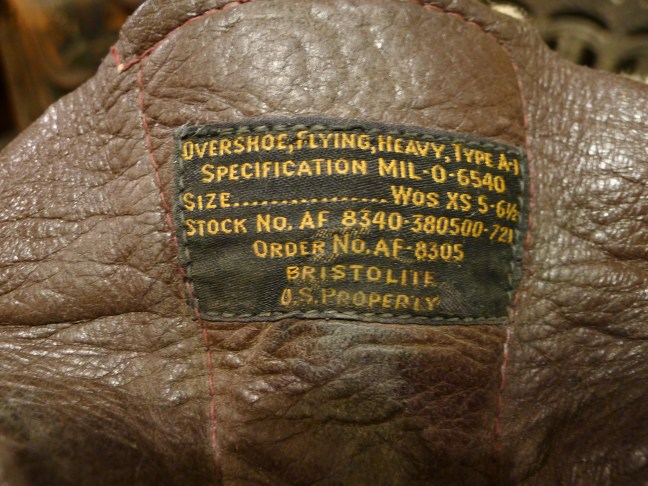
Tag reads:

OVERSHOE, FLYING, HEAVY, TYPE A-1
SPECIFICATION MIL-0-6540
SIZE………Wos XS 5-6 1/2
STOCK No. AF-8305
BRISTOLITE
U.S. PROPERTY

Danner 31570 Gore-Tex Hiking Boots

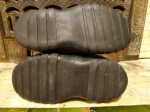
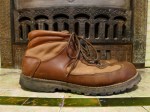
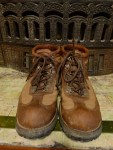
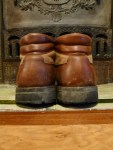
Great boots from the great northwest. These Danner Boots are like none other that I have come across before and you’ll be hard pressed to find another pair in this style. Marked as 31570  040035, these boots share have similarities with the famous Danner Light in the form of mixed  material uppers, but are lower cut with a more casual feel. Still fully lined with Gore-text they ready to take on just about anything, from the city streets to the mountain trails.

In the early 80s, the use of synthetic fabrics in hiking boots began to take hold. Cordura along with Gore-Tex had the ability to greatly reduce the weight of a pair of boots while still allowing for dependability and weather proofing serious hikers had come to expect from their earlier leather tanks. Boots like the Vasque Sundowner and Danner Light exploded in popularity and pretty soon every boot maker had a similar option.

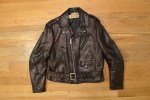
PERFECTO by SCHOTT model 618 leather motorcycle jacket – Late 1970s

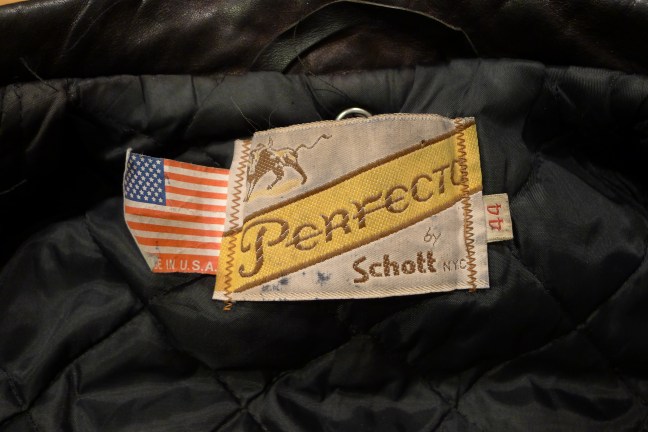
Research I’ve conducted suggests this is a late 1970s model Schott Perfecto 618. Details used to surmise this date include the Talon main zipper, lack of snaps on the collar tips, Lack of internal breast pocket (map pocket). Also the upward closing pocket zippers and label details. Many of these items were changed in the early 80s. YKK zippers were introduced and pocket closing direction were reversed. There is some debate among enthusiasts when the other updates were made. A conversation surrounding about a very similar jacket can be found here on SchottNYC.com  This particular version is made of steer hide. 

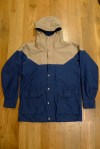
Mountain Equipment Co-op Parka

In short, Mountain Equipment Co-op was founded in Vancouver, BC circa 1971 by a group of individuals sick of crossing the border to shop at REI in Seattle. This malcontent for border crossings and a passion for quality outdoor goods has led to the MEC to become one of the largest co-ops of outdoorsmen in the world. The Co-op is still in operation today making gear for its user/owners with the same enthusiasm as they had 40 years ago.

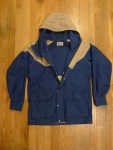
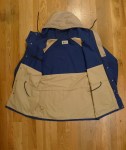
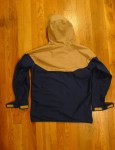
The parka seen here from the early to mid 1970s is very similar to what one would have found at REI during the same time period. It is made of a 65/35 cotton/poly blend, in an ever popular color combination for the time. What excites me the most about this parka is the thought that went in to the lining. Both the lower half of the torso and sleeves are lined in a light nylon. This allows for much freer movement as friction between the parka and any under layer is greatly reduced. The alternating of Navy and Khaki is quite nice as well.

The parka appears to have been produced under contract by Winner Sportswear LTD of Vancouver. Using local and foreign manufactures to produce items is common amongst Co-ops. Here you can see a later parka contracted by REI from Korean manufacturer Natural Comfort.

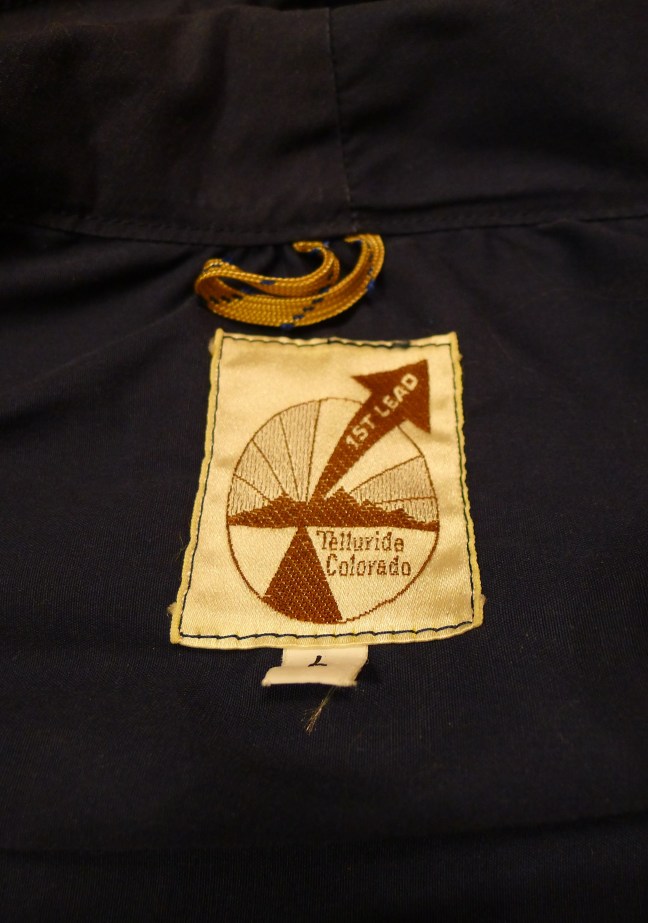
1st Lead Telluride, Colorado – Parka

This is a great parka from a rare Colorado company. First Lead exists today as an outdoor preparedness and training organization based out of Norwood Colorado, about 30 miles from Telluride. In talking with a spokesperson for First Lead I leaned the training outfit shares no direct relation to the outdoor gear company, but is cut from the same stock of friends and outdoor enthusiasts that started 1st Lead back in the 70s.   

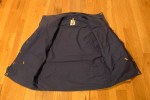
This  piece is  typical in many ways of other parka from this era by other Colorado companies like Holubar and Frostline.  A shell constructed from a cotton blend (most likely 65/35 cotton/poly). Added weight and warmth from an inner layer of the same material. Standard parka trimmings like the yoked shoulder panel and multiple large pockets for storage. Beyond that, this parka has some major difference from its competitors. Maybe the most noticeable is the lack of a hood. It’s not that it got lost, there’s not even snaps or a zipper half to attach one too. The cut of this parka is lot shorter too, ending just below the waist as opposed to mid-thigh length. Another difference is the leather backed snaps. Not exactly sure of the purposes here, I am sure it added durability to the snaps, but it also adds weight. Peaks on the front of part of the shoulder yoke point a little more than others, and there is an absence of chest pockets. Maintains traditional accouterments like the back pocket (closed by a small talon zipper), waist cinch, and Velcro cuffs. 
Can’t wait to find more gear from 1st Lead to see what other kind of things they were doing different so many years ago!

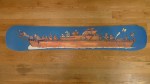
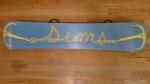
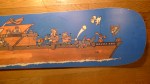
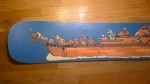
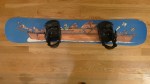
1995 SIMS Noah Salasnek – USS Salasnek – Noahs Ark

If you were riding in the mid nineties you remember it well, the era when snowboard graphics went from neon splashes to skate inspired middle fingers to society. Twin tip boards over took directional race set ups and Summit County, Colorado exploded into a freestyle snowboarding mecca. Noah’s Ark was the follow-up to Noah Salasnek’s monumental “Skate Deck” from the previous year. Essentially the same board, the 1995 graphics pushed the envelope further. A ship full of unsavory characters, hoodlums, gangsters, skaters and brawlers represented snowboarding’s new direction.  This board is seen with period correct Sims pre-ratchet, full-based low back bindings.

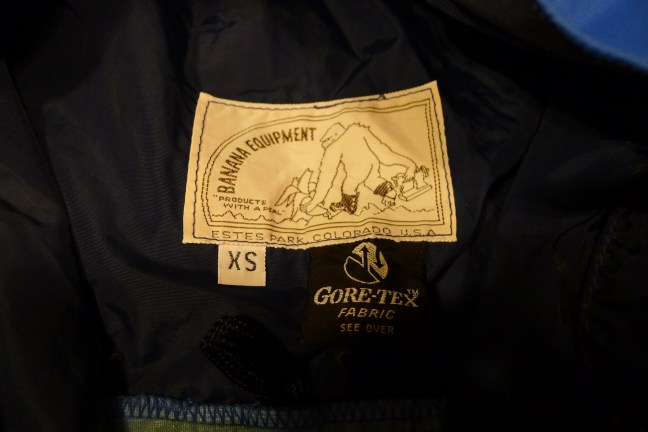
Banana Equipment Anorak Parka

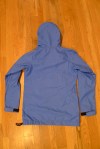
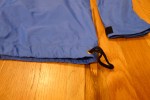
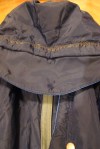
Banana Equipment is among my favorite of all the early Colorado labels. Banana’s slogan was “products with a peel” and they were one of the first companies to put Gore-Tex fabric to proper use. This simple pullover is a single light weight water/wind barrier when your out in the elements. 1/4 zip YKK zipper closure with banana embossed snaps.  Great two-piece design hood with peak and underlying draw cord for a nice,functional closure. Velcro close kangaroo pouch pocket with overlaying storm flap. Velcro cinch cuffs, and bottom draw cord round out this pieces simple structure. Back of Gore-Tex label marked IV-79, it would make perfect sense for jacket to be from 1979. Seam sealant is still visible on the unlined fabric, common on early Gore-Tex goods

Banana Equipment was founded in Estes Park, Colorado in 1972 and  the brand was later sold in 1980. Labels changed slightly over the years. At one time they bear the location Boulder, Colorado and later versions don’t contain a city at all. Recently the label has been resurrected and a new line of day packs are available. Find the new Banana Equipment at www.bananaequipment.com.


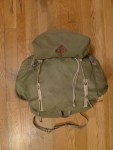
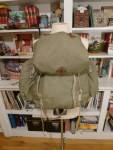
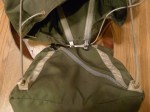
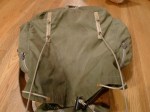
Early Gerry Ruck Sack

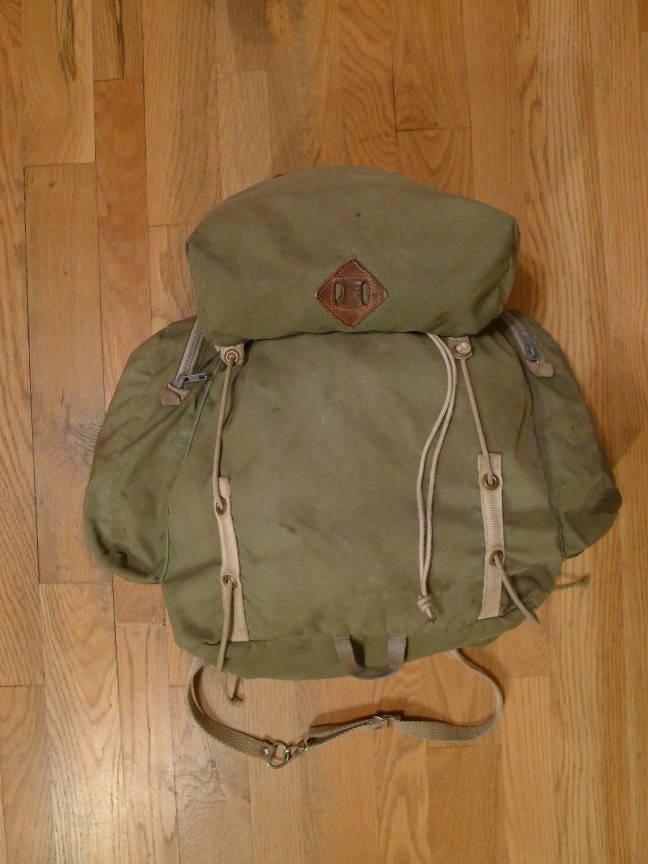
I will preface by saying this pack contains no makers markings, tags or labels. It is believed to be from early outdoor gear manufacturer Gerry based on certain characteristics.

It wasn’t until the end of the second World War, when GIs returning from the European campaign settled rejoined the fabric of american life that outdoor exploration as a true hobby and leisure exercise really begin to gain a foothold in the United States.  campaigns in the Alps and Pyrenees along with  exposure to cultures that had survived and thrived in these areas provided some soldiers with a taste for the alpine life when their tour was over. Purpose built military gear provided the basis for these new adventure’s kit.  Modifications for civilian use at some point became drastic enough that an entirely new piece of equipment was created and their creators found business in doing so.

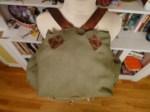
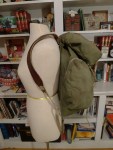
In this pack you can see the lineage of its predecessors.  Even with in this blog you can find examples of Swiss and other military packs of which this bag shares many characteristics. Heavy canvas has been replaced by lighter nylon blended material and  excess hardware associated with military use has been eliminated. The items that work remain; leather shoulder straps affixed with nuts and screws,  main compartment with external pockets for stowing items that need be readily available.  And OD Green, hey, it works and why would anyone want to stray from earth tones any way?

This pack’s tear drop shape, side compartments and top flap are consistent with another pack designed by the Gerry company in the early 60s featured on this blog here. In particular the way the top flap is secured by cords through nylon lashings and knotted. Gerry’s Gerry Cunningham was one of the earliest designer and manufacturer of commercial mountaineering and outdoor goods starting the company in 1946 after leaving the military. Since that time the company has gone through many changes and owners. Its most current incarnation can be seen at www.gerryoutdoors.com.

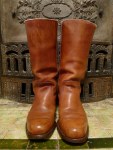
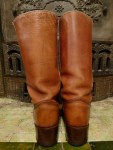
Frye 3572 Boots

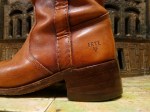
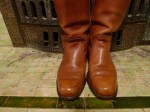
This striking boot is a model 3572 Frye 12.5″ tall riding boot done in deep chestnut-brown premium Frye leather.

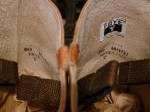
This style is similar to the popular campus boot but with a narrower toe which is slightly rounded (somewhere in between a square toe and a point). This boot also has some nice lines which differentiate it from the campus model. The vamp extends high up the ankle and does not continue to the side seem. Side seems are covered in a strip of leather and the heel panel extends from that a few inches up from the sole. They are lined with very soft white leather and have internal nylon web pulls. The sole is all leather, with 1.75″ stacked leather heel (including rubber heel sole).
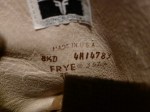
These boots are not “black label” but were probably made shortly there after the label switch. This is evident by the heel markings which use the company name as well as the logo. Predating boots with just the twin F logo.

These boots are currently available on the BCV eBay Store.