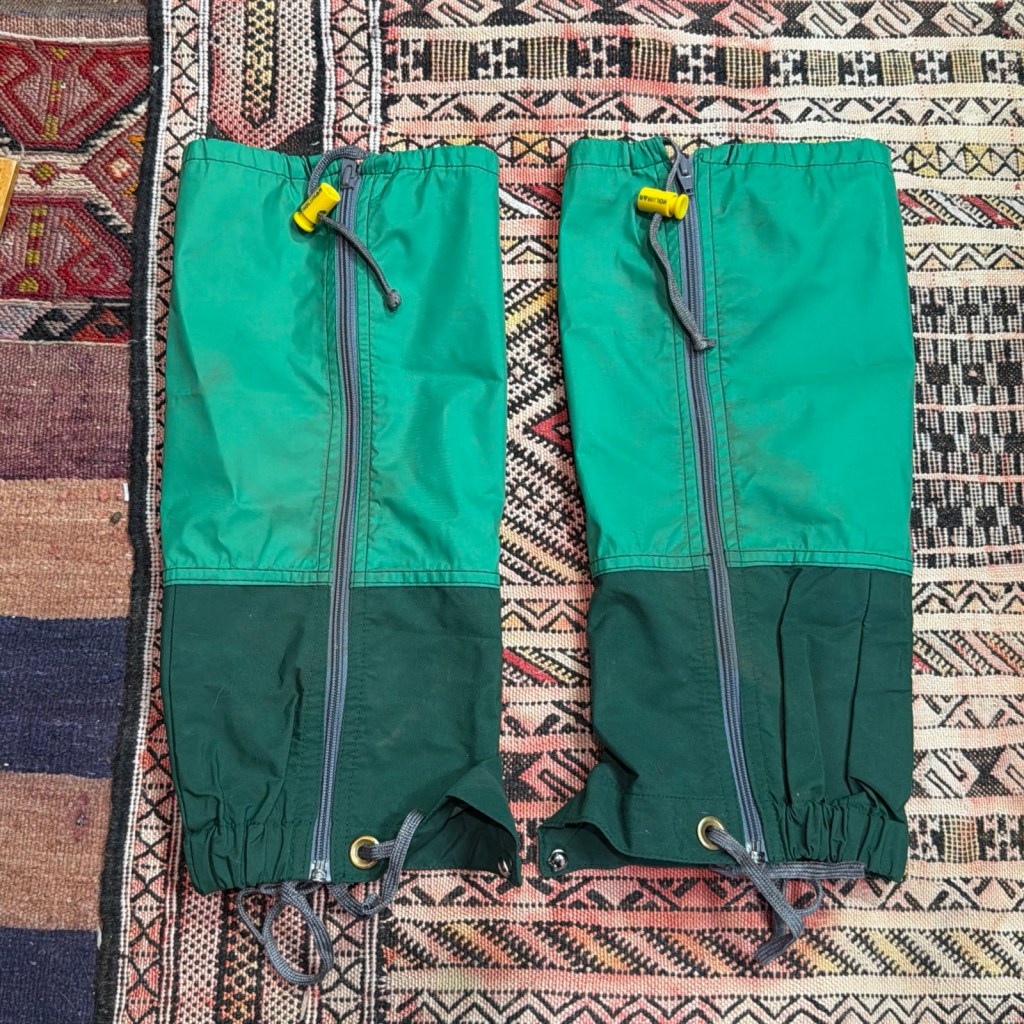
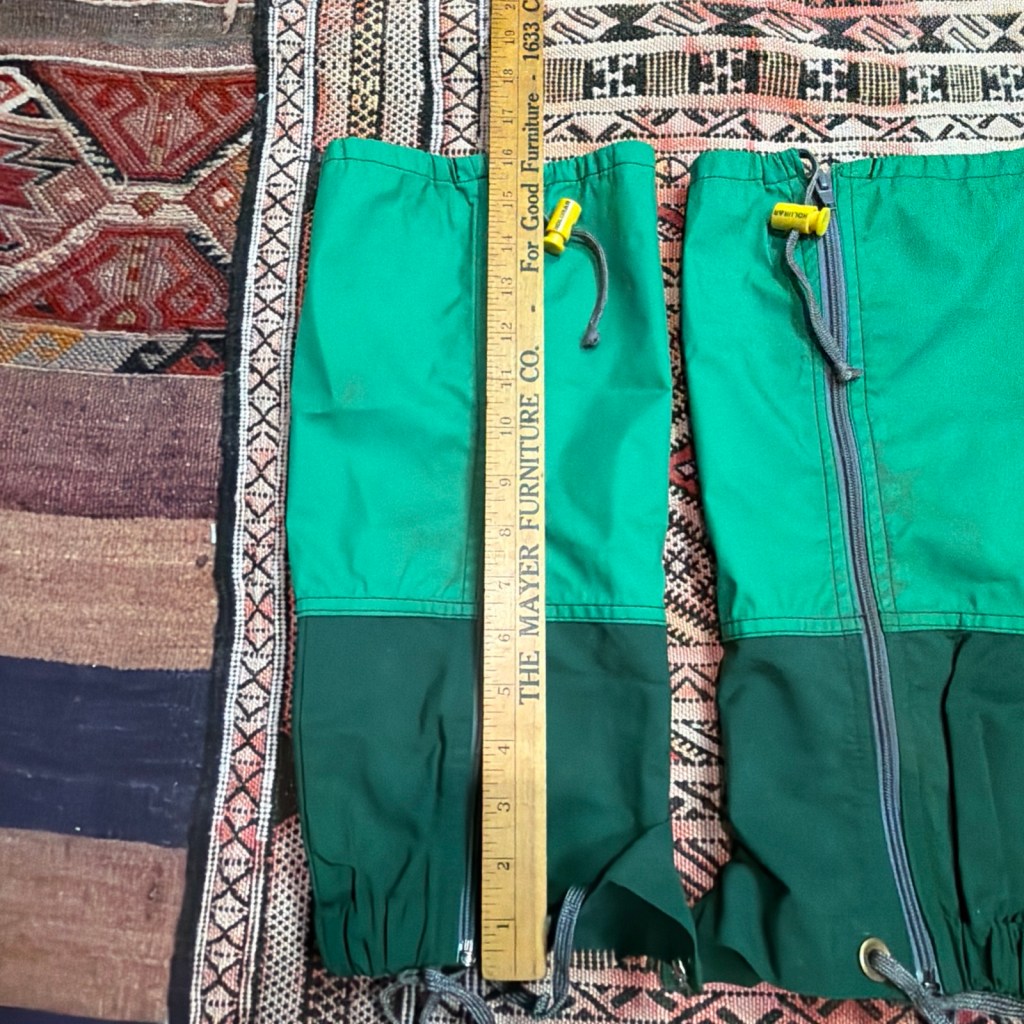
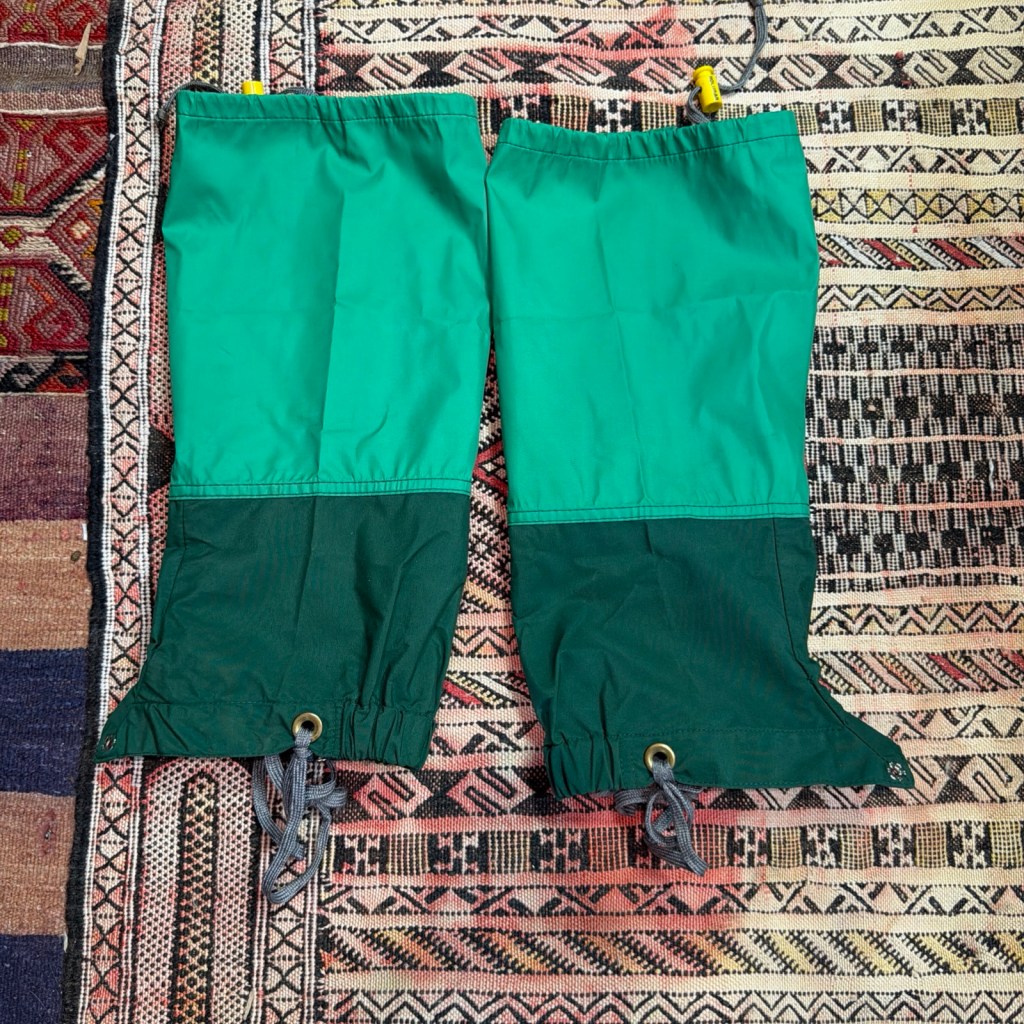
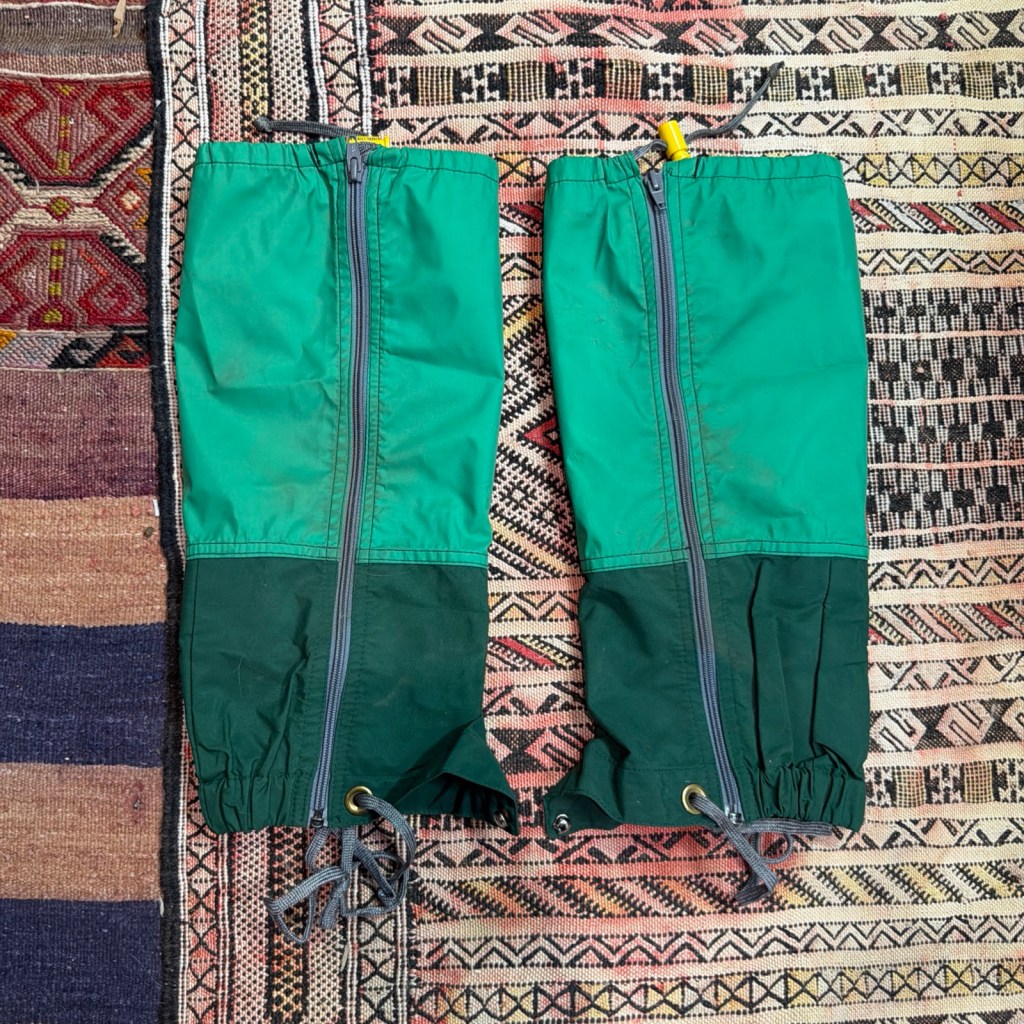
1980s Holubar Gaiters

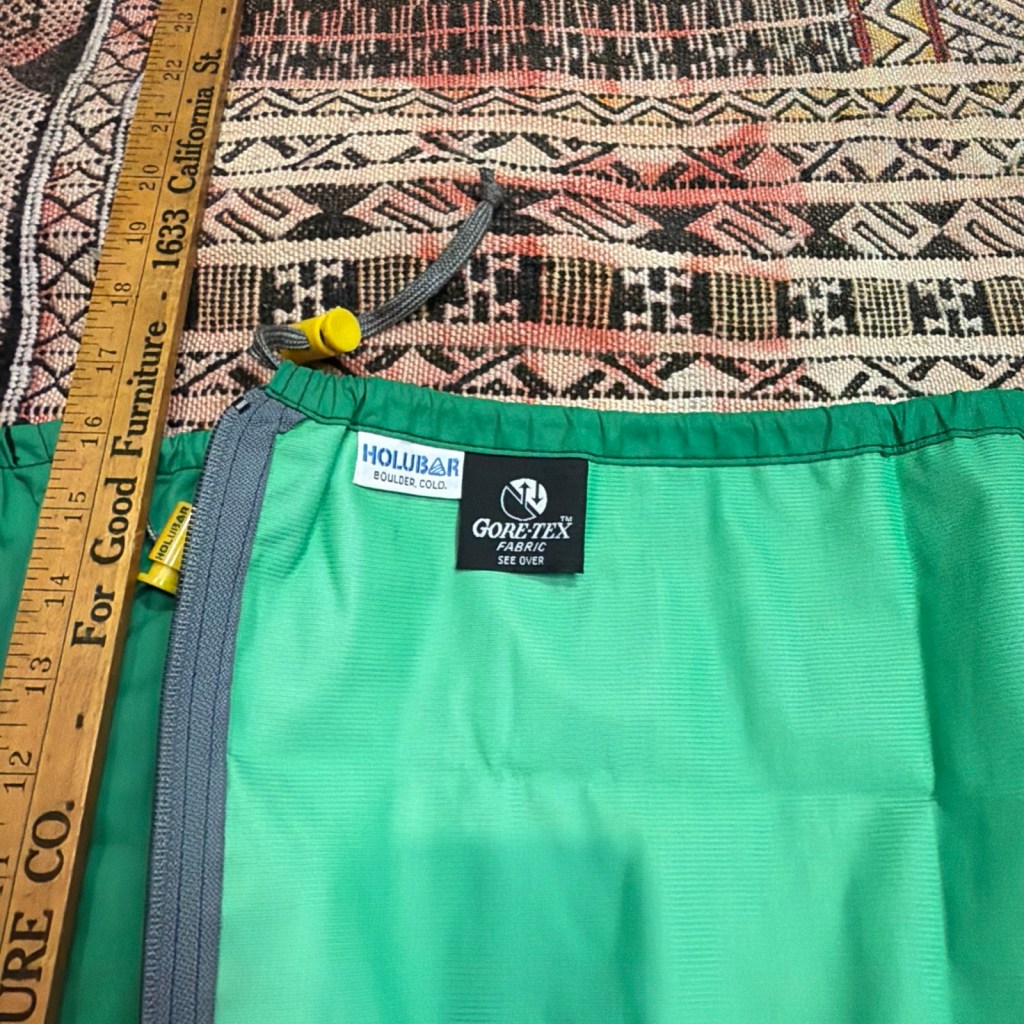
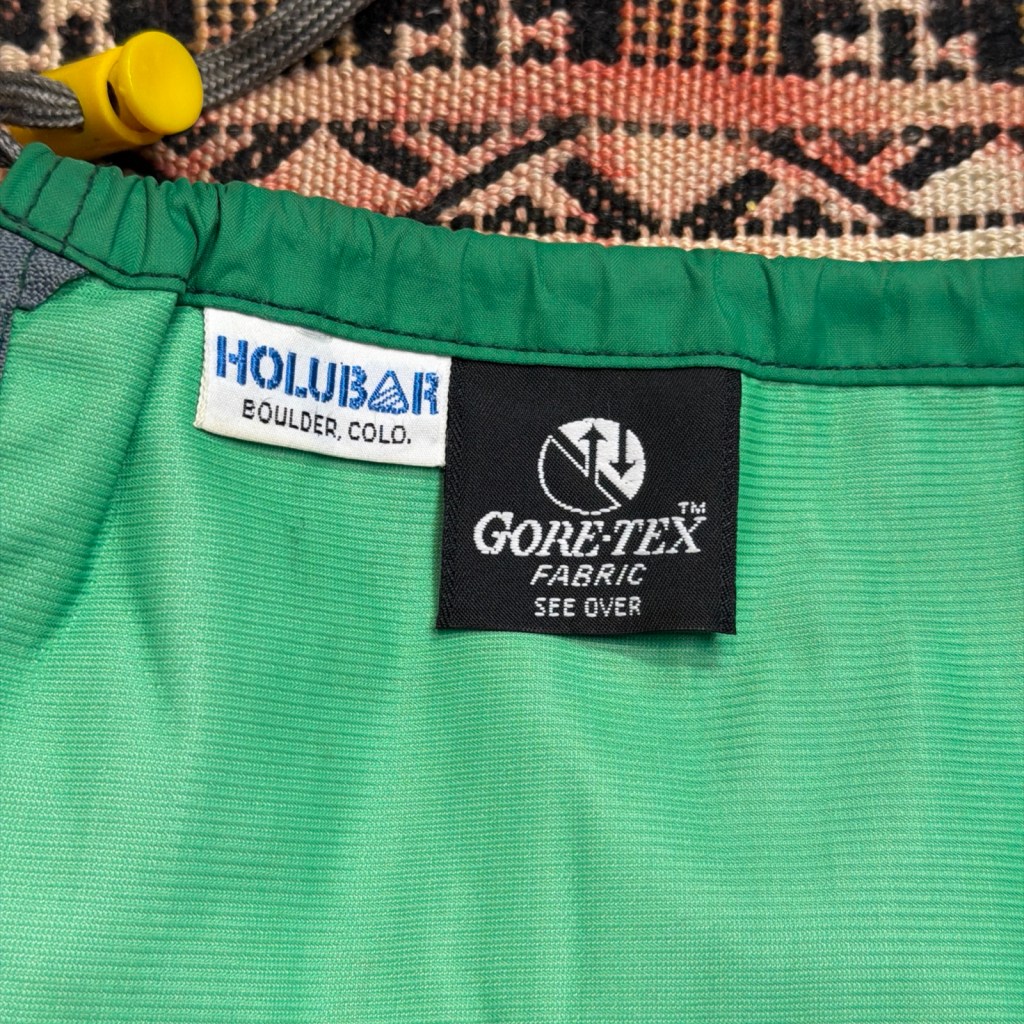
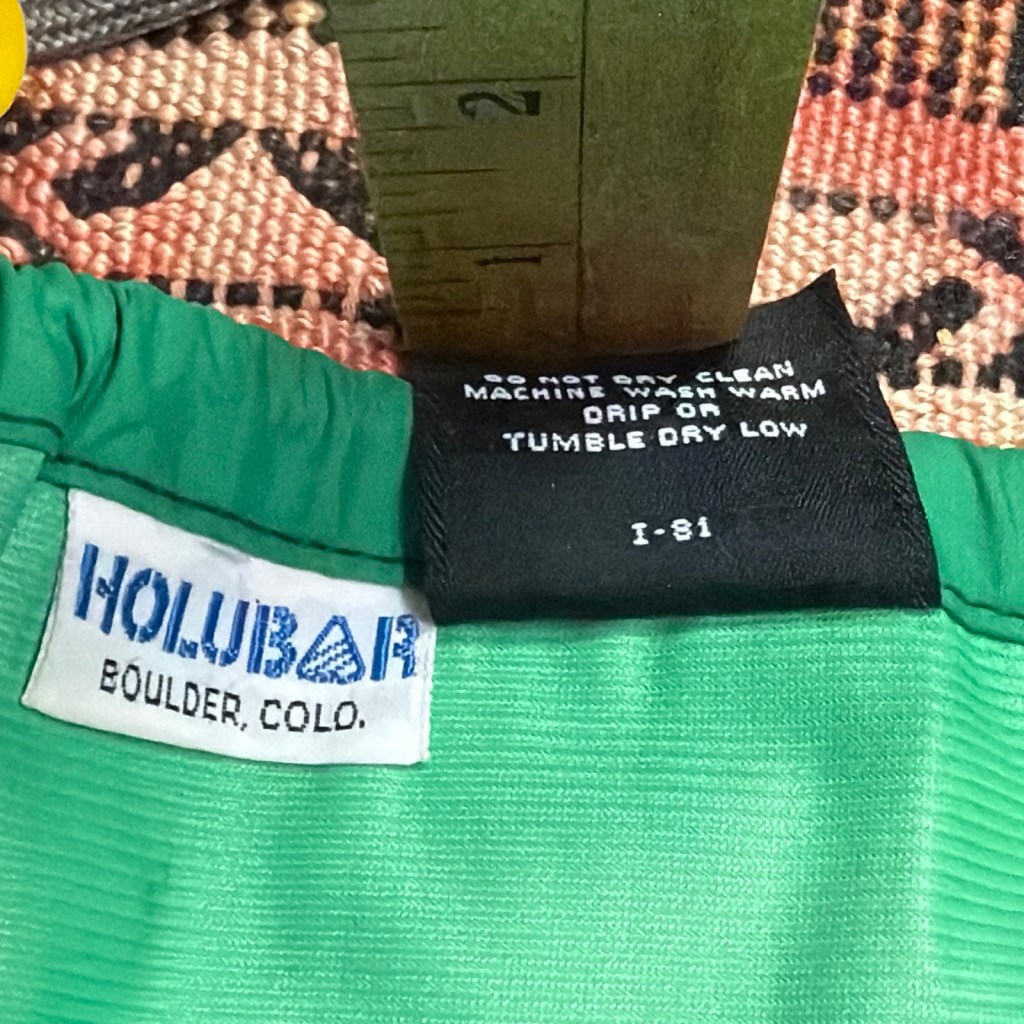
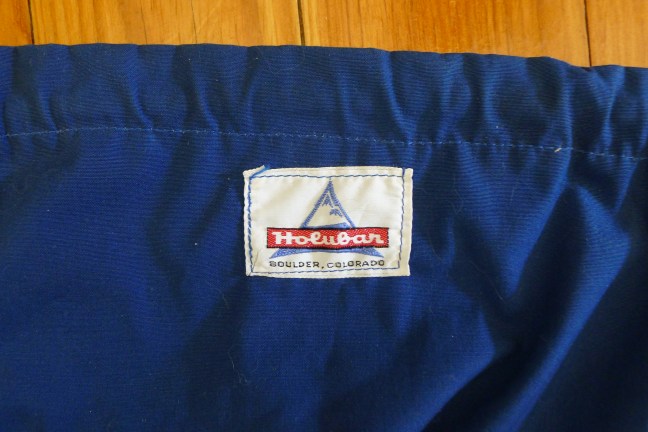
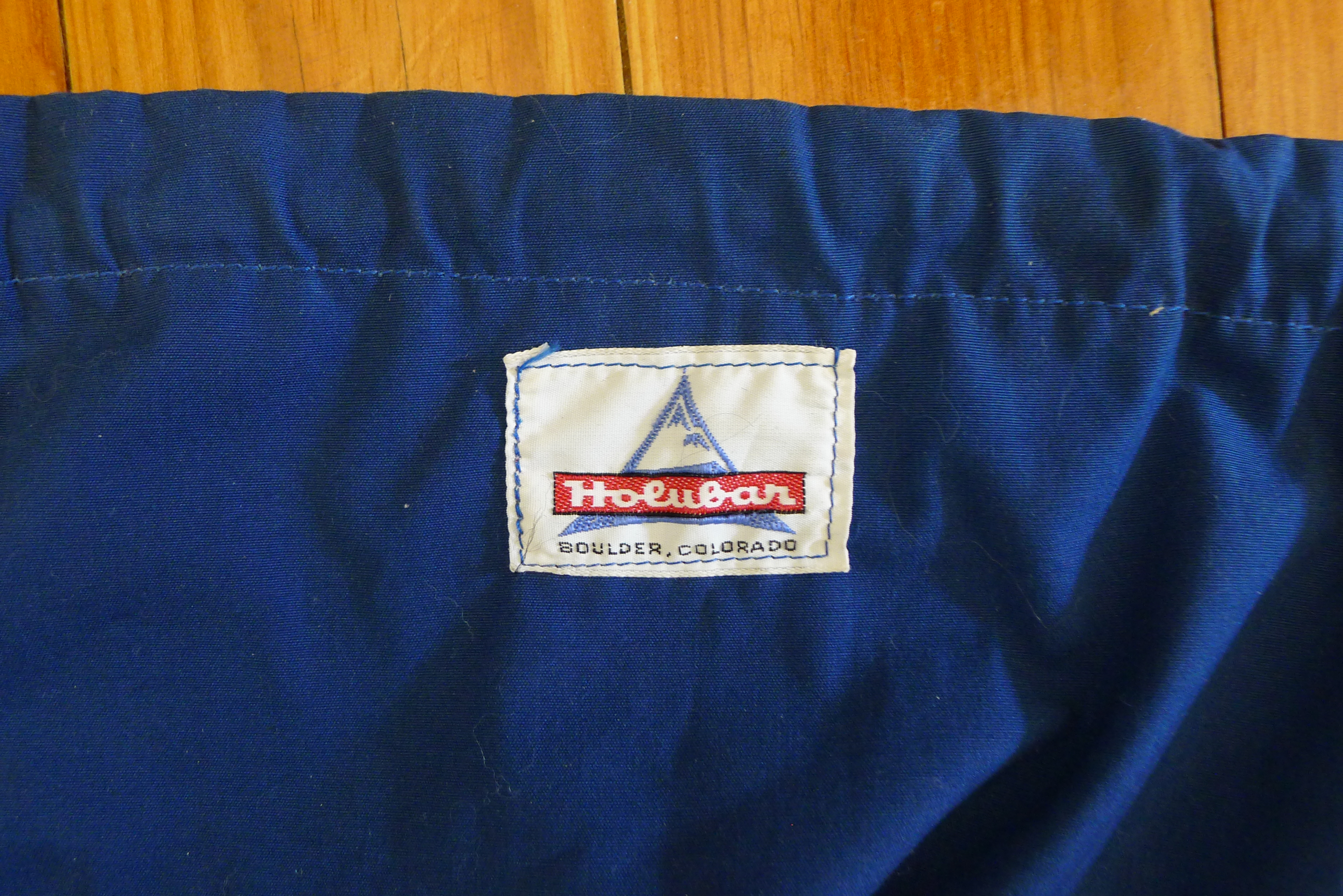
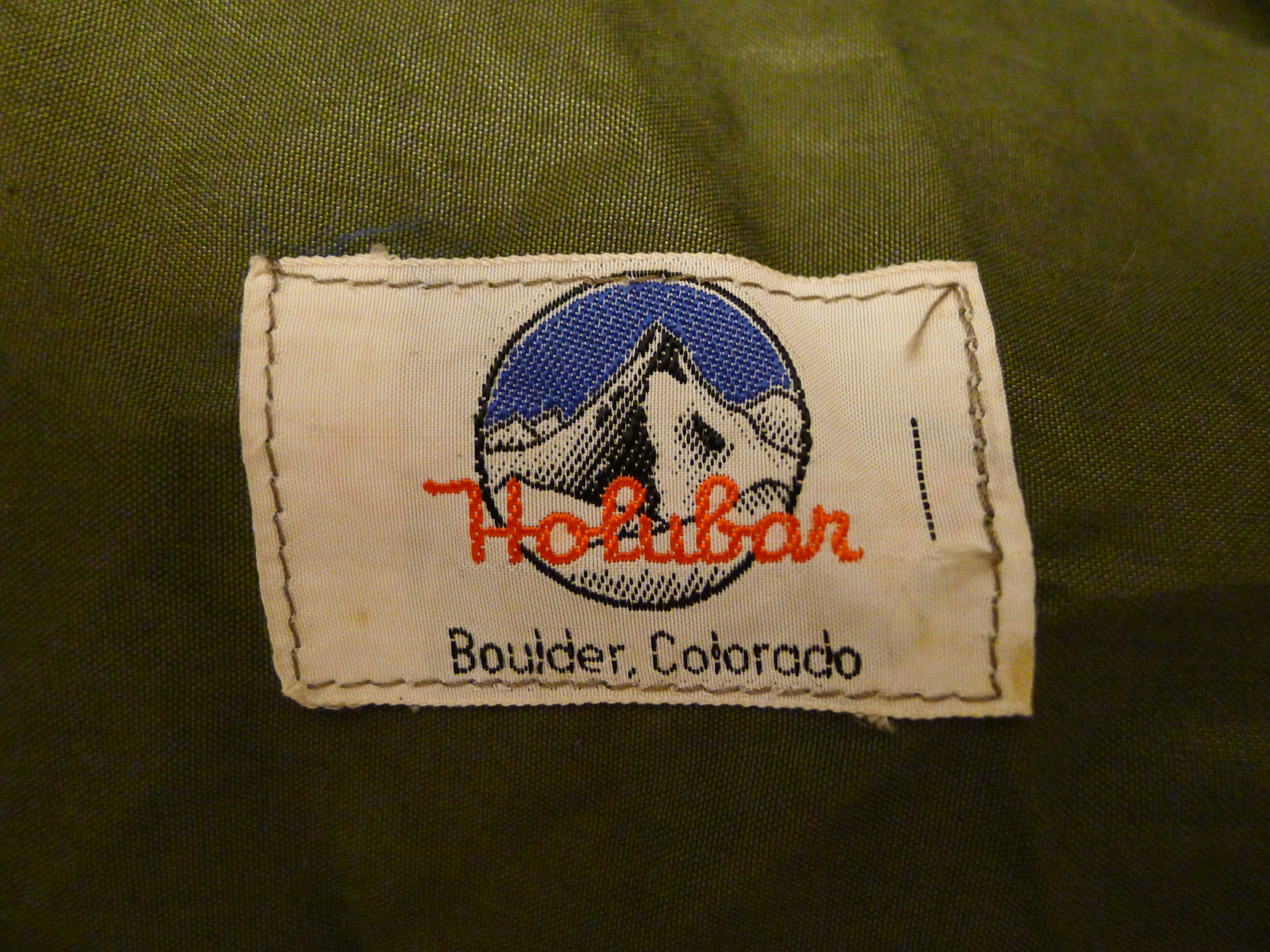
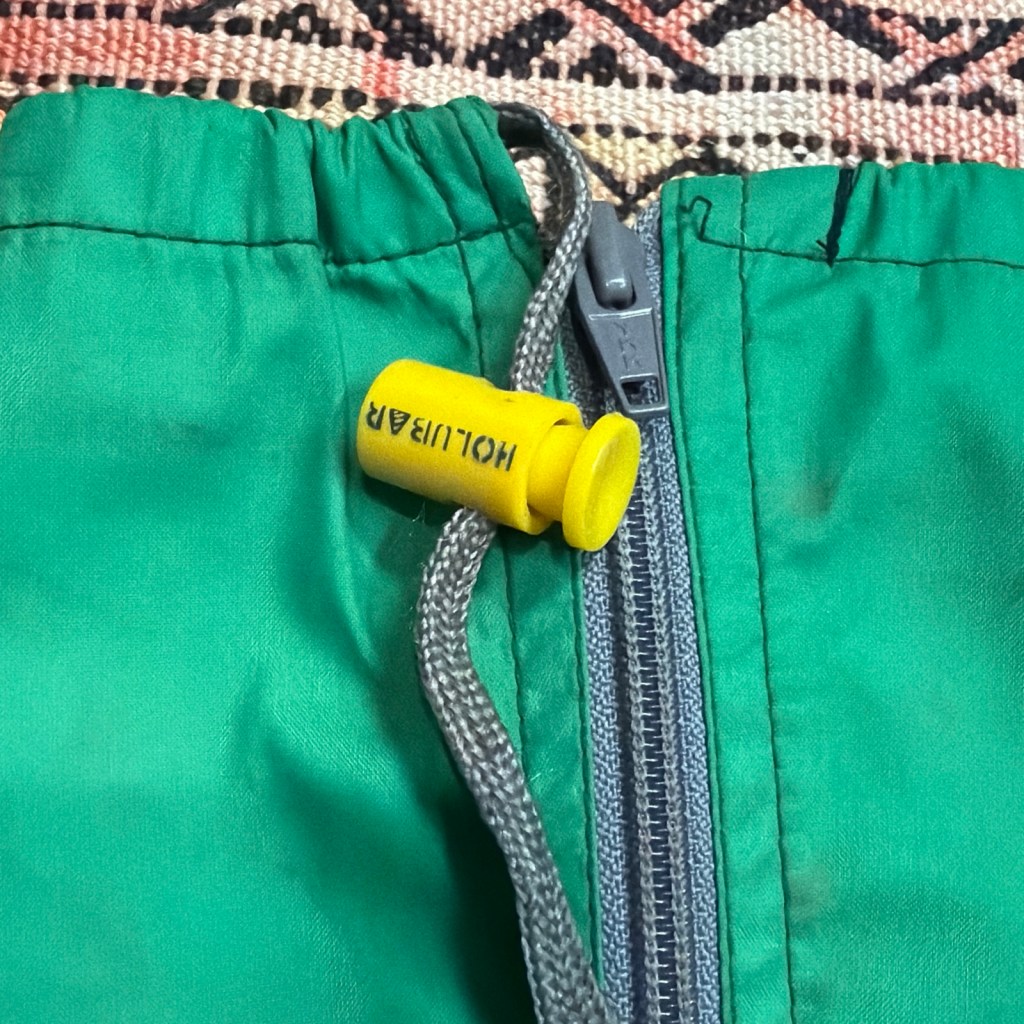
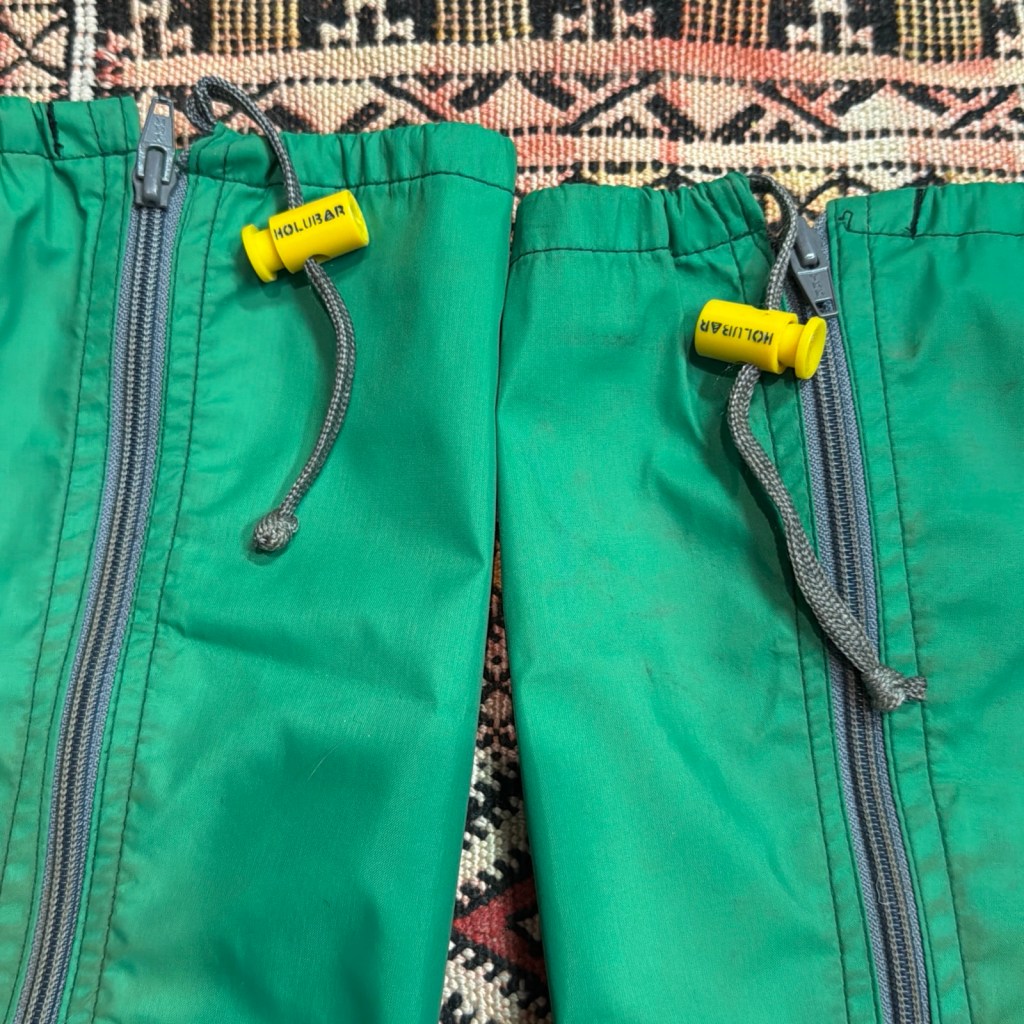
Recently acquired these late model Holubar Gaiters. I’ve seen this simplified logo prior and recognized it as being from the tail end of the brand’s initial run. The Gore-Tex label indicates a production date of 1981, which would roughly coincide with when the brand was acquired by TNF.
Holubar — The Later Years: A Timeline

1975 — The company was purchased by Johnson Wax around 1975. Despite an attempt to transition from a high-cost manufacturing model to a lower-cost design and manufacturing approach, Holubar failed to meet the business expectations of its new owner. Wikipedia

1981 — The September 1981 “North Face Newsletter” proudly announced The North Face’s acquisition of Holubar from Johnson Wax, with Hap Klopp himself signing the landmark newsletter. The nine Holubar stores across three states, the Holubar name, and all inventory became North Face’s. Oregonphotos

1981–1983 — The North Face swiftly established itself at the original Boulder store on 30th Ave., but left all the Holubar signs in place. Employees received North Face payroll checks, but their signs all said “Holubar” — no one would have known of the ownership change unless told. Sometime in 1981, a planned shopping mall forced closure of the original store, and it moved to South Broadway St., still using the Holubar name into 1983. What appeared to be “Holubar” labelled garments were actually being made by North Face in Berkeley, in gradually diminishing numbers. Oregonphotos

Late 1980s — The North Face eventually stopped producing the Holubar brand altogether. The brand had not been active in the U.S. since the eighties. WWD

Late 1990s — An Italian group led by entrepreneur Alberto Raengo purchased Holubar from The North Face. WWD

2012 — The Italian group reintroduced the Holubar brand to the European market. WWD Today, Holubar is sold in more than 500 stores in Europe and Asia, including Le Bon Marché and La Rinascente. WWD

2019 — Fashion Box USA, a new business created by Patrick Nebiolo, the former managing director of Woolrich Inc., acquired the North American license and relaunched the brand for the U.S. market. The fall collection centered around parkas and mountain jackets intended to compete with Moncler, Stone I
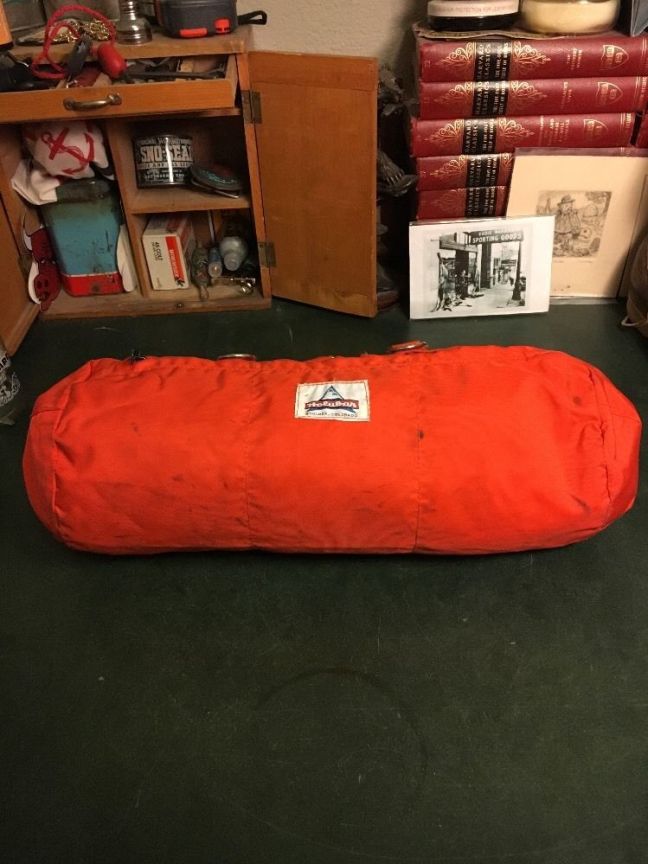
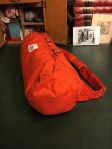
Holubar Tubular Waist Pack

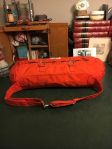
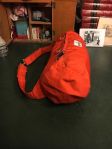
intage Holubar Orange Waist Pack Boulder CO

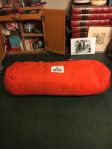
Unique tubular shaped Holubar waist pack. The pack is made of heavy orange nylon with straps constructed from the same material, doubled over for strength. The almost oddly long bag measures 18″ by 6″ high and 6″ deep. Where as most waist packs are relatively abbreviated in width to sit either squarely in front or behind the user, the length of this bag would cause it to wrap around most users. To battle this, the straps are inset on the bag as opposed to attached to the ends of the bag. D rings at the top could be used to secure rolled items such as a jacket to the outside, or possibly even to attach the pack the bottom of a day pack with corresponding lashing squares.

Carikit by Holubar Down Insulation Layer Jacket.

Holubar Carikit Down Insulation Layer Jacket

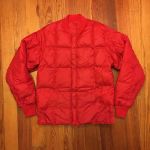
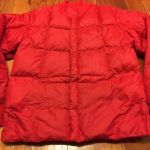
Carikit was Holubar’s foray into the sew-it-yourself market in the mid 1970s. The name was later changed to Holubar Sew-It-Yourself Kits for stronger brand recognition with the parent company. This garment could be used as a layering piece or  worn as a jacket. The style first popularized by Eddie Bauer features elastic cuffs and collar. Small snaps and two front pockets.

Holubar Royalite II Tent

Holubar Royalite II Tent

Classic and iconic design can be found in this early 70s Holubar Royalight II tent. The example seen here is unfortunately without the rain fly that would have accompanied it. The model was a semi-traditional A-frame style tent with adjoining shock-cord laced poles up front and a single pole down the center of the foot of the tent. Tent can be vented at the front and foot through screen lined windows.

The 1973 Backpacker Magazine “Tent Issue” (issue 3) praises the tent for top-notch construction quality but goes on to say, “The beautiful construction quality makes the tent’s shortcomings that much more frustrating.” Sighting the fit of the rain fly, door zipper placements and weight. The article goes on to praise Holubar’s new tent, the Chateau as a better design.

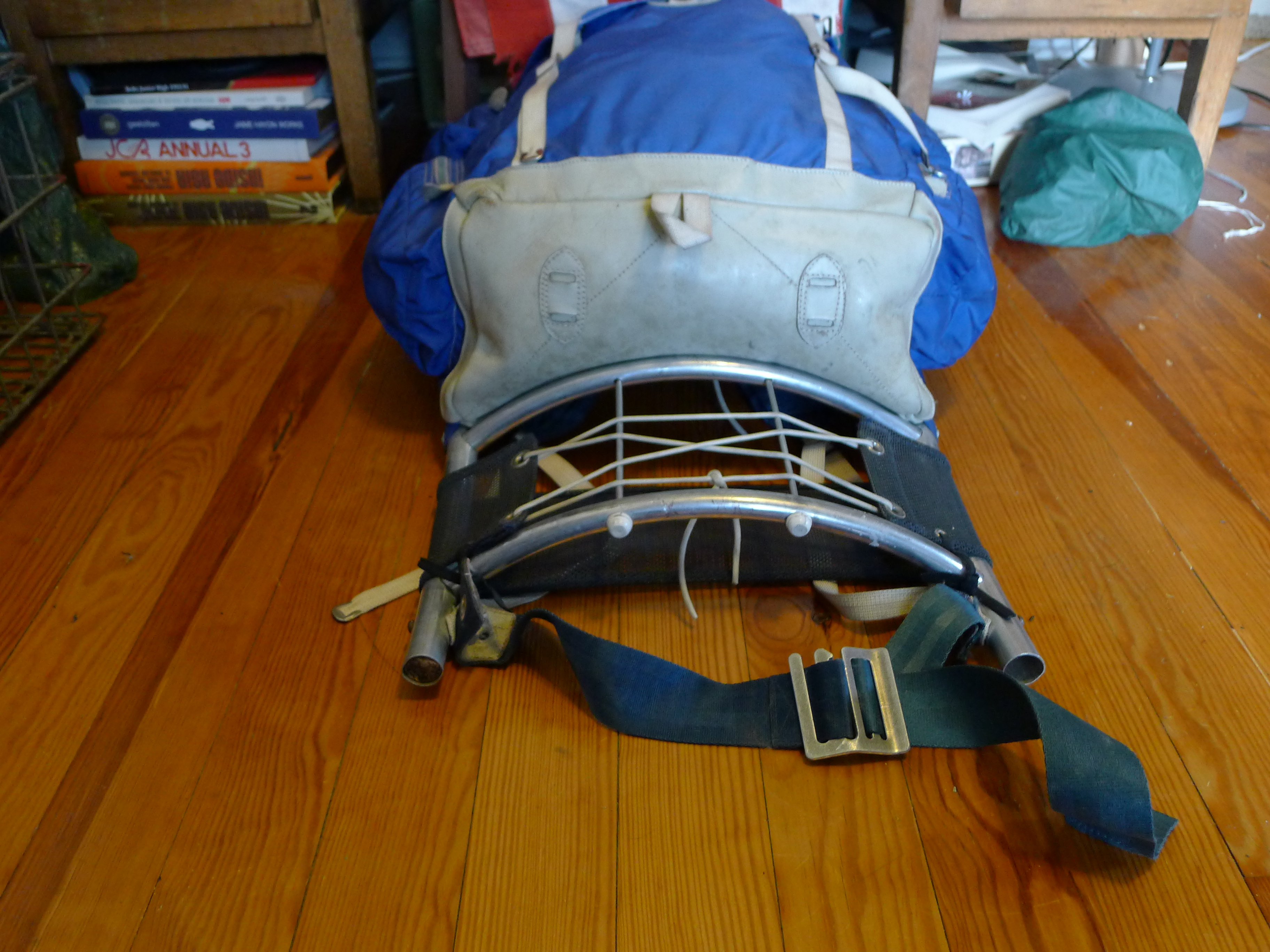
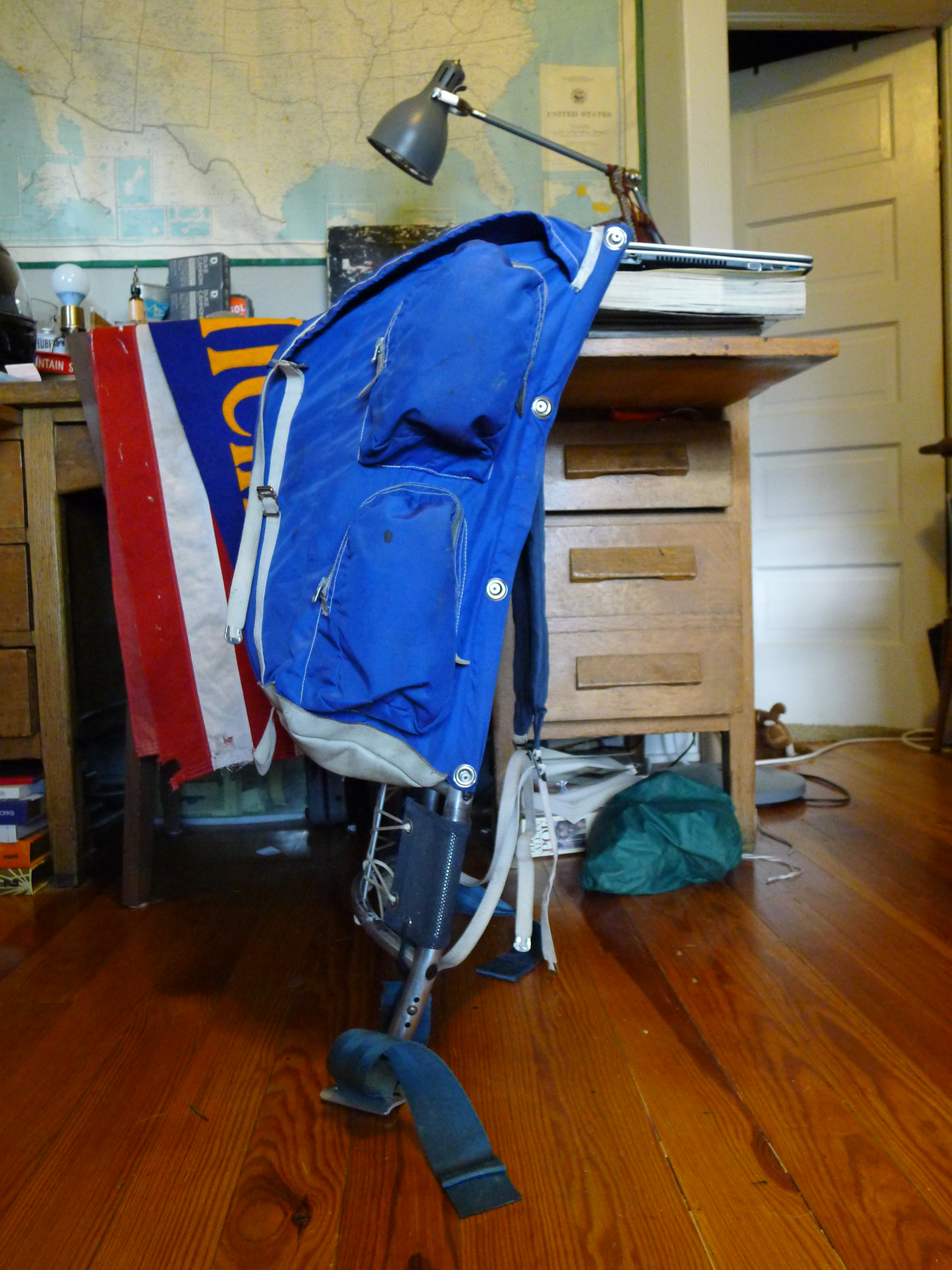
Gerry External Frame Backpack – Early, Leather Bottom Model- Boulder, CO

Vintage Gerry External Frame Backpack - Early Leather Bottom - Boulder, Co - Med

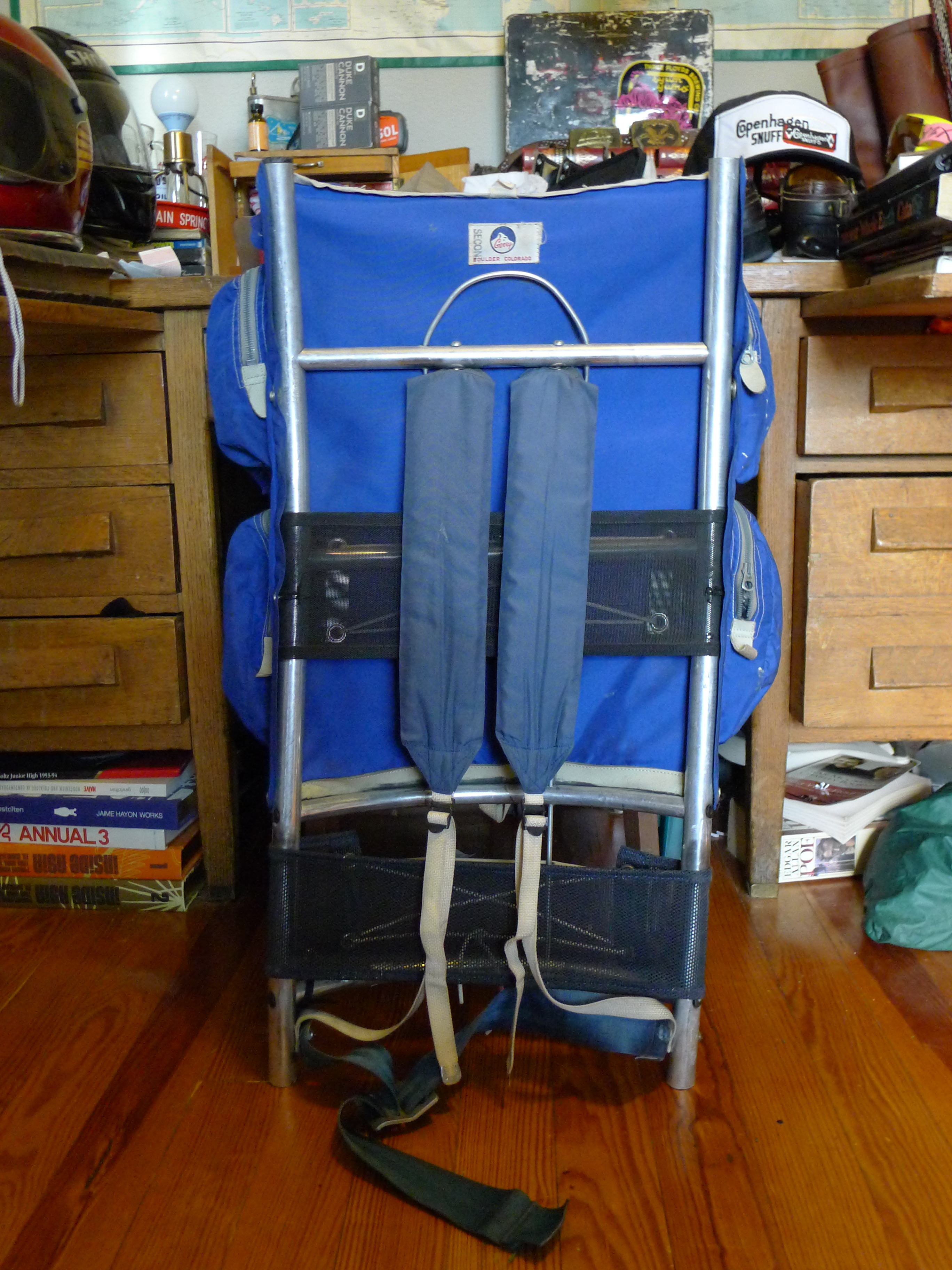
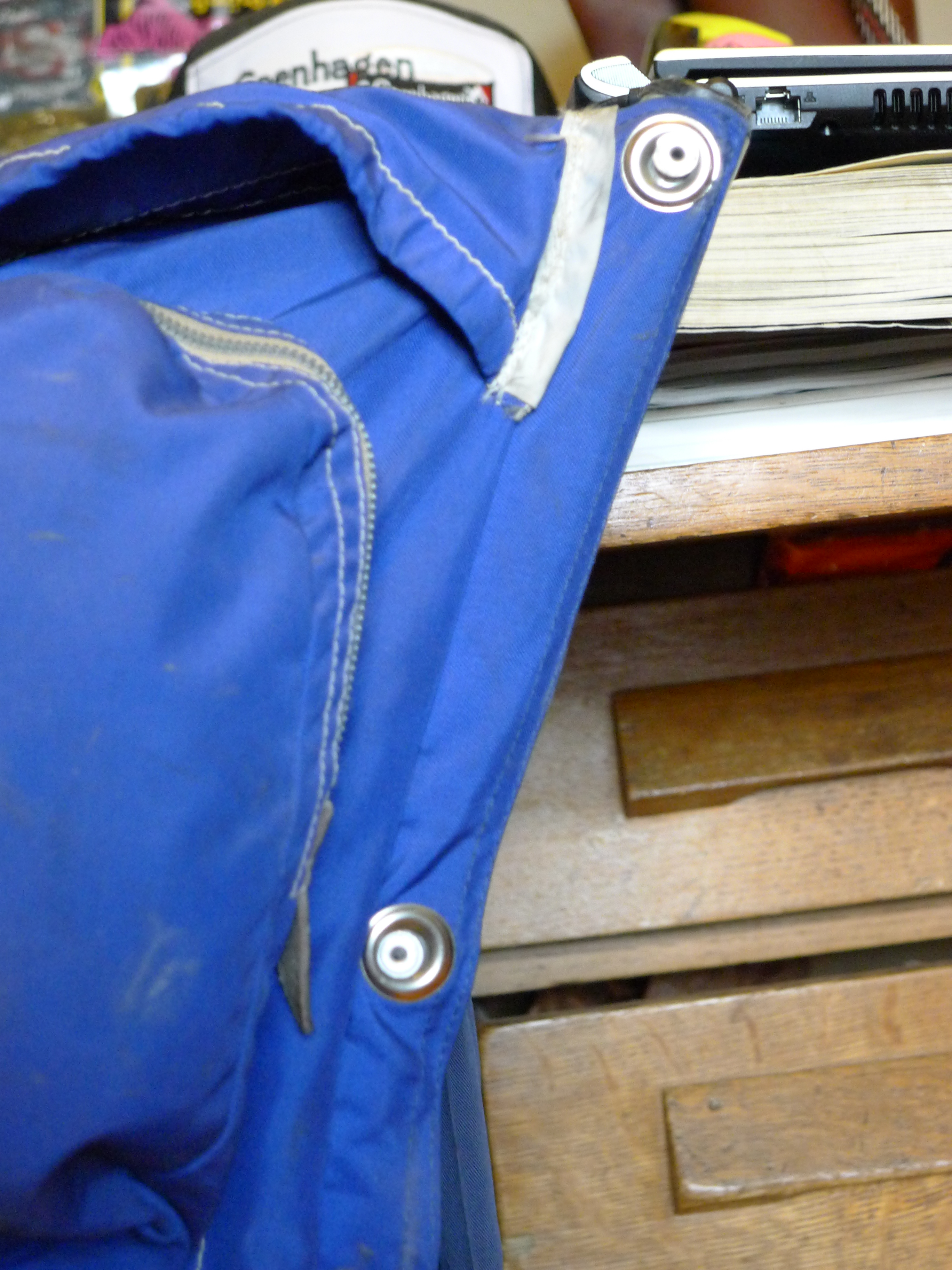
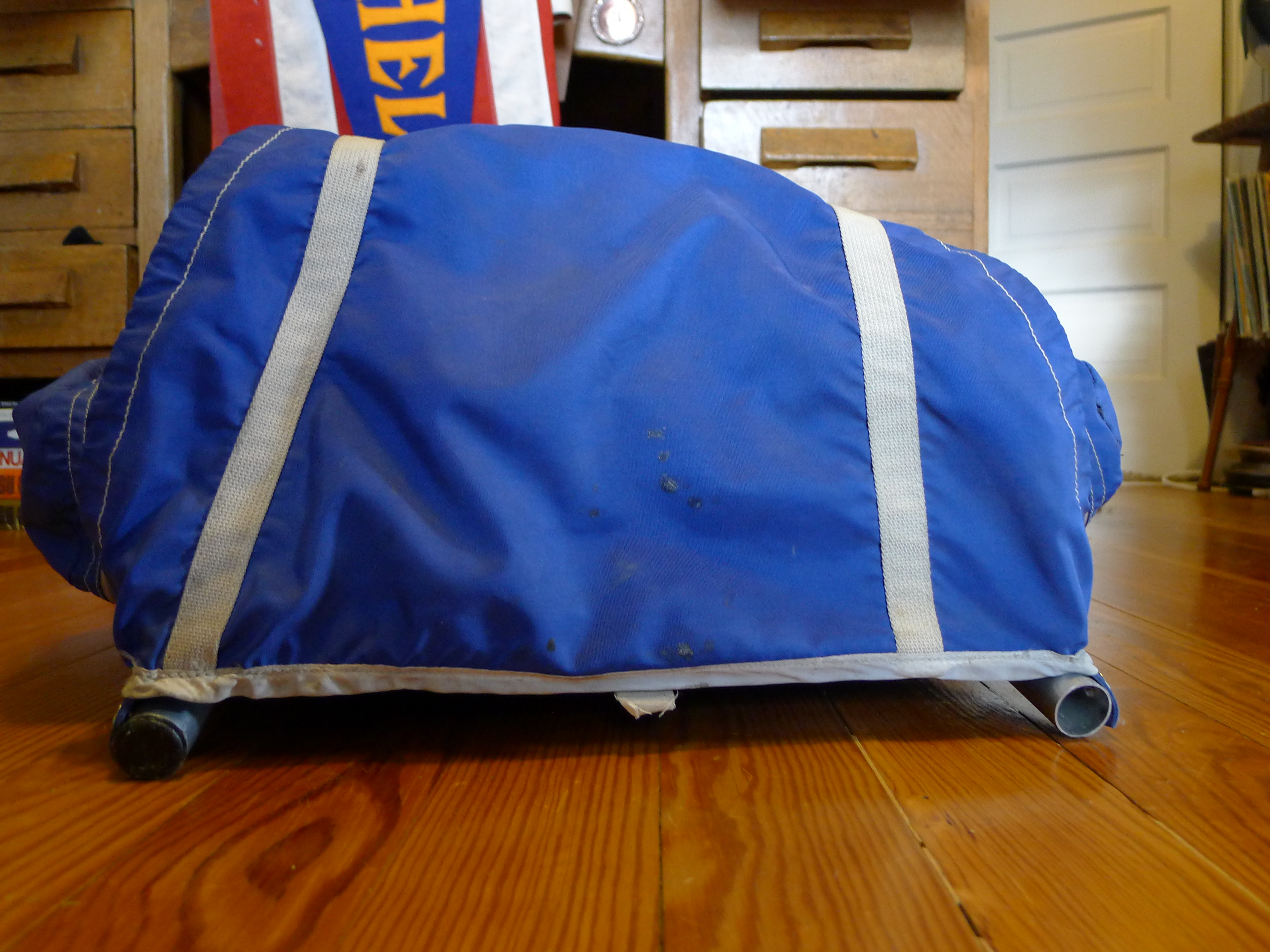
Early Gerry external frame pack. This pack bears the Gerry Boulder, Colorado label and denotes production prior to the company being purchased by Outdoor Sports Corporation. This pack exhibits many of the common traits that came to dominate external frame pack construction in the 1970s up through the 1980s, but has its differences. The white leather bottom for instance is a great touch and common for construction of day packs which are often sat on the ground, but the added weight of the leather and lack of need for a toughened bottom would mean it was a feature not built to last. Secondly the one main compartment could make getting to what you needed on the trail difficult if packed incorrectly. This one large compartment construction would soon give way to more compartmentalized construction. (Gerry’s later Vagabond pack would take compartmentalized to whole new levels). The primitive waist strap is also an area later designs would improve upon. Though this bag does feature the patented buckle design it bolts directly to the frame and does not form a full padded belt. This is before the notion of “shoulder the load with your hips”

Beyond its shortcomings the pack is still beautifully designed and constructed. There are four canister style side pockets with leather pull tabs (missing on one). The bag is constructed of 100% nylon which was probably still somewhat exotic in its time. Padded shoulder straps. There’s also a pretty ingenious handle built into the frame.

The label is marked ‘Second’ meaning they found there was something wrong enough with it to not be sold as new, or possibly it was a prototype model later sold as a second. A small tag above the label has it sized a medium. Definitely a cool bag for any collection or use for its intended purpose.

Holubar Wool Blend Knickers

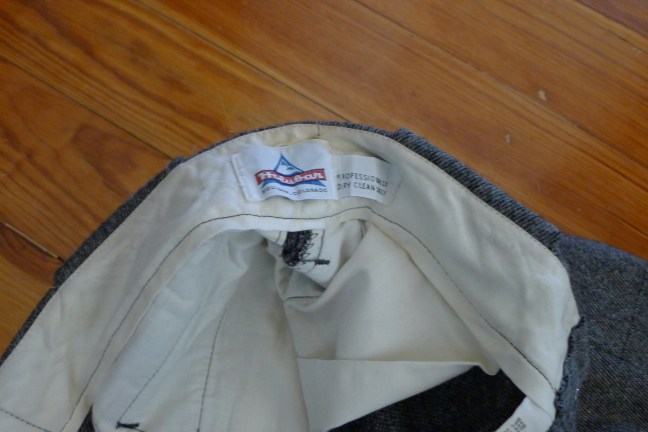
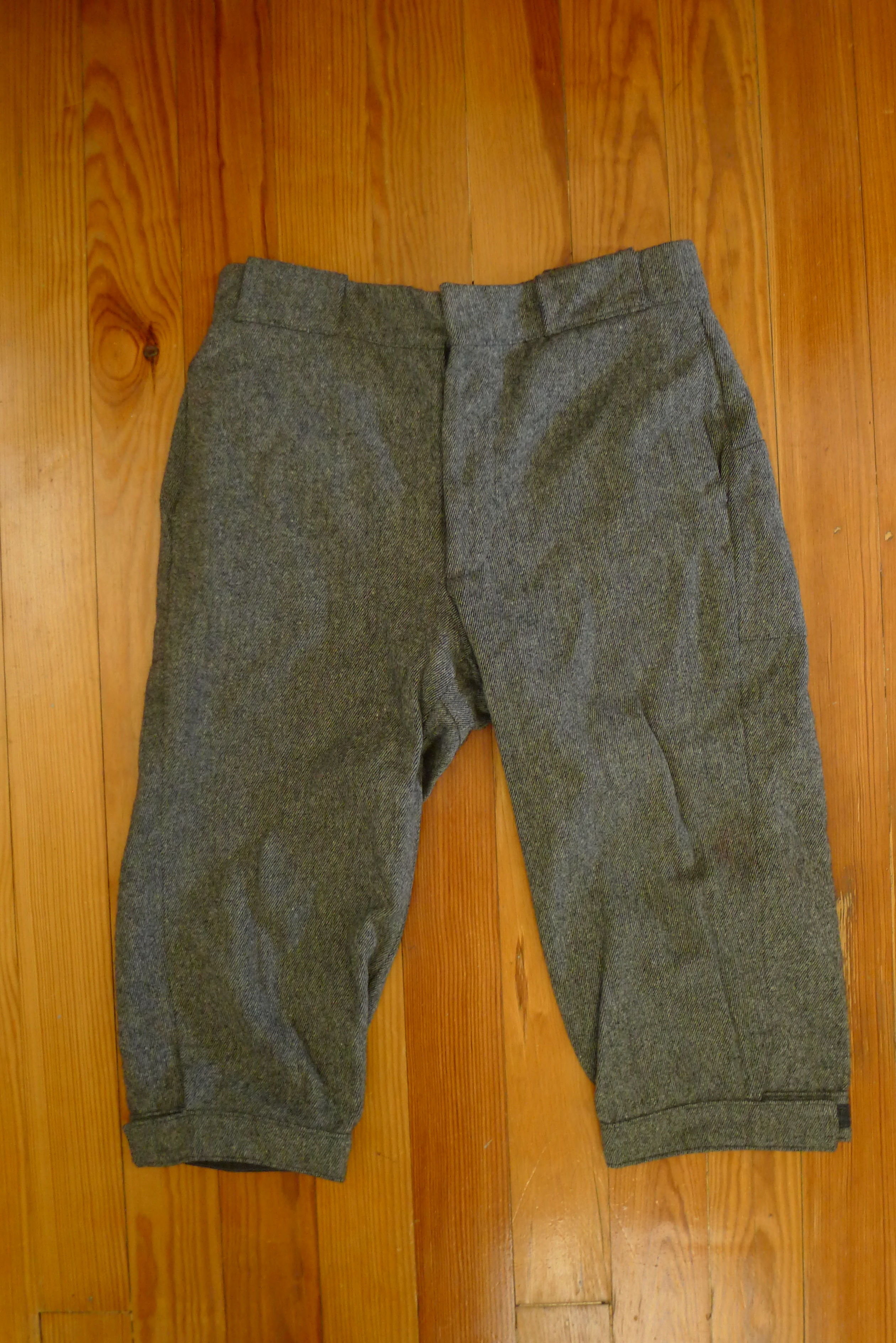
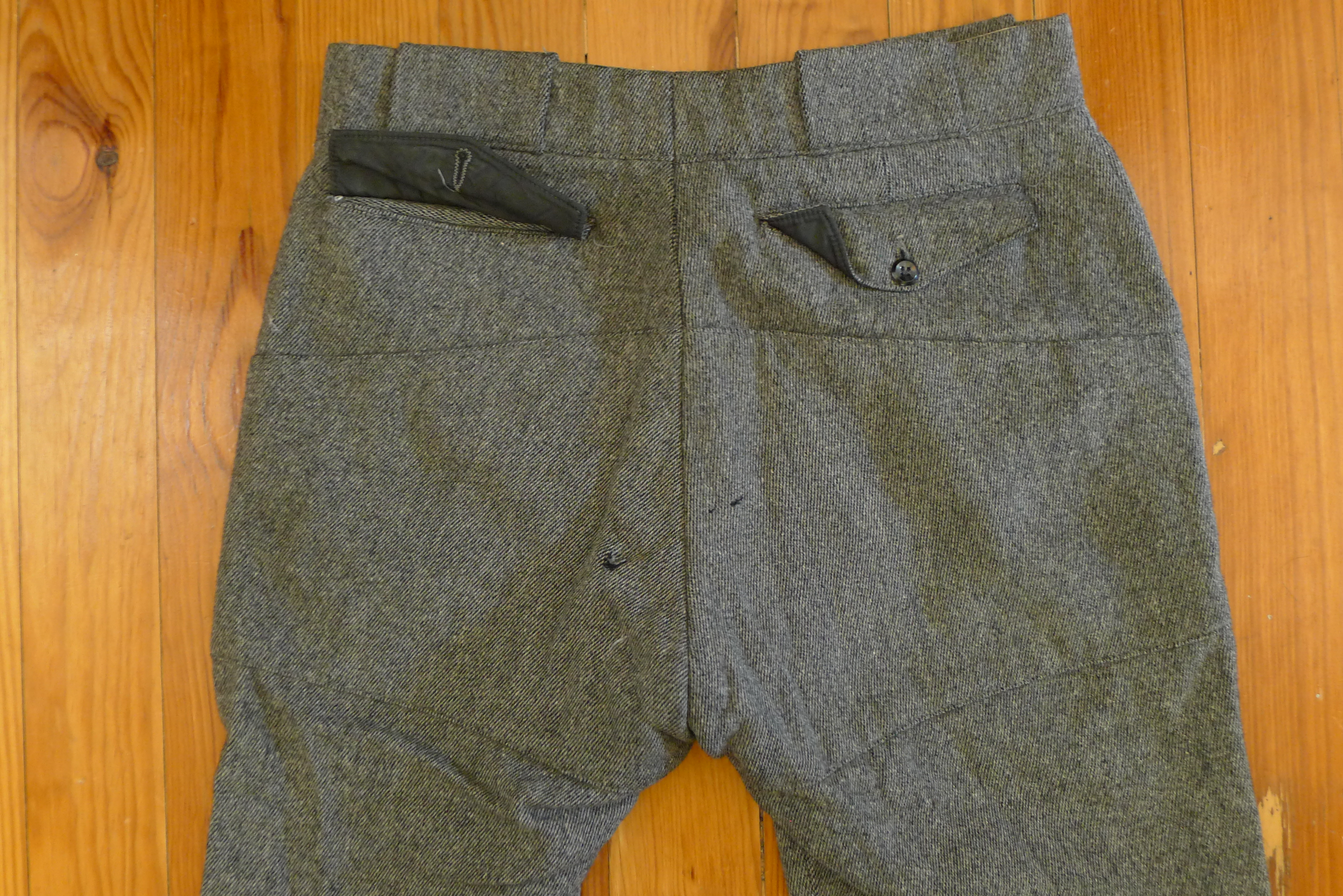
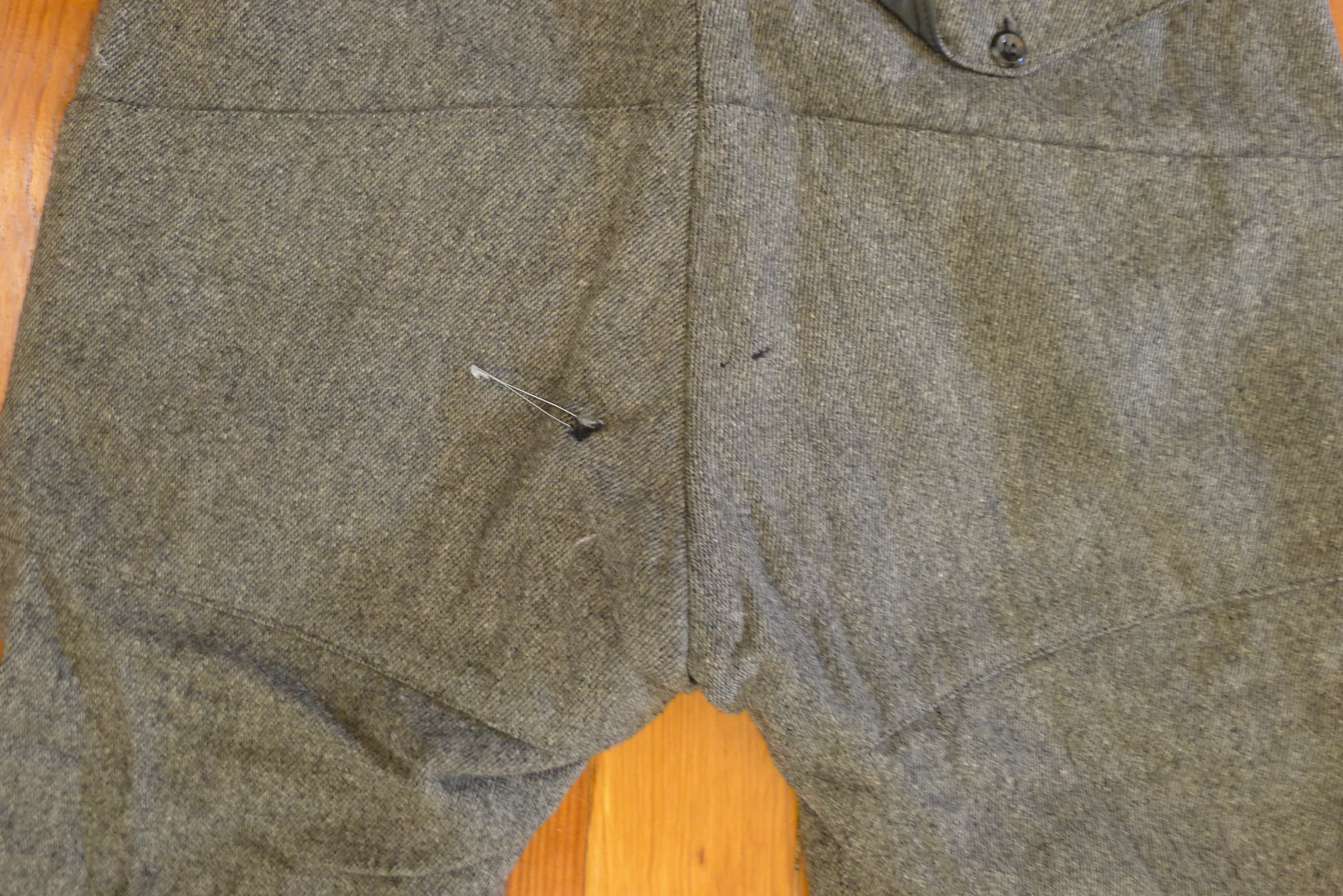
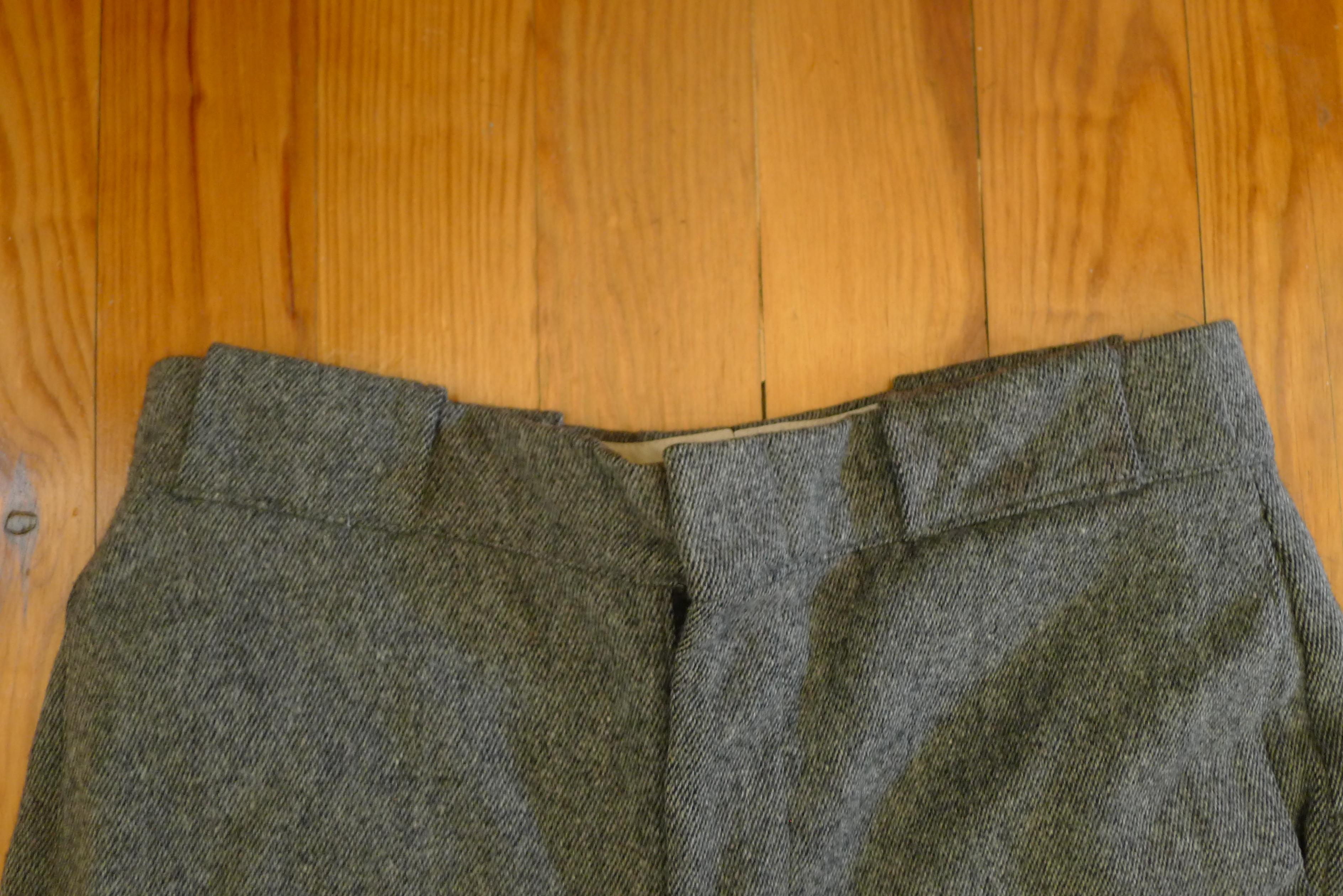
This is the first pair of knickers from Holubar I’ve coma across, though I have seen similar styles from Woolrich. These grey tweed knickers are constructed from an 85% wool, 15% nylon blend. White cotton pockets and waist band. The bottoms have velcro closure for cinching and are lined with nylon on the inside to reduce chaffing. Slack style hook closer with small gauge Talon zipper fly. 2″ high by 3″ wide belt loops. Slack style front pockets with button close back pockets. The seat is double pained for strength.
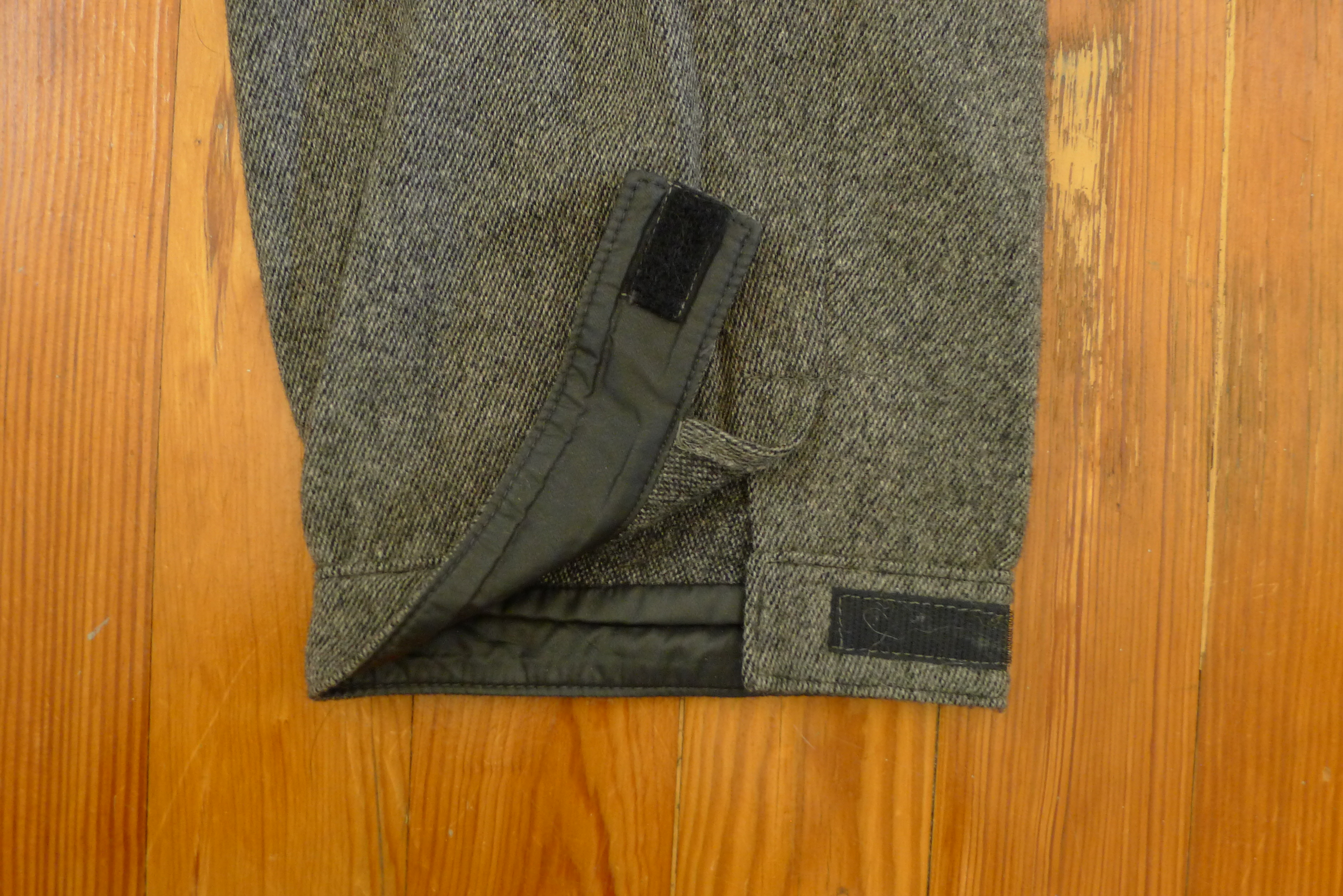
Approximate Measurements:
20.5″ inseam
35″ waist
31″ from top of waist to bottom
12″ from top of waist to crotch seam

Holubar Gaiters

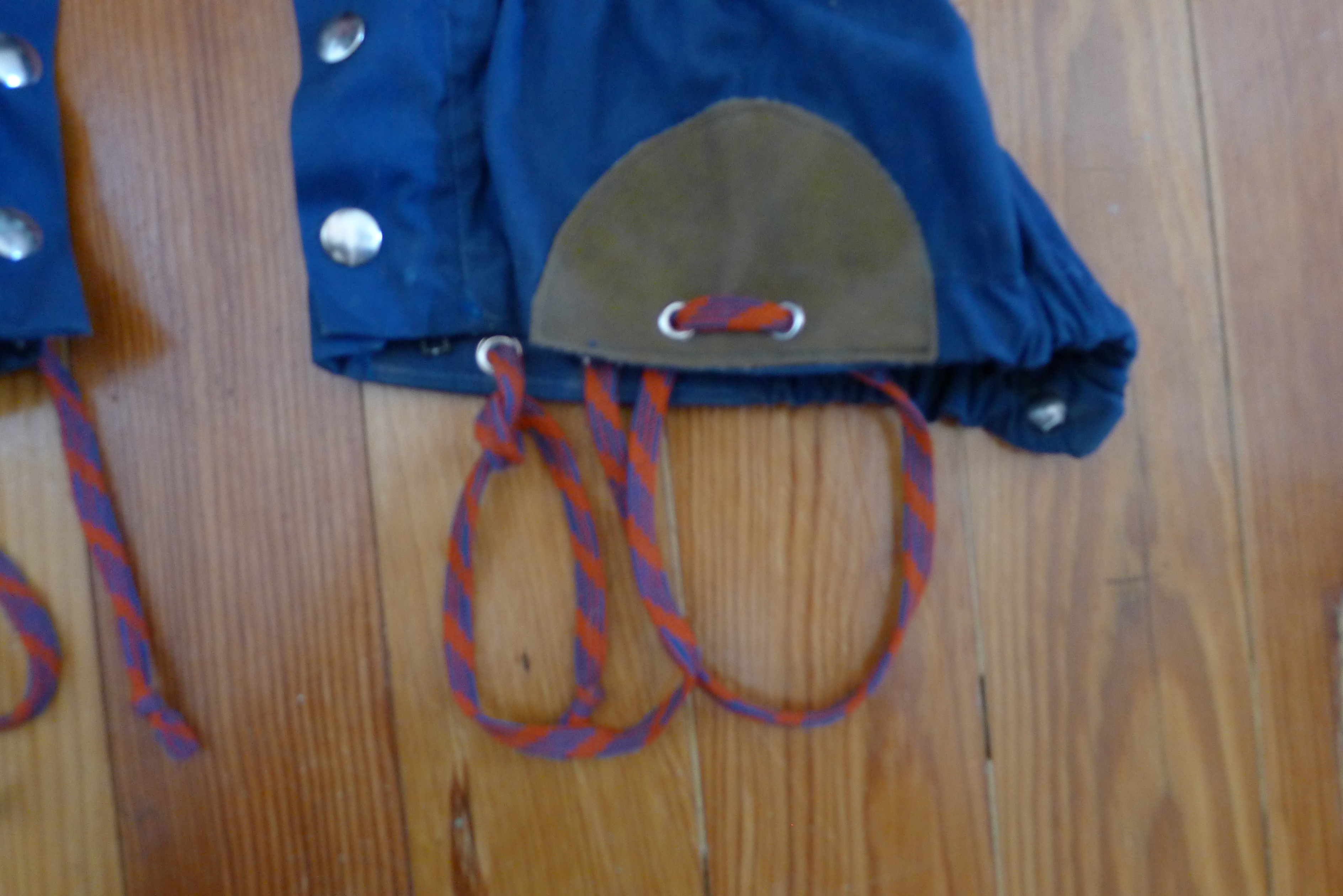
You are looking at a pair of Holubar Gaiters circa early 1970s or later as denoted by the logo with no climber. These gaiters are made of two layers of the 65/35 poly cotton blend, predecessor to the 60/40 nylon cotton blend popularized by Sierra Designs. The unique design of these gaiters has YKK zippers closing from top to bottom accompanied by five snaps for securing. Spring loaded cord locks with draw at the top with matching red and blue laces to secure under the arch of the boot. These laces are strung through two grommets on each side and can be tied off to fit different size boots. Leather reinforced lace hook for securing on the boot laces at the toe. Also featuring leather reinforced side panels where the lace grommets pass through.

These gaiters measure about 17.5″ high from the side to the top. 19″ across at the top from zipper to zipper and 14″ across at elastic ankle

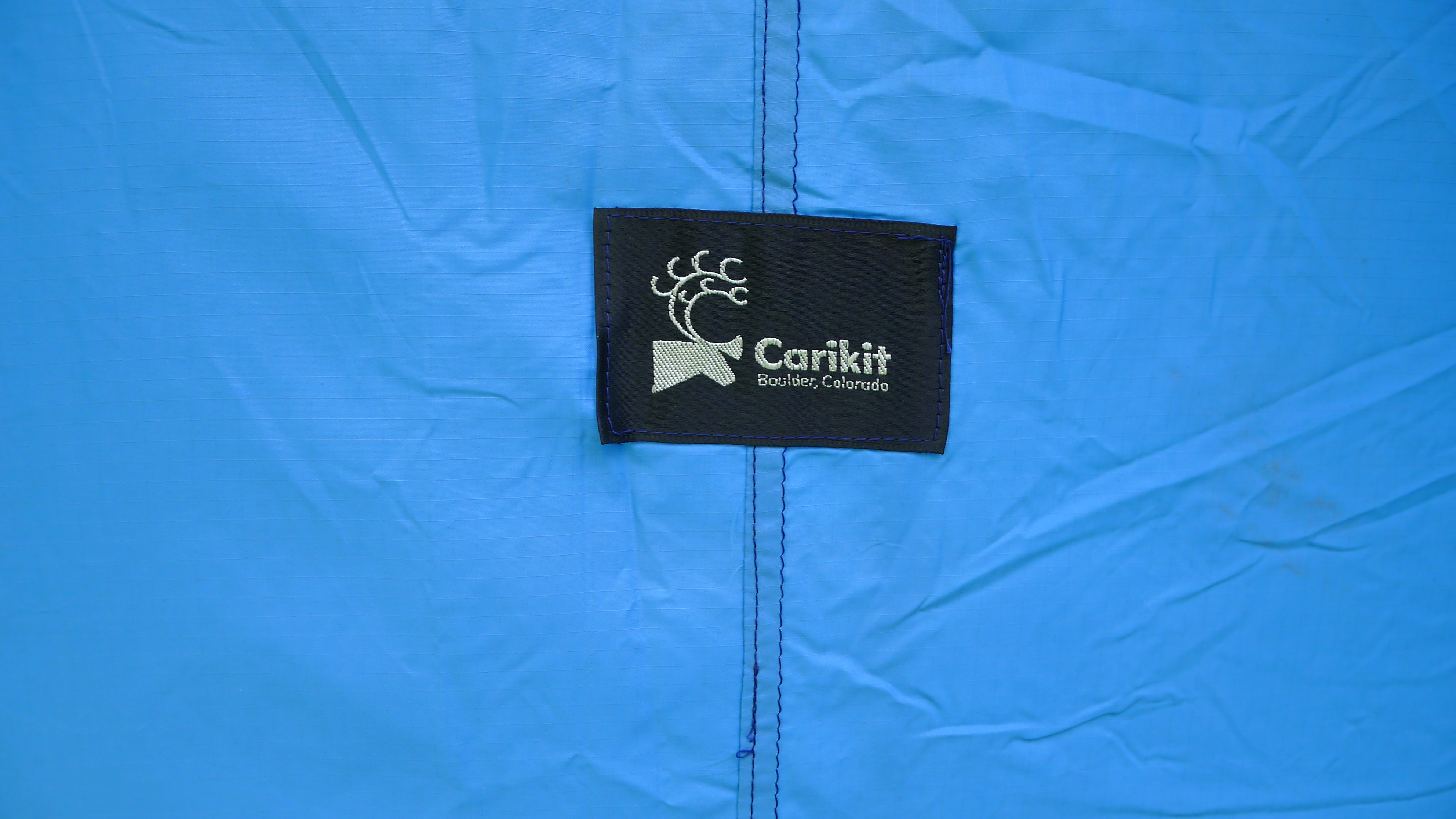
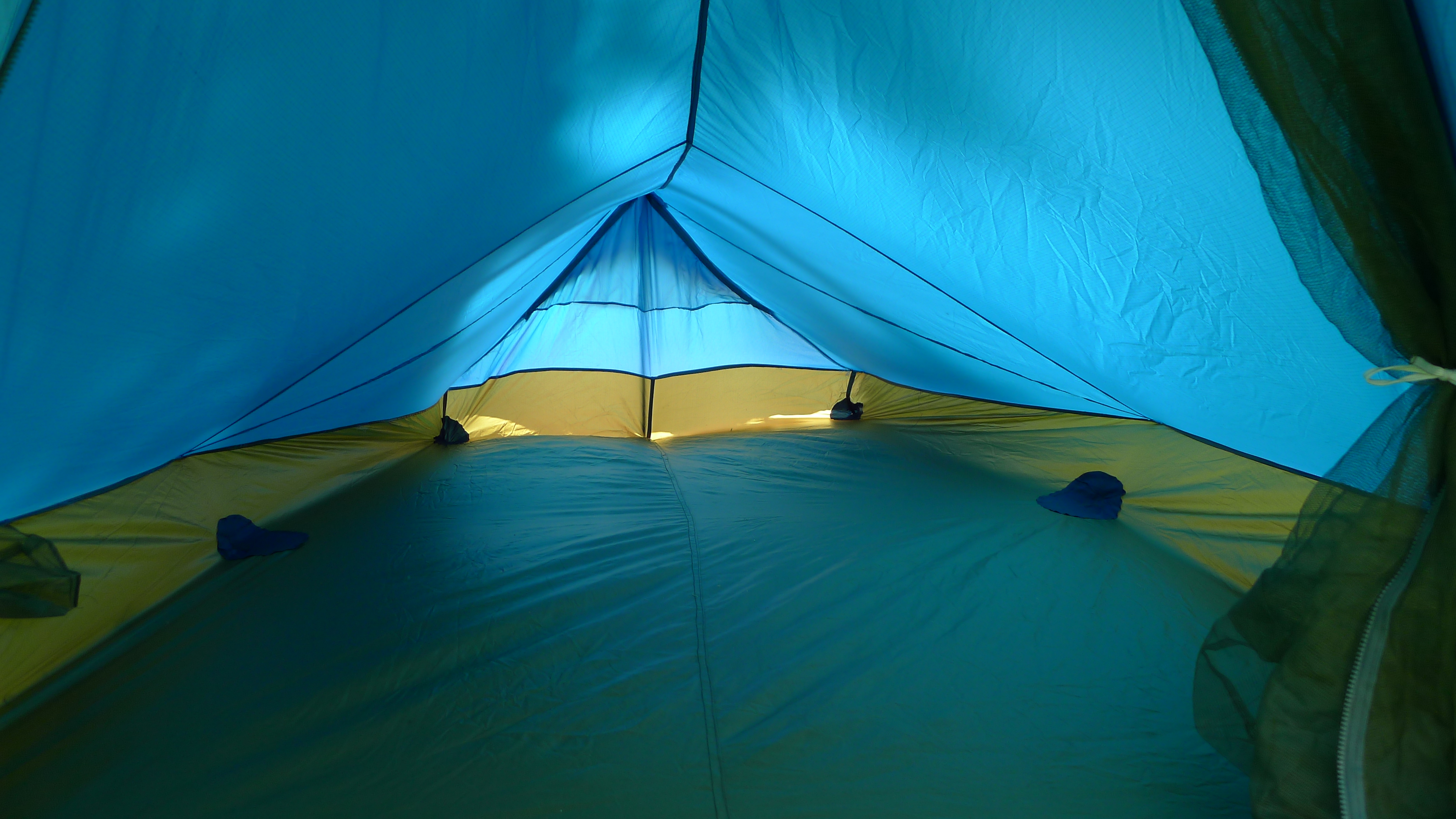
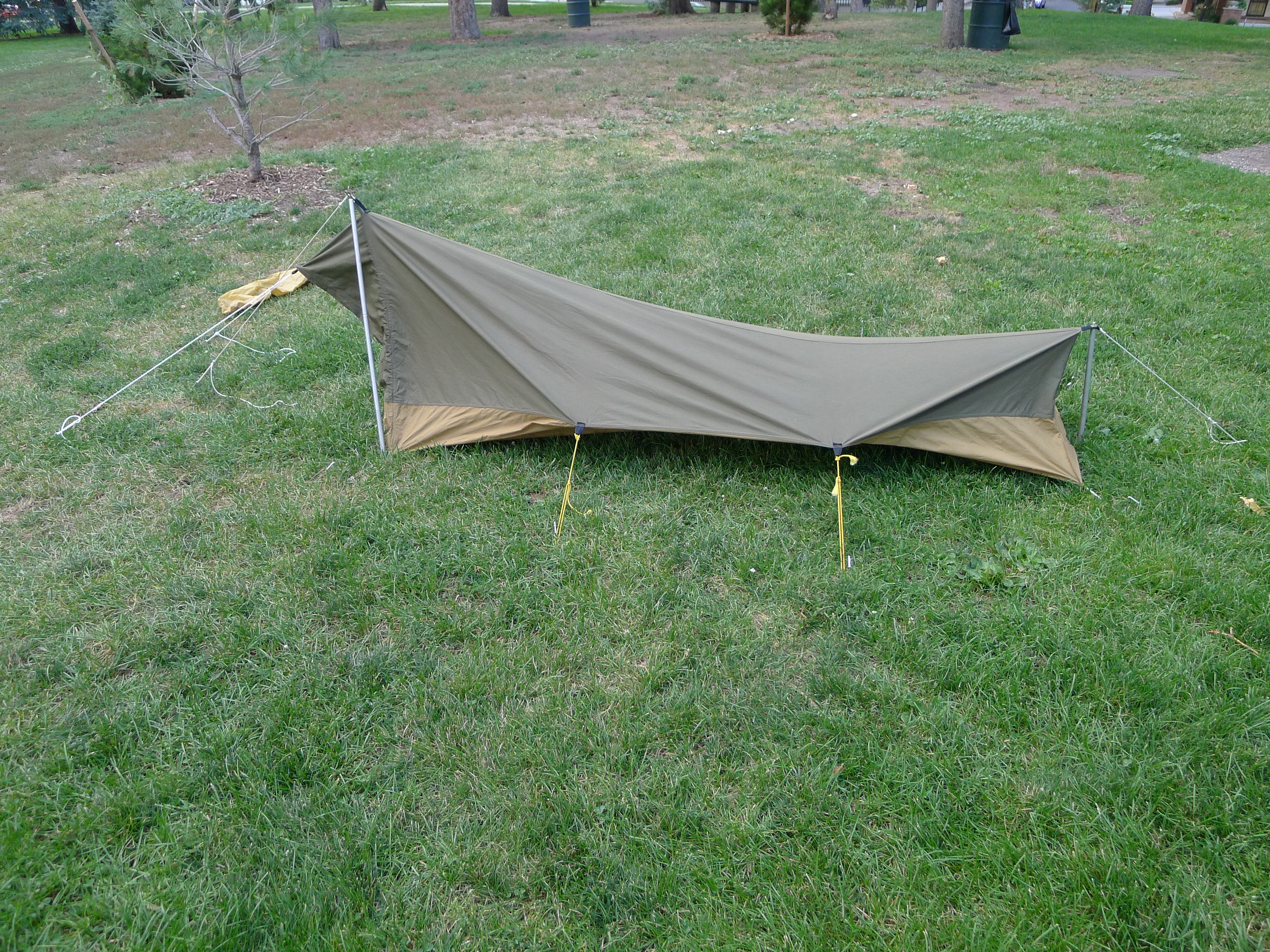
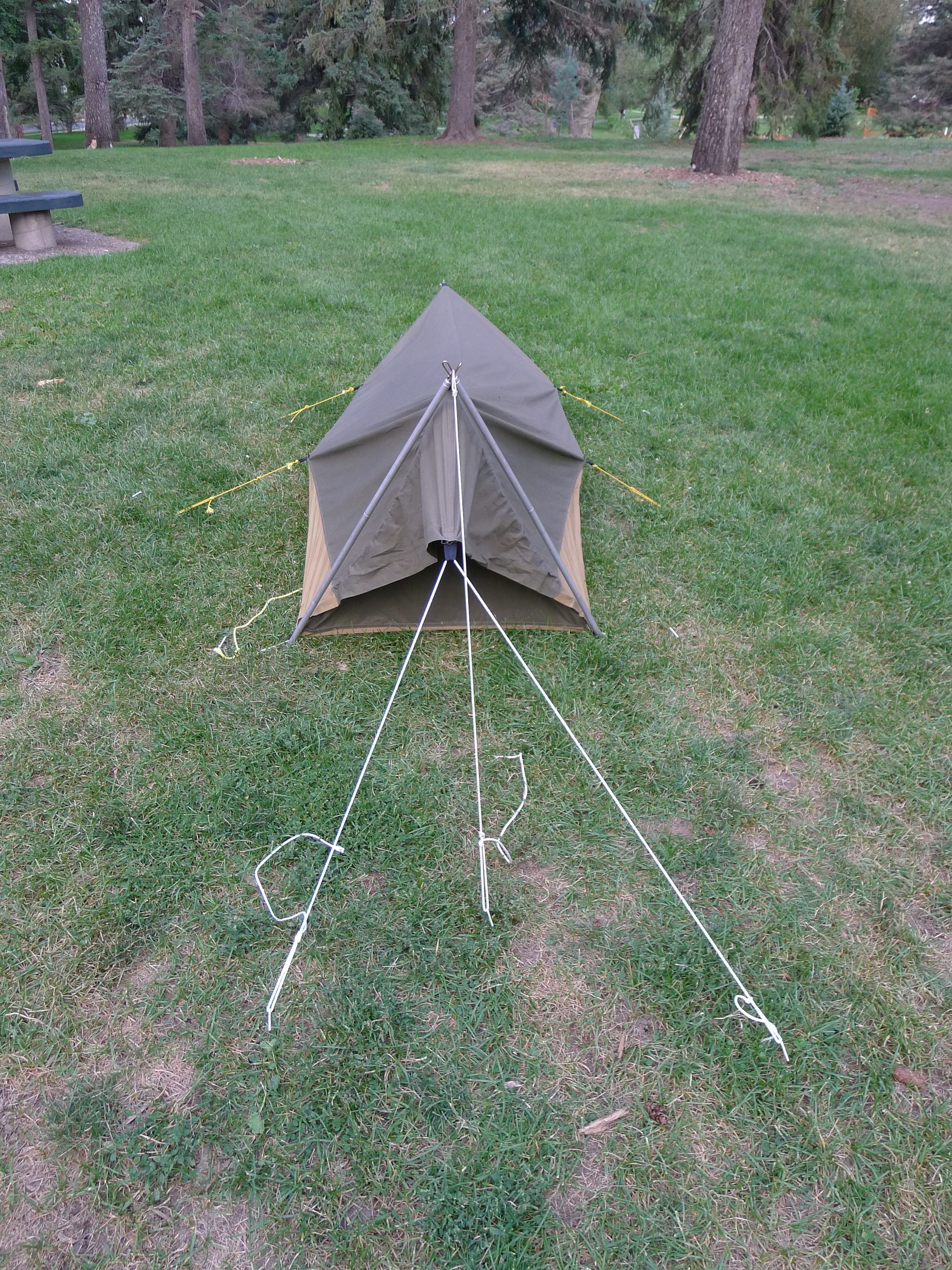
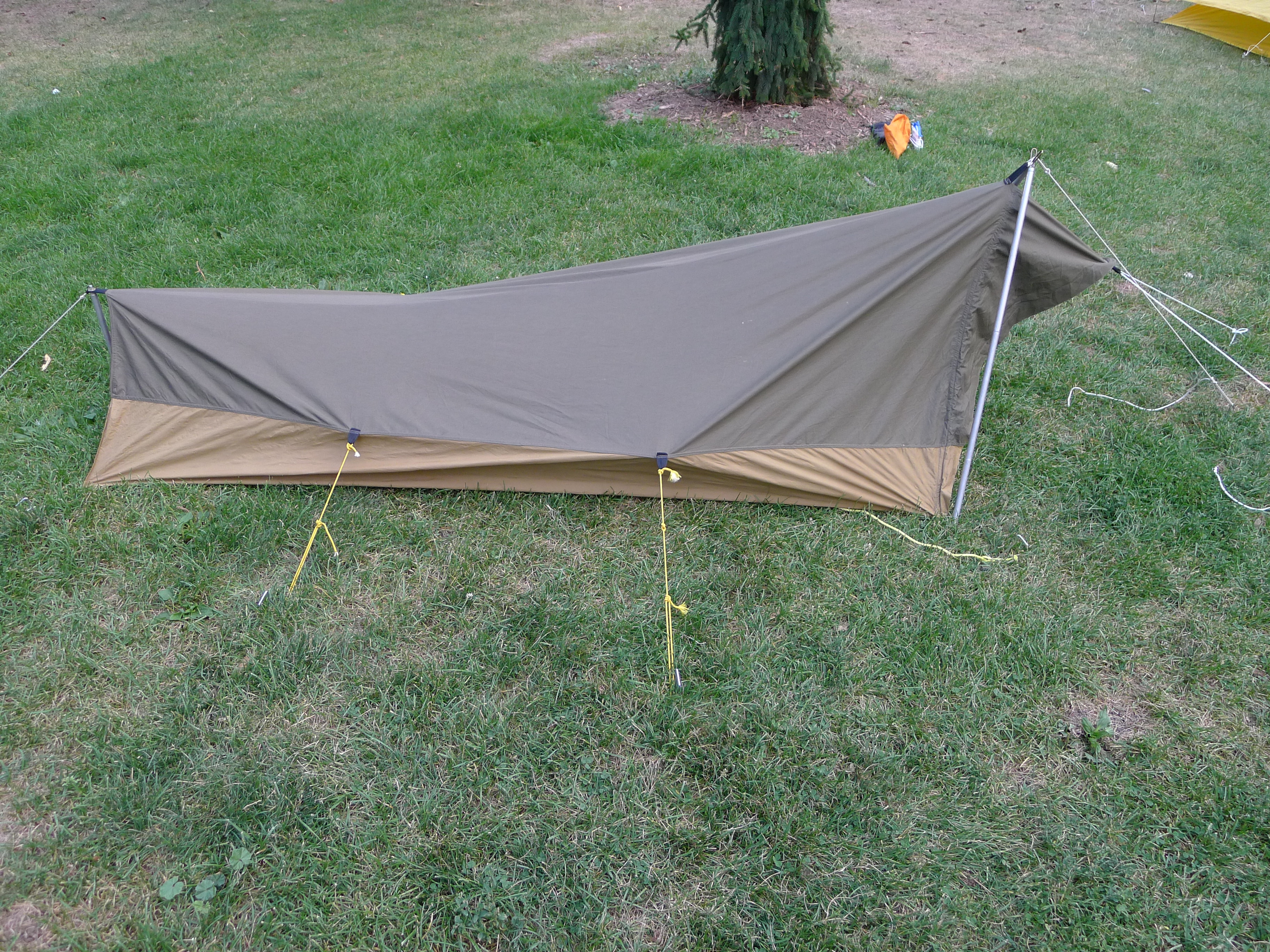
Cari-Kit Two Man Backpacking tent – early 1970s

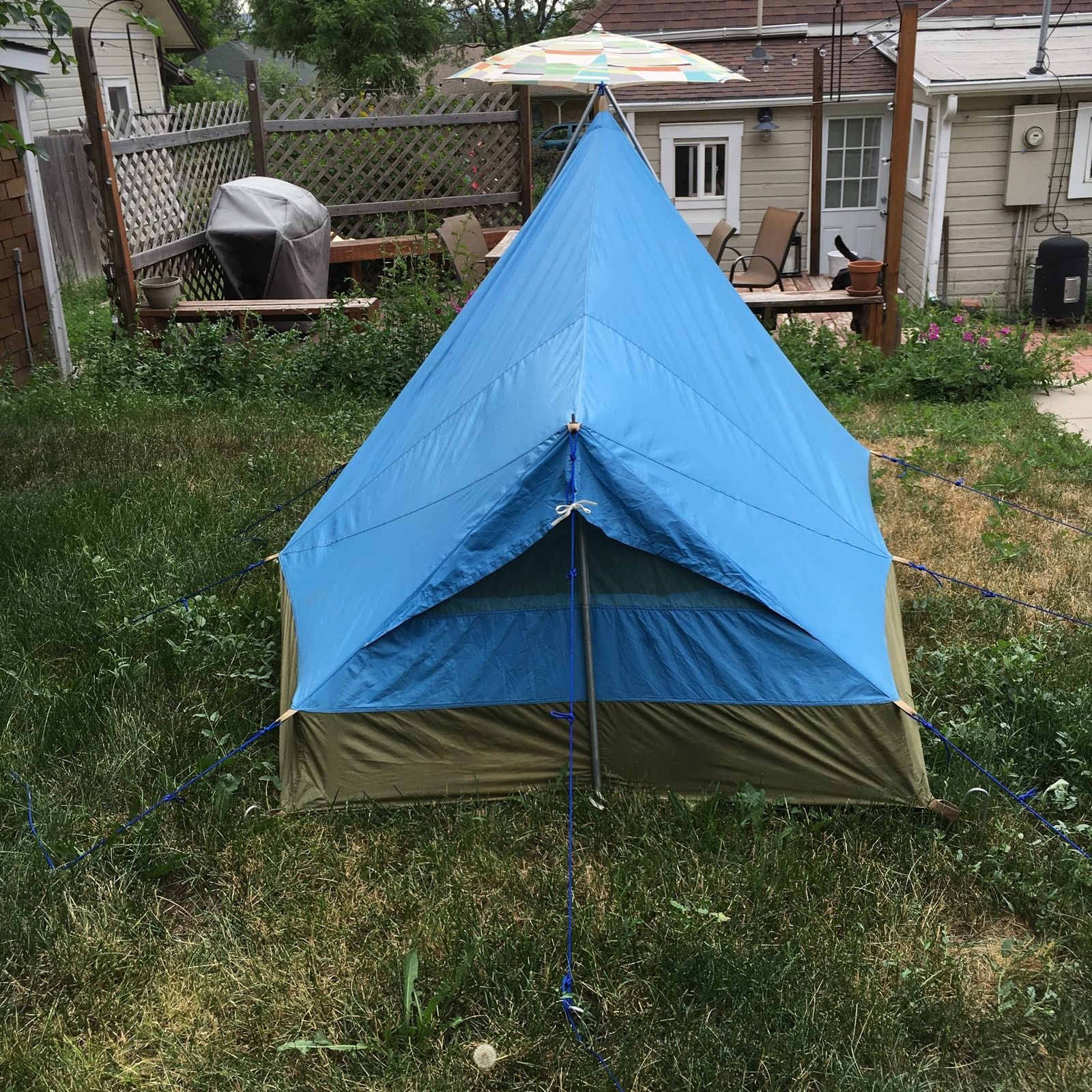
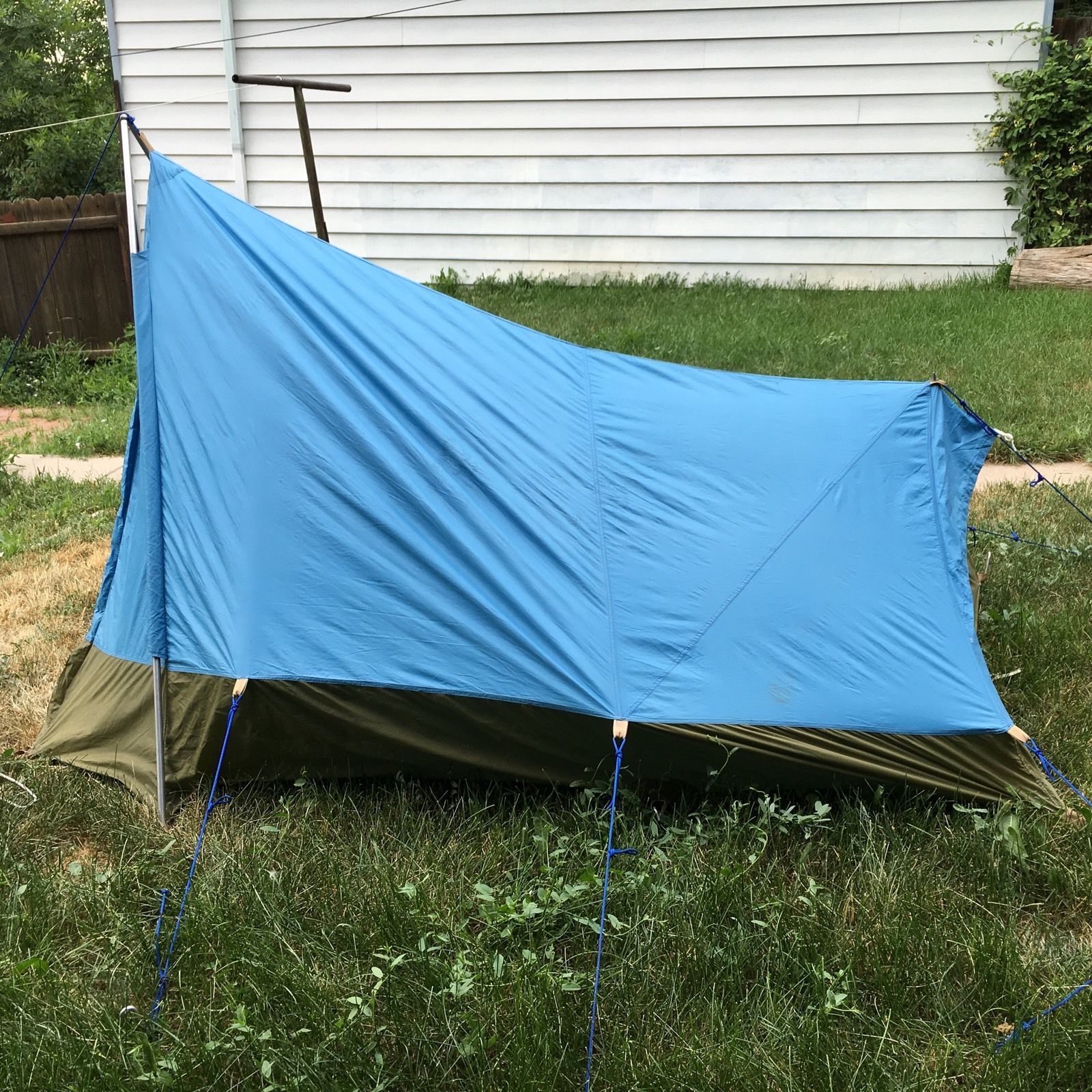
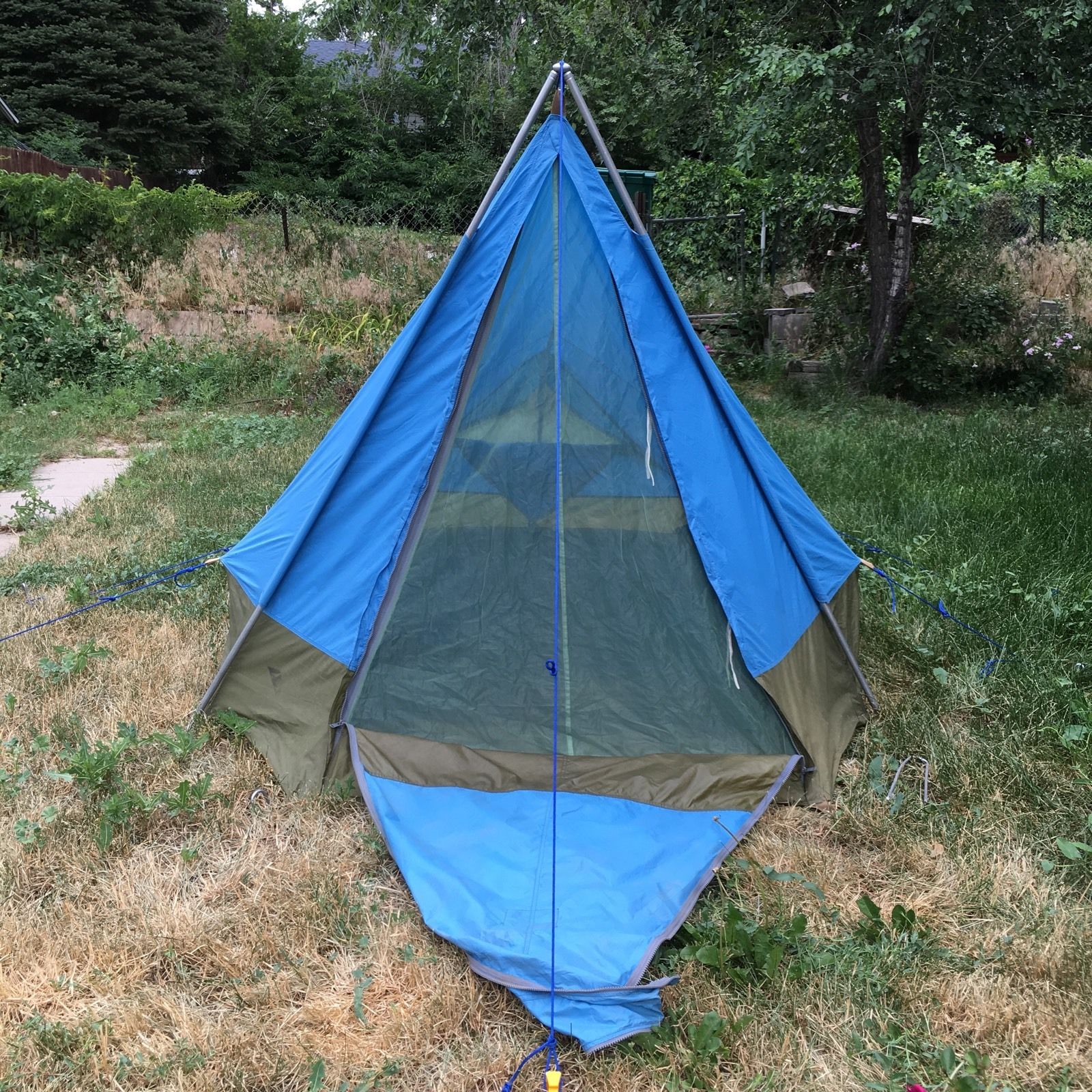
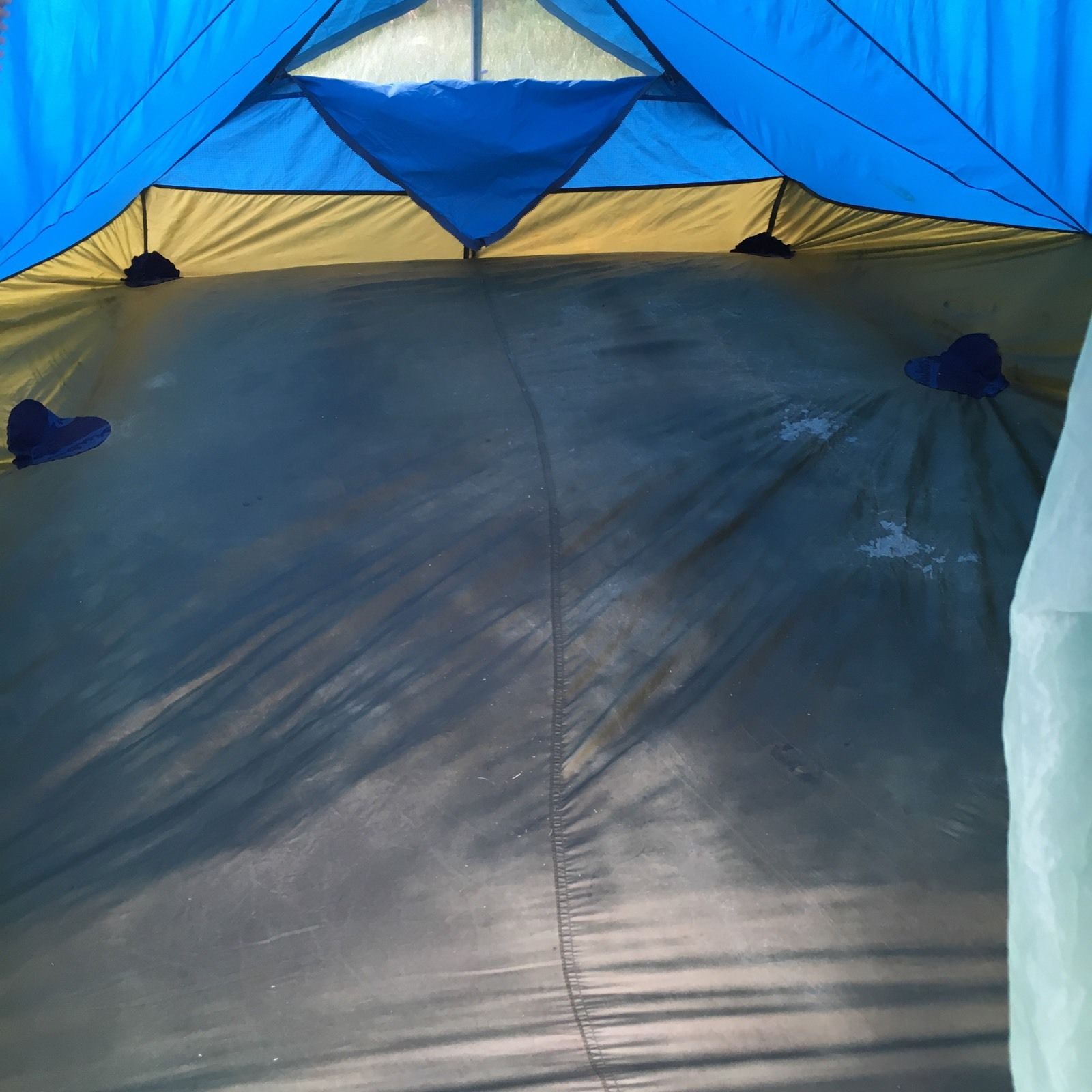
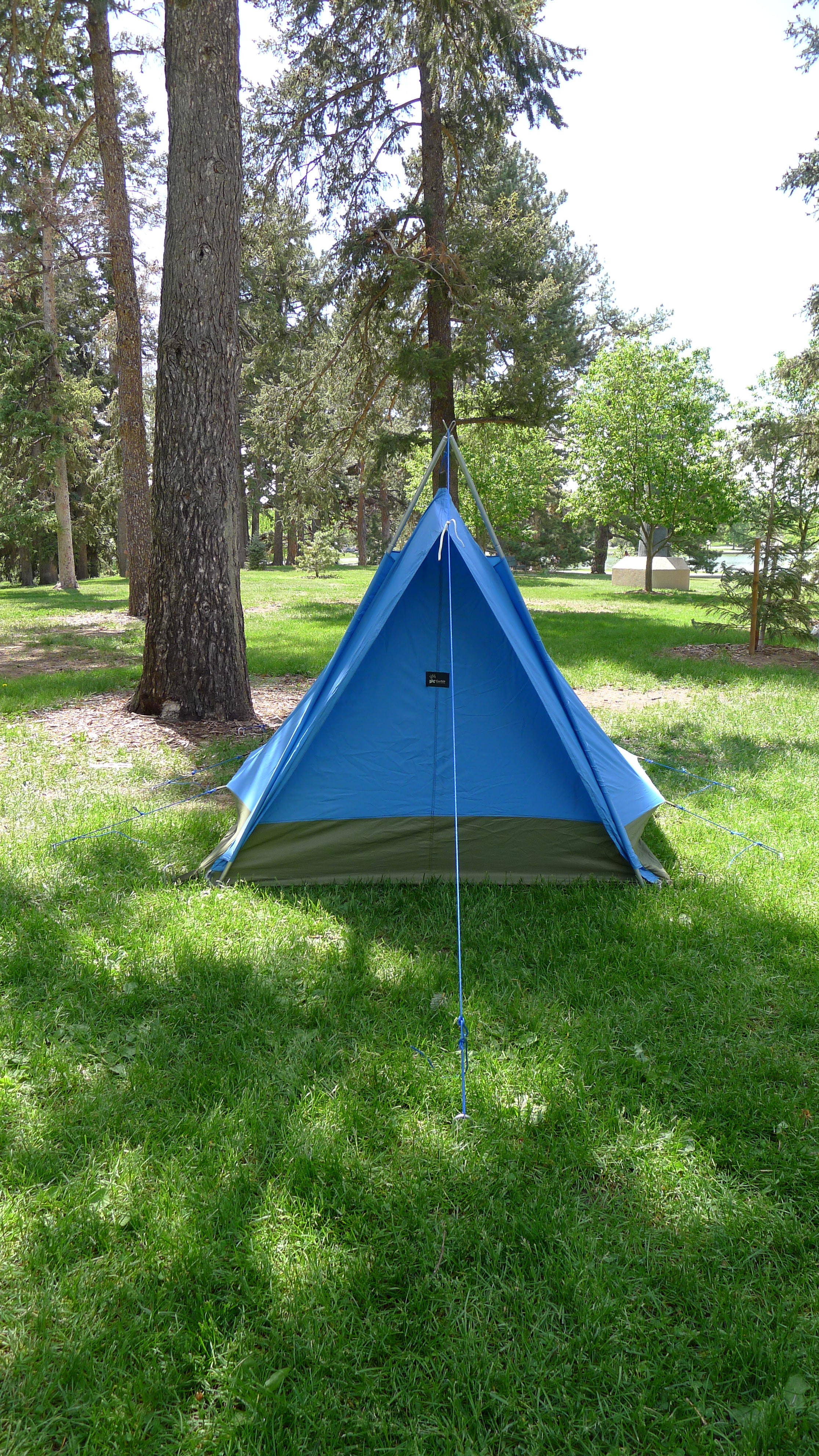
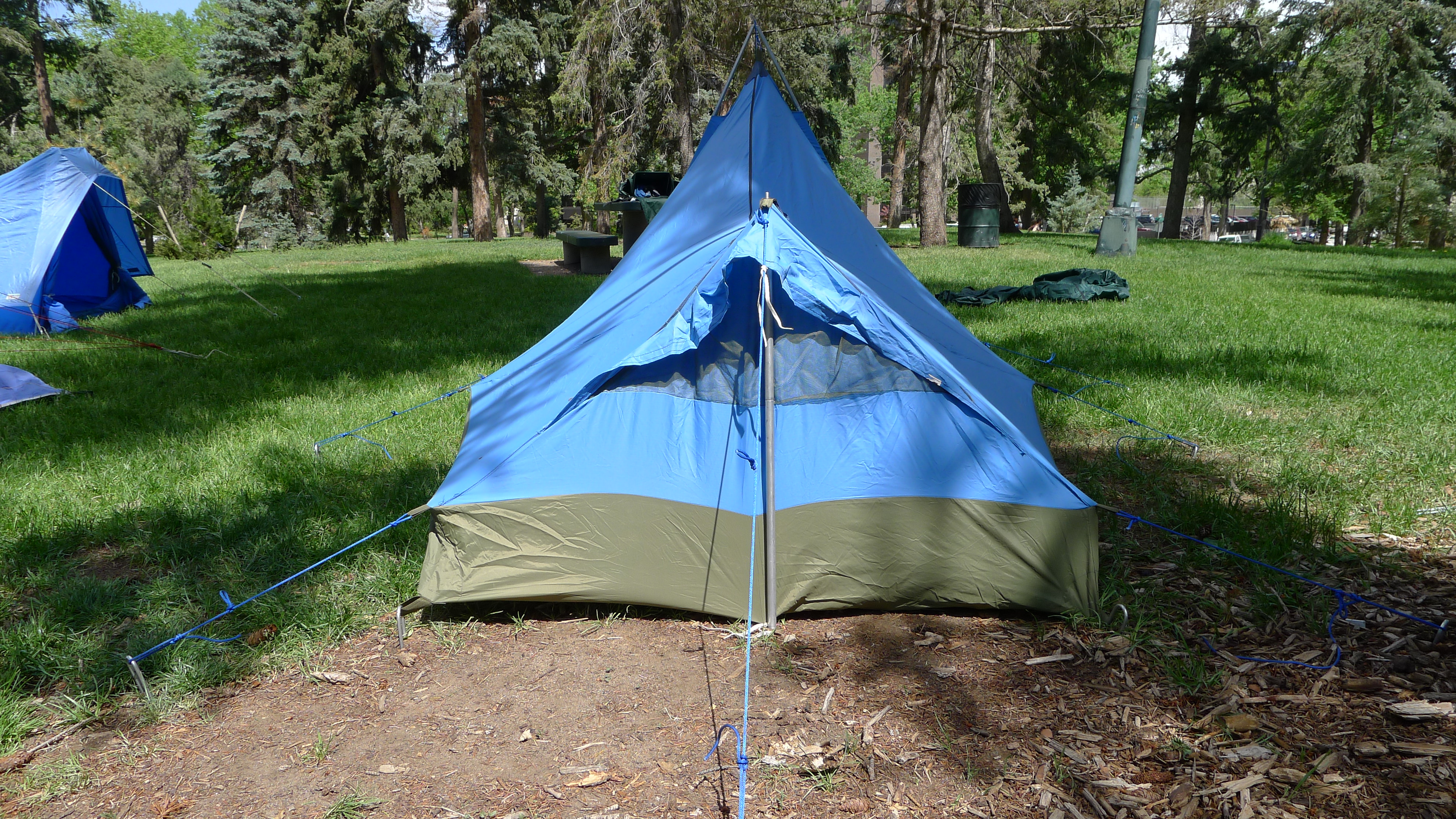
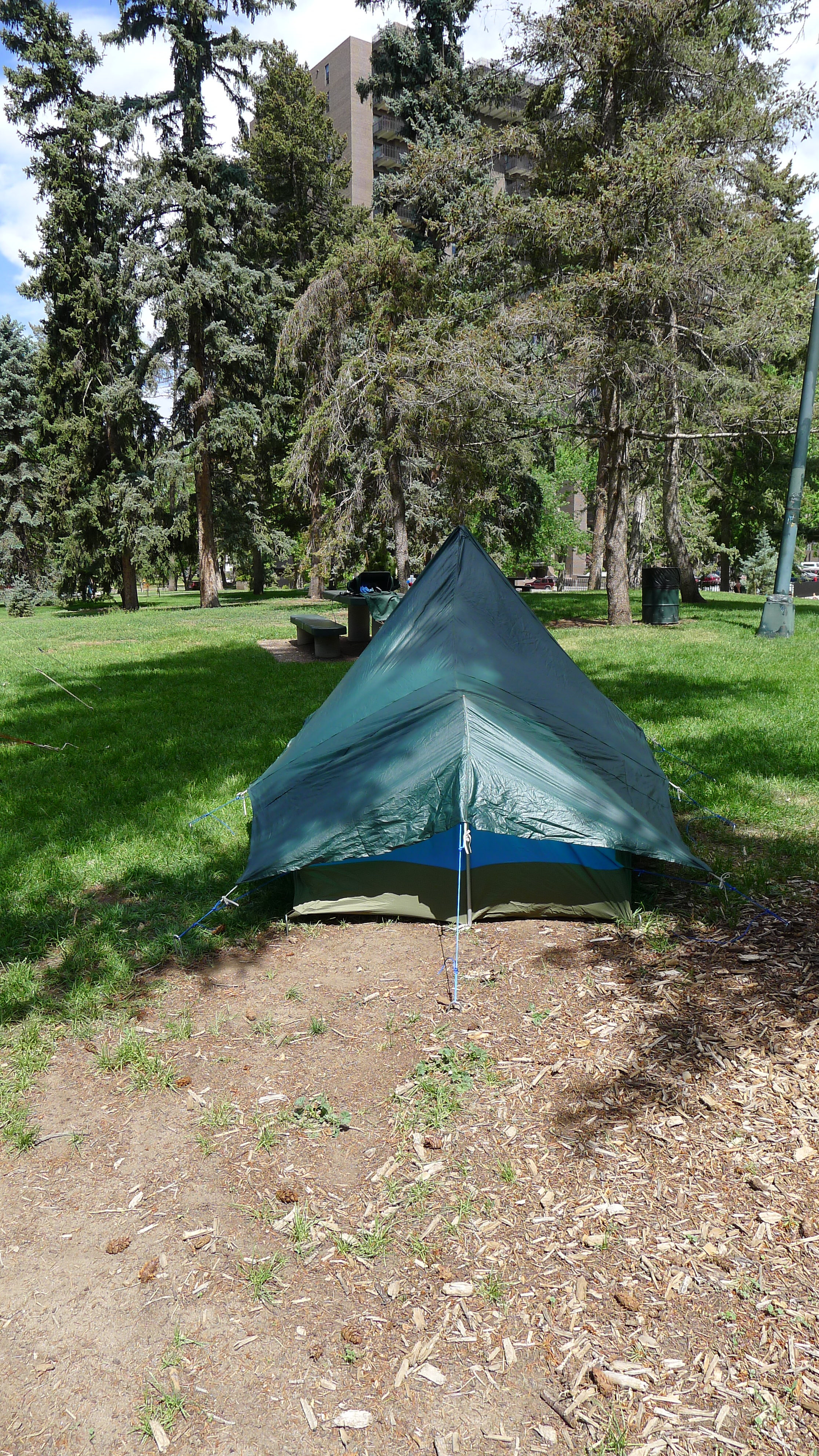
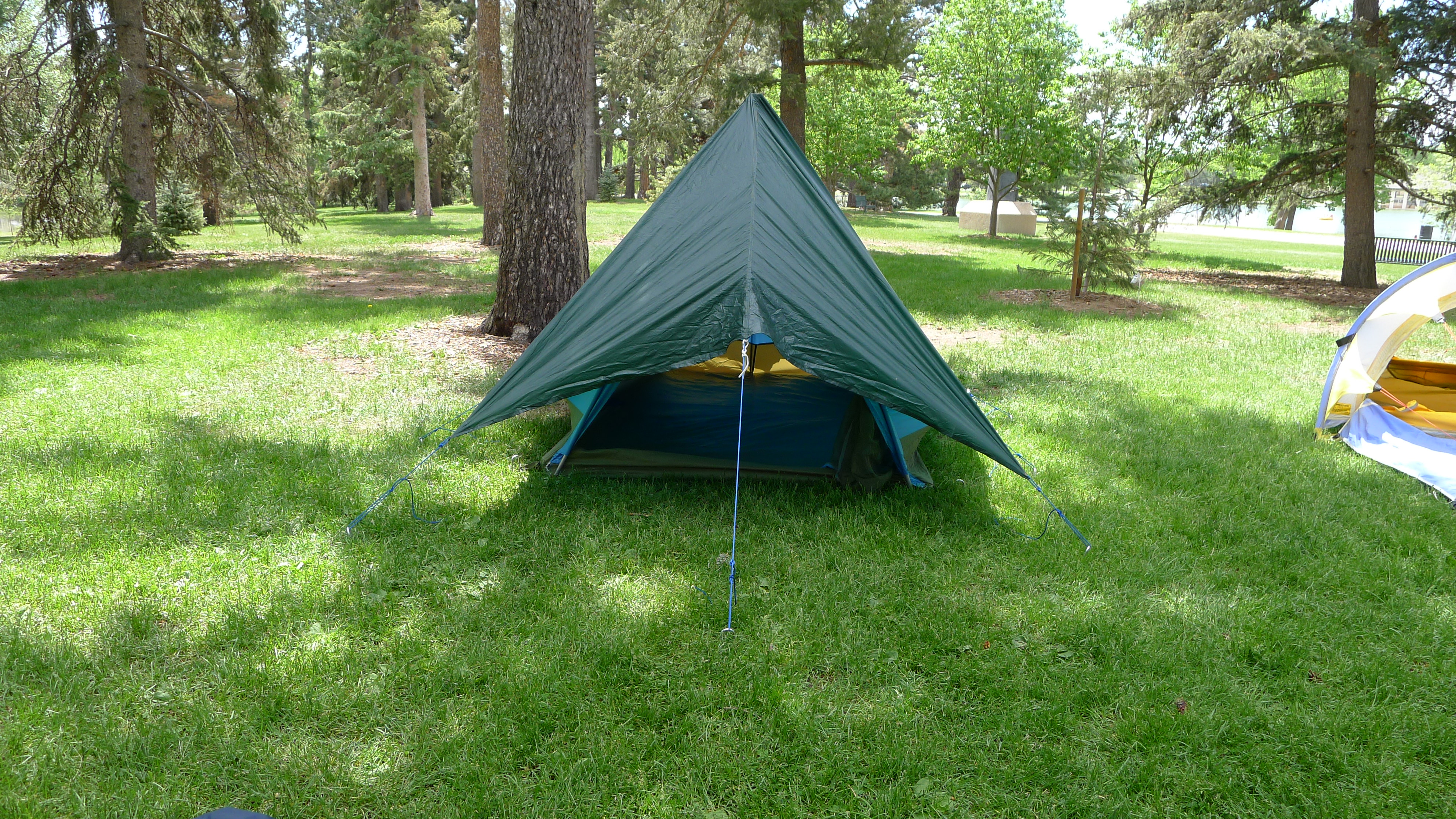
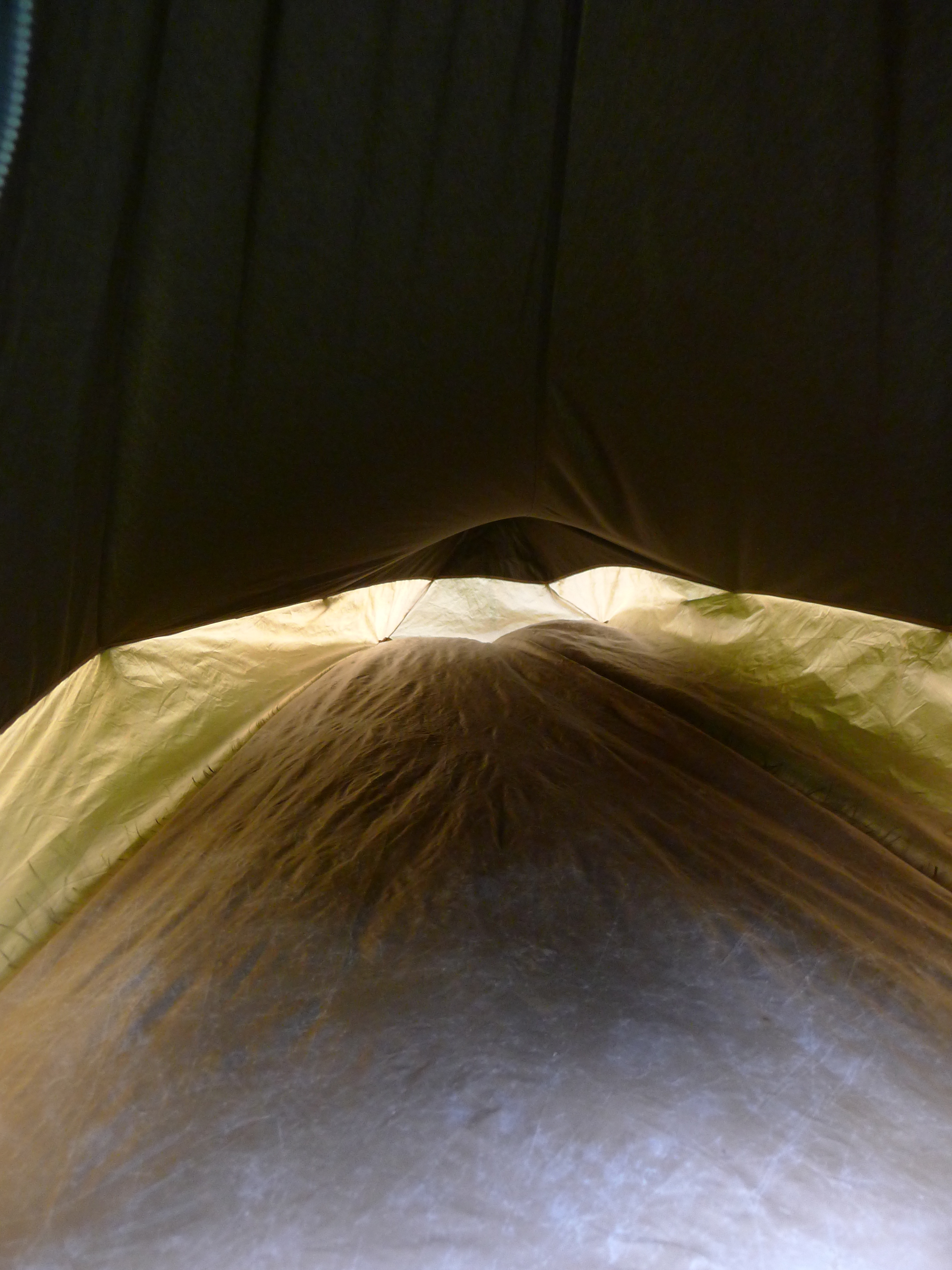
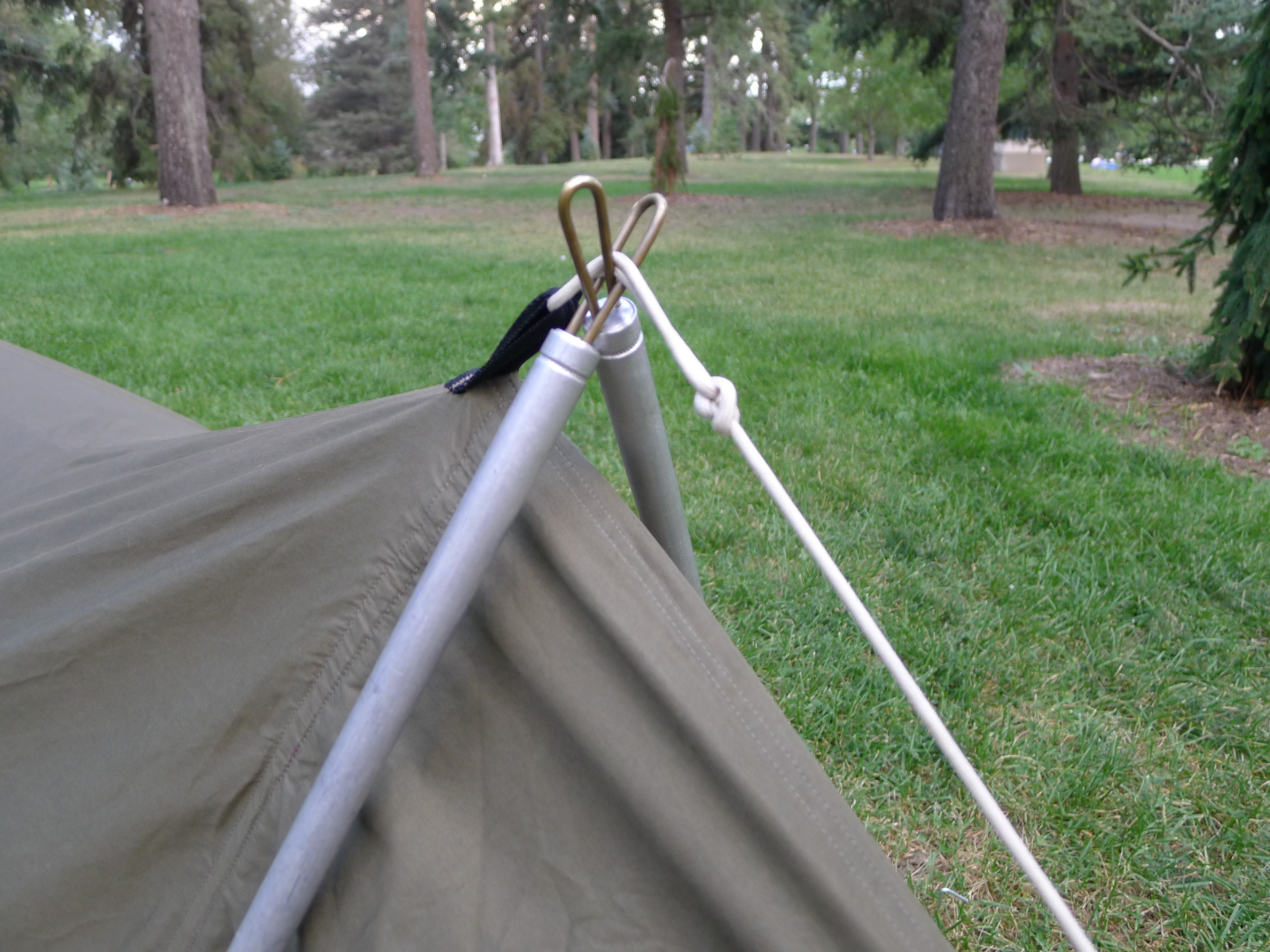
 This two-man  tent is constructed using two poles at front one at rear. The front poles fit together with loops at the top and support the tent body which is ran up over the crossed loops and pulled taut with a staked cord. The single rear pole is shorter and is secured by top and bottom grommets and staked down with a cord. The tent comes to a high point at the front and is only about half as tall at the foot. The tent has a rain fly, but does not offer  a fully enclosed vestibule. It would most likely be considered a two or three season tent.

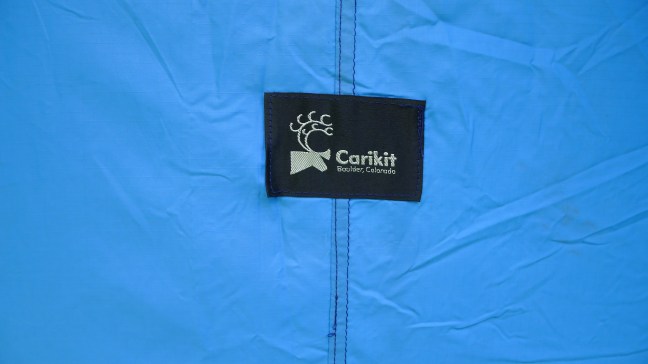
I received this tent from the original owner who said it was purchased from the original Holubar store in Boulder, Colo. in the early 70s. The tent bears a similarity to Holubar tents of the era and has good reason. Cari-Kit was the label originally used on Holubar’s line of sew-it-yourself products in 1972.  The name was later abandoned and the kits rebranded as Holubar Sew-It-Yourself Kits.
Other popular kit producers of the day include: Frostline, Altra, Eastern Mountain Sports, Country Ways, Mountain Adventure, Sundown and Plain Brown Wrapper. EMS enjoys continued success though the production of kits has since ceased. A newly resurected Holubar label produces fashionable and functional pieces in homage to the company name

Measures approx:

90″ long
60″ across
51″ high at front

Weighs approx:
6.5 lbs

This tent is available for sale.

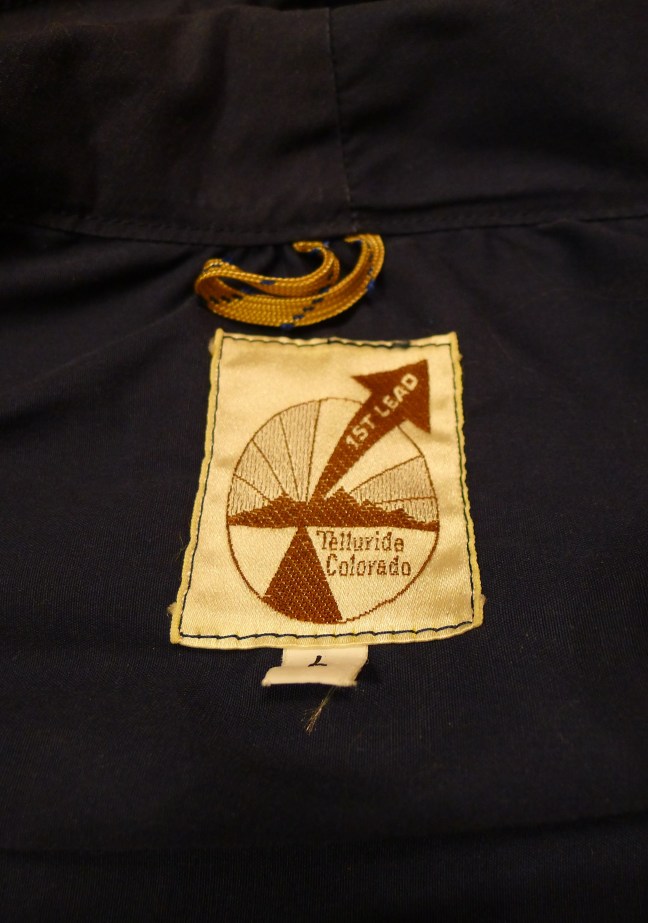
1st Lead Telluride, Colorado – Parka

This is a great parka from a rare Colorado company. First Lead exists today as an outdoor preparedness and training organization based out of Norwood Colorado, about 30 miles from Telluride. In talking with a spokesperson for First Lead I leaned the training outfit shares no direct relation to the outdoor gear company, but is cut from the same stock of friends and outdoor enthusiasts that started 1st Lead back in the 70s.   

This  piece is  typical in many ways of other parka from this era by other Colorado companies like Holubar and Frostline.  A shell constructed from a cotton blend (most likely 65/35 cotton/poly). Added weight and warmth from an inner layer of the same material. Standard parka trimmings like the yoked shoulder panel and multiple large pockets for storage. Beyond that, this parka has some major difference from its competitors. Maybe the most noticeable is the lack of a hood. It’s not that it got lost, there’s not even snaps or a zipper half to attach one too. The cut of this parka is lot shorter too, ending just below the waist as opposed to mid-thigh length. Another difference is the leather backed snaps. Not exactly sure of the purposes here, I am sure it added durability to the snaps, but it also adds weight. Peaks on the front of part of the shoulder yoke point a little more than others, and there is an absence of chest pockets. Maintains traditional accouterments like the back pocket (closed by a small talon zipper), waist cinch, and Velcro cuffs. 
Can’t wait to find more gear from 1st Lead to see what other kind of things they were doing different so many years ago!

Holubar Tiny Tent

The Holubar Tiny Tent circa early 1960s is very simple, slightly glorified pup tent. The floor and lower edges of the tent are a mustard colored heavy Nylon. The Nylon is poly urethane (or similar) coated, this coating is slightly cracked in some places but in decent shape. The upper is made from a heavy cotton blend. Front supports come from two three-piece poles that fix into grommets at the corners and loop at the top. The back pole is a single piece that fits into grommets top and bottom. Tent and poles were originally sold separately as the tent can be set up using sticks, ski poles, guy lines or an ice axe. The front door is secured by two zippers starting at each bottom corner and meeting at the peak. There is also a fly screen that has one zipper going from the viewers bottom left corner to the peak. There is no zipper along the floor for the screen, the material is instead about 6″ longer to meet the floor and keep out all but the most determined intruders.

Measures:
29″ high at front
16″ high at foot
30″ across
90″ long

Weighs approx: 4.5 lbs with stakes