Ross Stefan Oil on Canvas – “Antelope Girl at the Summer Hogan” 1971

Ross Stefan Oil on Canvas - "Antelope Girl at the Summer Hogan" 1971

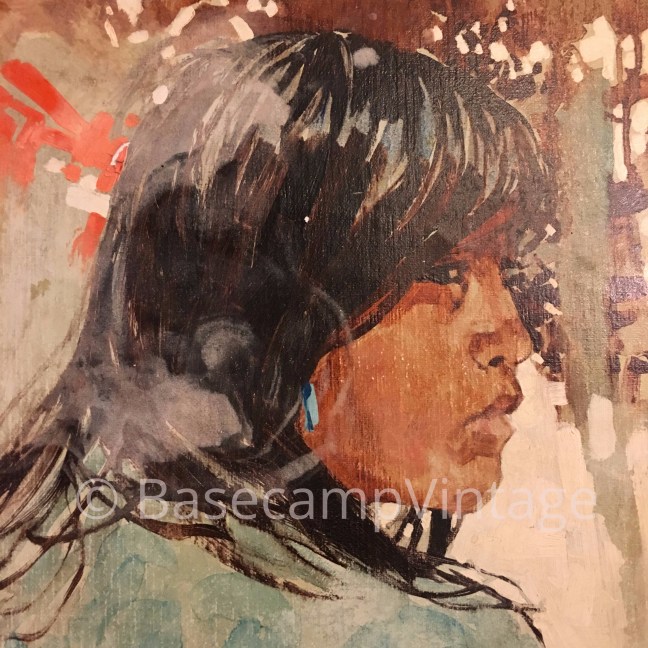
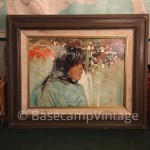
Arizona based artist Ross Stefan (1934 -1999) original art dated 1971. Titled “Antelope Girl at the Summer Hogan”,  this piece depicts a Navajo woman, girl as the title suggests, seemingly older and wiser than other girls. She peers inquisitively off over her right shoulder. The artist’s impressionist style coming through in the hues and lines of the hogan in the background. A turquoise earring dangles complementing the chambray shirt, a mix of traditional and modern styles . Pink splashes in the background reflections of the Arizona desert, land and sky where she lives.

This piece was acquired as is. Sadly neglected in its last home. Appears to have water damage resulting in fading and gradation of paint on the front throughout the background and the woman’s hair. Fortunately her face, the focal point of the piece has been spared the worst of it. Some small paint chips in her hair and pink behind her head.

Marking show this is clearly a documented work and you won’t find documentation of it elsewhere on the internet. Piece is available for purchase. Email Rob@basecampvintage.com for details.


Buddy Lee 13″ Composition Doll in Lee Dungaree Overalls and Cap

Buddy Lee 13" Composition Doll in Lee Dungaree Overalls and Cap

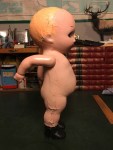
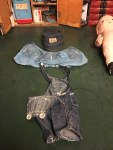
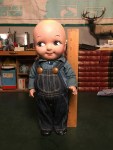
This Buddy Lee Doll is of the composition variety and measures 13″ head to toe. There are no Buddy Lee markings on the doll body. Clothes bear an early Lee Union Made Label. The overalls, shirt and hat were essentially miniature replicas of actual Lee products as Buddy Lee was in fact a salesman’s sample as well as a promotional tool.

Unfortunately with this doll the paint is rough, almost porous on the body. The arms however are much smoother. Appear to be of a different material than the composition body. Left leg appears to have been repaired. Painted boots are a little chipped up. Right thumb and pinky appear to have been chipped.

Danner Boot Recrafting

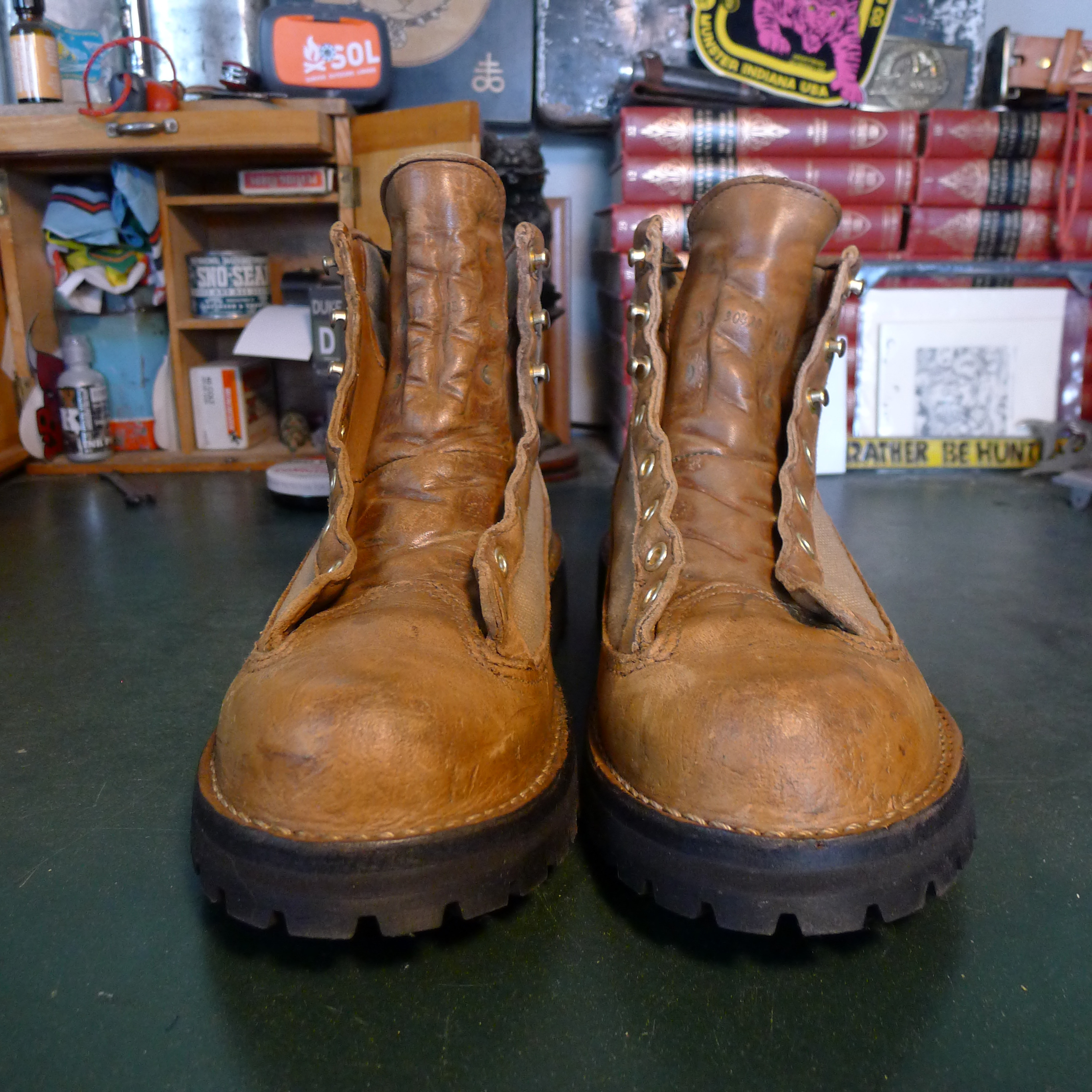
Danner boot recrafting Danner Light 30420

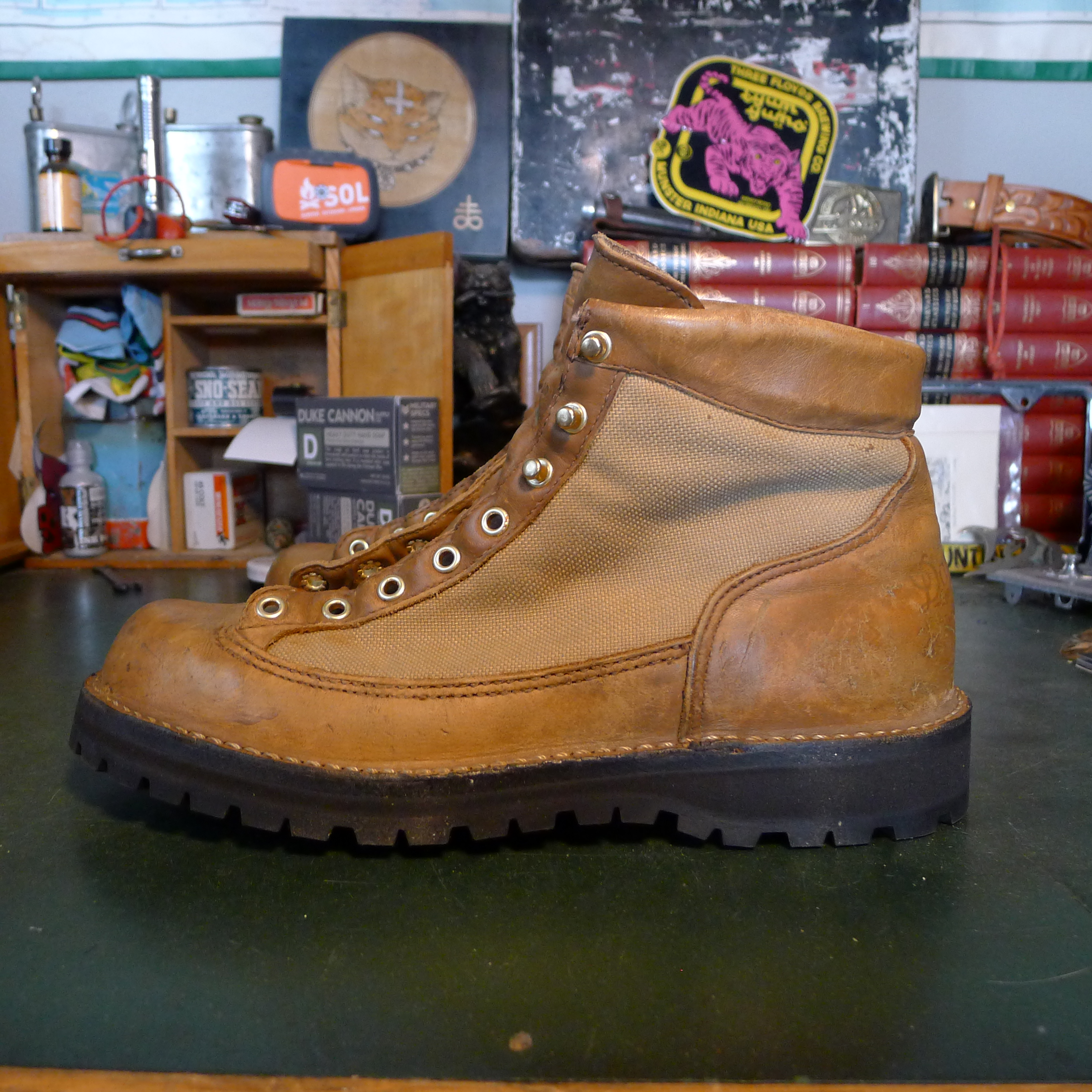
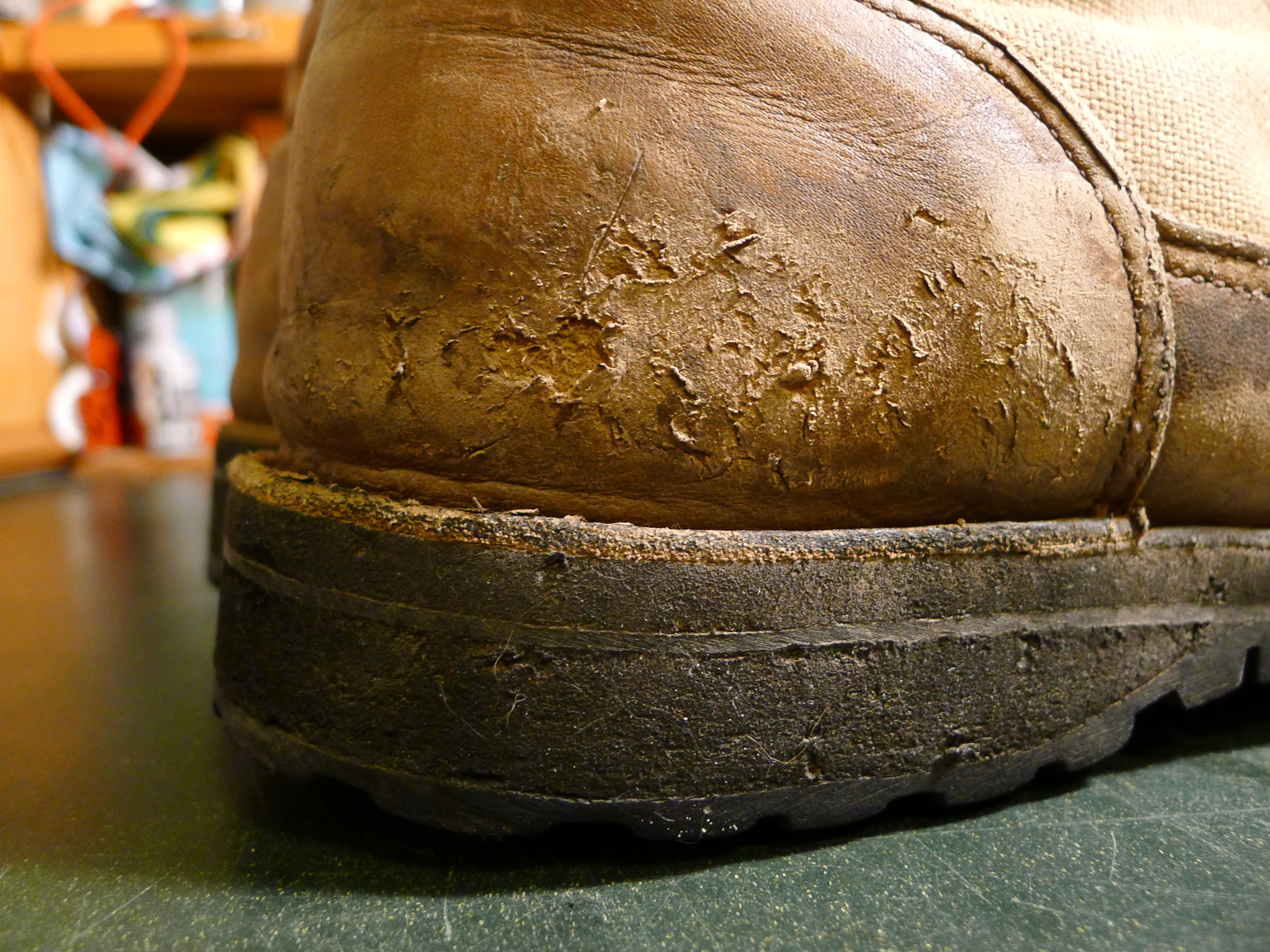
I’ve been fan of Danner Boots, ever since I found my first pair. Eventually every pair I’ve come across I’ve sold, a testament to their quality and enduring nature. Earlier in the year I picked up a pair of older Danner Light 30420. Condition was less than favorable, perhaps even gone enough I wouldn’t make the $3 dollars back I’d paid for them. Being they were a good fit for me, I decided to run them through the recrafting process and see what I got back. As I sit here typing this in brand new old Danner boots, all I can say is, I’m glad I did it.

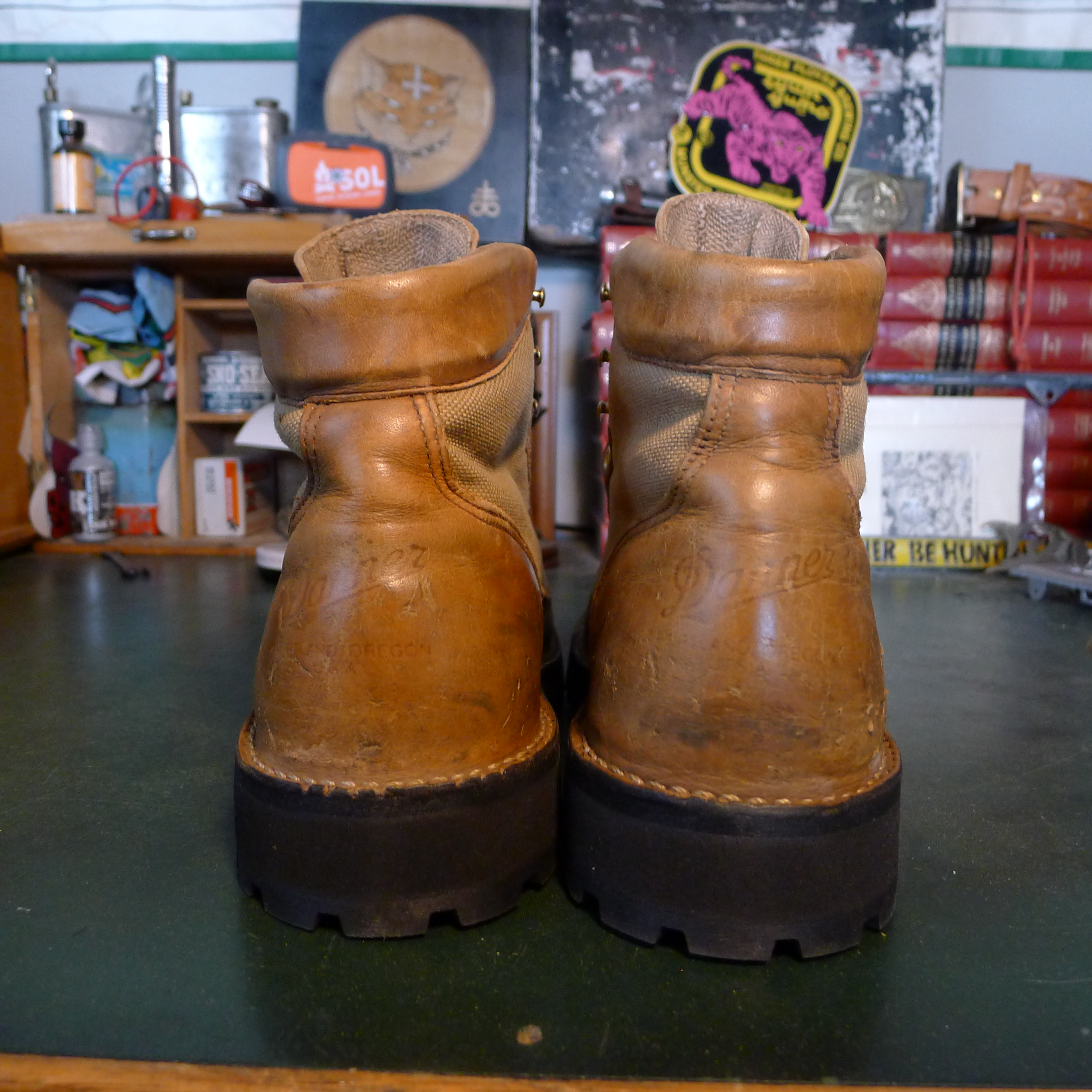
Forms and information on the recrafting process are easy to find and follow on the Danner site. As long as your boot has a stitch-down welt it boot should be recraftable. Simply remove the laces, insoles and send them to address provided with the form marked for appropriate servicing. If your unsure on the services your boots may need, just ask. I sent an email with questions on mine before hand to which I got a quick and friendly response. When filling out my form, I wrote in that I’d be interested in any additional service their people recommended. Basically, the heel on the boots I was sending in was a bit wonky, but I was unsure if the heel counter service would remedy it. Shortly after my boots were received I got a call from woman at Danner letting me know my heel counters were indeed broken and it was recommended I replace them, to which I gave the go-ahead. On the call I was also informed my boots had passed the waterproof test and there was no need to worry there. My call was followed by an email letting me know the queue for the process was 8 weeks. That’s about what I expected, and I was happy to wait.  No less than 7 weeks later I got a friendly email letting me know my boots were on their way back to me accompanied by professional before and after pictures.

The workmanship on the recrafting is quite simply amazing. I’ve had boots resoled, which always ads an element of newness to them, but this was above and beyond. The wonky heels are solid! The toes are rigid and shaped again. They’re overall cleaner than I imagined they could ever be. The boots were returned to me with new laces and a brand new set of Danner Airthotics, along with the business card of the gentleman I presume did the work.

I don’t know that you need to send your boots back to Danner to have such great work done. There’s probably a capable cobbler in your area. But if you have the time and means to put your boots through the process, I’d recommend it. Some of the best customer service I’ve ever got from a company.


Vintage levis Big E 501 Repairs

vintage levis 501 Big E repair

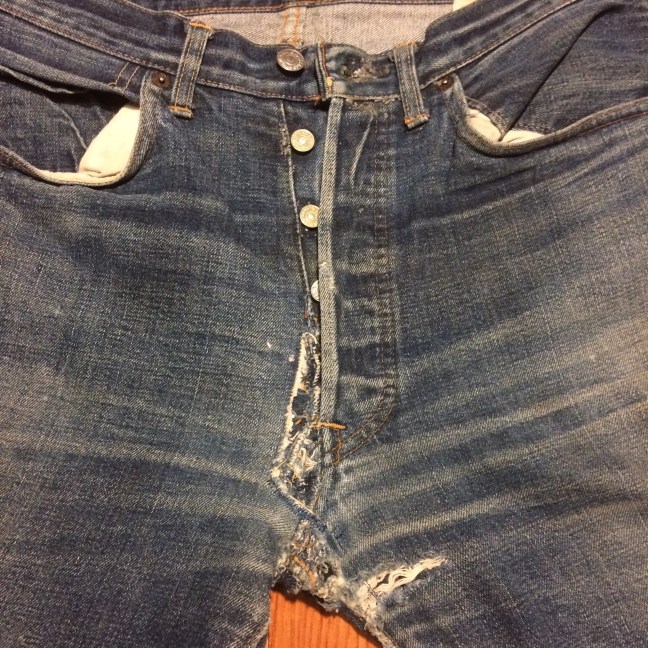
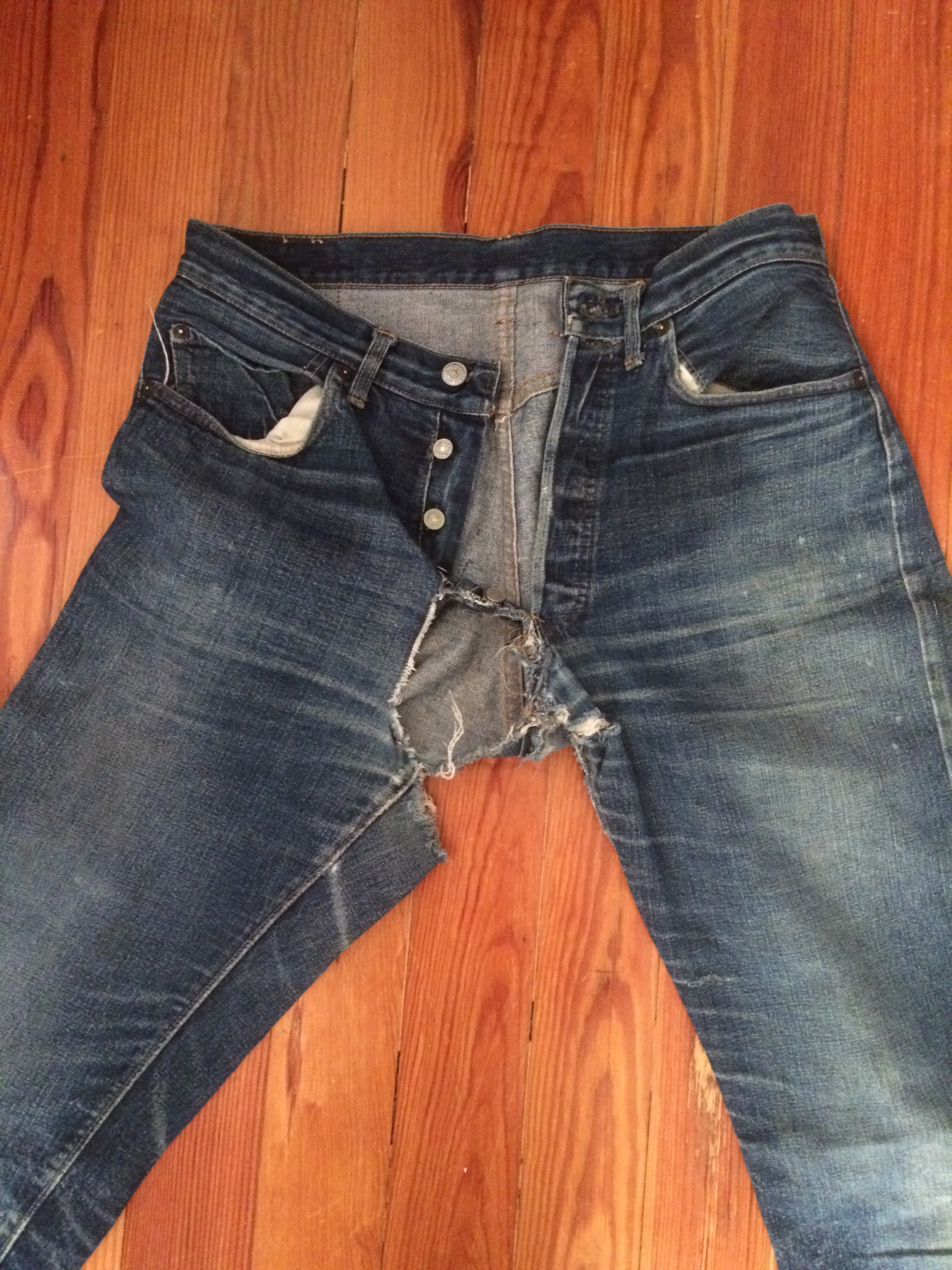
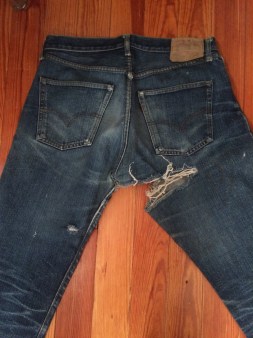
A while back I happened upon a pile of disheveled denim. The markings on the two pair of Levis 501s, a pair of 505s, Penny’s Foremost and Lee Riders dated them to the 1960s. The Lee’s in relatively good shape I sold off almost immediately. The others needing significant repair I held on to knowing at some point I’d have them repaired. Fast forward a few years, I pulled the stack of denim from the closet and studied. Such denim deserved a second life at the hands of a skilled professional, or did it? Having come across jeans that had been lovingly repaired and myself, and having been raised by a mother that sewed and mended many of my childhood clothing, I knew it wasn’t really a question of professionalism, but of utility and resourcefulness. I set out to do what any other mother or miserly person of the day would do and fix them myself.

vintage levis 501 Big E repair

vintage levis 501 Big E repairAgain going back to my childhood, I had learned the ins and outs of a sewing machine at a relatively young age. I can thread one properly and work the stitch settings well enough. I chose a pair of the 501s and set about. Now, I’ve patched items regularly over the years, but these were in need more of a reconstruction! I planned for a few minutes and got to work.

Among the pile of denim I found was a leg piece of red line selvedge I would use as my patch. The jeans in question must have been washed after the incident that left them in their dire shape as the fabric was unraveling. I paused, contemplating whether to preserve the tattered edge or clean it off. I opted for the later (which in hind sight, I somewhat regret). After trimming the long weft strings I cut my patch. Pinning it in place would have taken a lot of time and ensuring the two sides lay as they should considering the loss of fabric would have been difficult. I opted to use some fabric glue to make the initial bonding. Also in consideration was to patch the outside or from within. Given the size and severity of the mend I chose an inside patch.

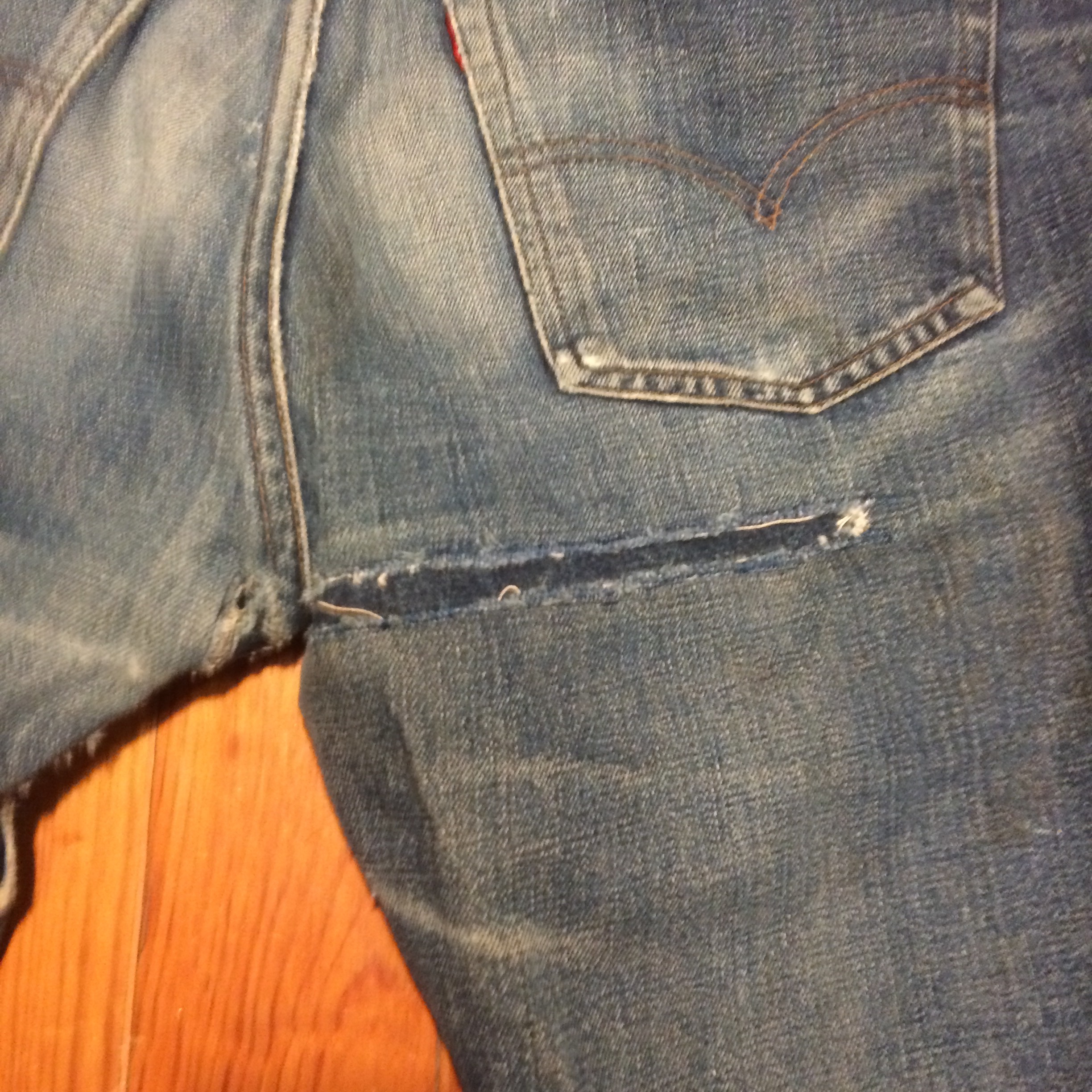
vintage levis 501 Big E repairThe nature of this break, extending around the leg and up through the crotch made for a challenging fix. I knew early on it wouldn’t be clean, but just figured it would create character.

After allowing for the patches along the back of the leg and crotch to set I made a few additional pinnings and set about sewing. First with a straight stitch to get them in place, then with a series of zig-zag stitches for strength. It was a technique I learned from my mom long before seeing many other pieces repaired in the same way. Rather than try to exactly thread match the denim in color I chose to use some color to personalize my repair.
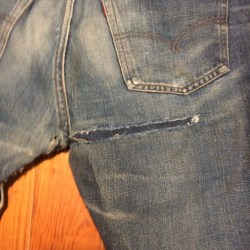
vintage levis 501 Big E repairTo finish this fix off I grabbed the closest color match I had to the original Big E yellow thread and sewed a stitch a around the patch, followed by some big zig-zags with some olive green just for fun.

I know with wear this mend will need additional attention and It’s something I look forward to completing. Adding to these nearly 50 year-old jeans history.

vintage levis 501 Big E repairvintage levis 501 Big E repair

Duofold Norse-Net Insulated Long Underwear

Rare Vintage 60s/70s Norse Net By Duofold mesh thermal suit

No, this isn’t some new fetish man-gerie suit. Duofold’s Norse-Net was a Scandinavian-style knit underwear popular in the late 60s early 70s. It claimed to provide maximum ventilation in warm weather and maximum insulation (when air spaces are sealed by close-fitting outer garments) in cold weather.

The ad in the photos is taken out of Backpacker Magazine Issue 3, Fall, 1973.

USAF Arctic Survival Suit Overcoat

USAF Down Filled Arctic Survival Suit Overcoat

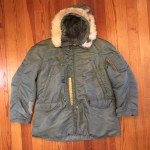
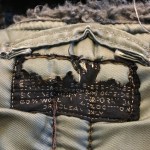
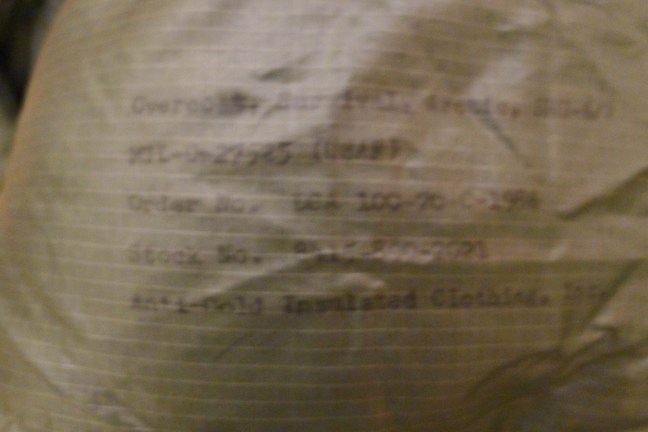
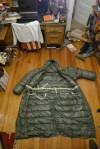
Here is a cool, warm rather, piece of militaria. You are looking at a USAF Arctic Survival Suit or overcoat. If you have an interest in this item, you’re probably a little more familiar with it than I am. I picked it up thinking it was an early outdoor gear piece used in cold weather expeditions and was probably made by Gerry or one of the other companies of the day. It was not until further investigation that I found the printed label inside the left breast of the garment. Here is what that reads:
Overcoat, Survival, Arctic, SRU-6/P
MIL-O-27525 (USAF)
Order No. DSA 100-70-C-1986
Stock No. 8415-890-2021
Anti-Cold Insulated Clothing Inc.

There’s also instructions for use printed on the left sleeve which indicate this item would have been in packaging on the aircraft until it was needed.

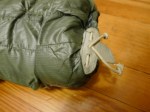
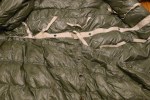
After some tinkering with what at first appears to be a sleeping bag with arms I found that the over coat is just that, and more. The garment can actually be worn as an over coat, shortened to a waist coat or turned into a suit by breaking the back of the coat along the snap and velcro seems and forming legs. Other images I have uncovered on the internet suggest that this piece would be complete with a pair of down boots and mittens, which I do not have.

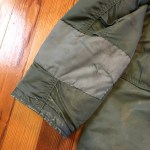
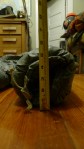
The piece is made from light rip-stop nylon and stuffed with loads of prime down. The piece is truly expedition weight, compared to a sleeping bag I would say it has a 0 degree if not below rating. all the seems on the front and back are both snap and Velcro Equally insulated hood with snorkel type closure around the face. Cuffs at the end of arms can also be completely sealed off. Leather tabs at all stress points. White nylon tabs inside around the waist are for securing the garment to your belt inside to get the length right. My inital guess on the age of this piece was the 1960s, but it may be later than that. Not sure if the 1986 in the order no is an indication of production date but I could see that being the case. This is a pretty simple design that may have served the USAF for decades.


Holubar Gaiters

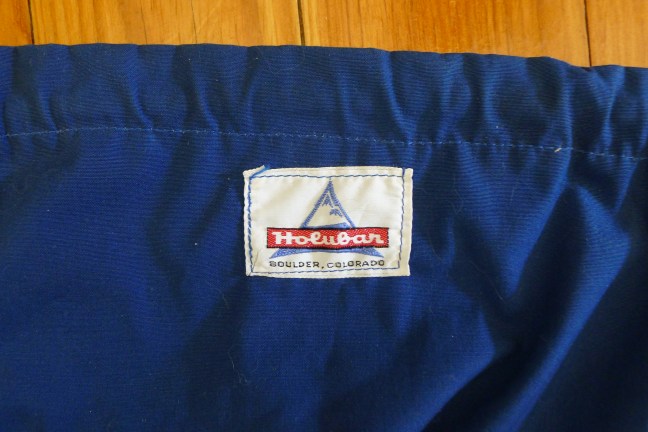
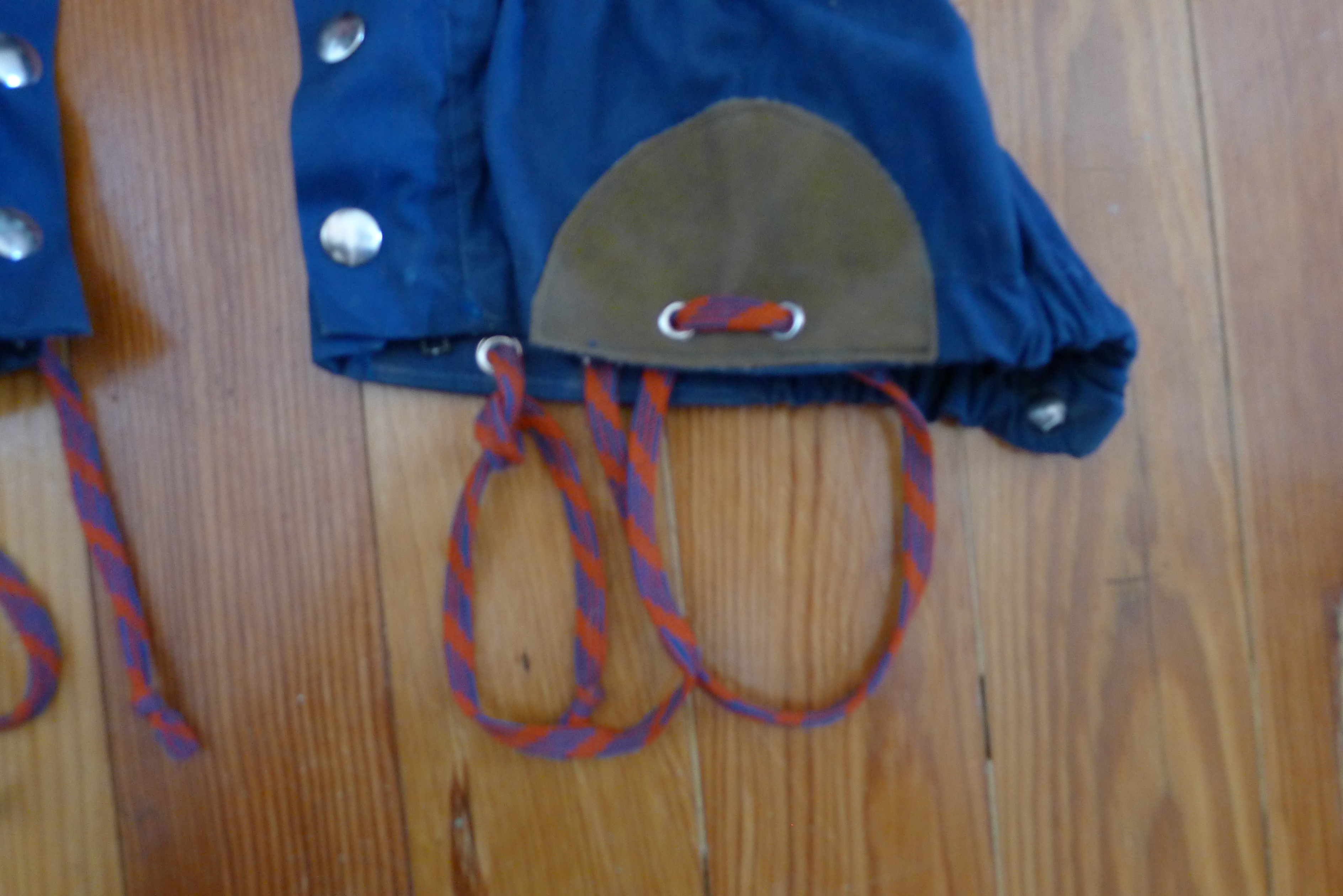
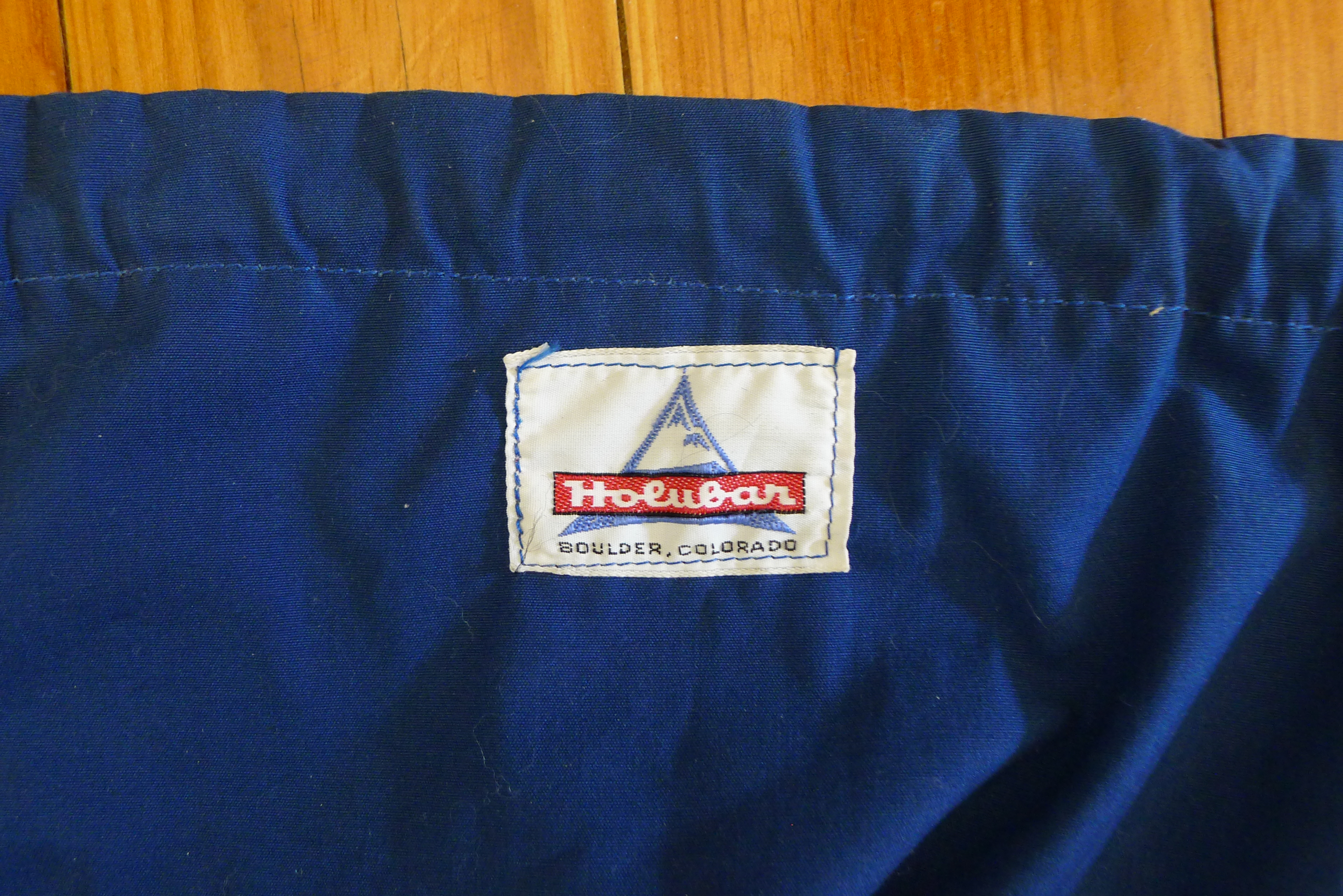
You are looking at a pair of Holubar Gaiters circa early 1970s or later as denoted by the logo with no climber. These gaiters are made of two layers of the 65/35 poly cotton blend, predecessor to the 60/40 nylon cotton blend popularized by Sierra Designs. The unique design of these gaiters has YKK zippers closing from top to bottom accompanied by five snaps for securing. Spring loaded cord locks with draw at the top with matching red and blue laces to secure under the arch of the boot. These laces are strung through two grommets on each side and can be tied off to fit different size boots. Leather reinforced lace hook for securing on the boot laces at the toe. Also featuring leather reinforced side panels where the lace grommets pass through.

These gaiters measure about 17.5″ high from the side to the top. 19″ across at the top from zipper to zipper and 14″ across at elastic ankle

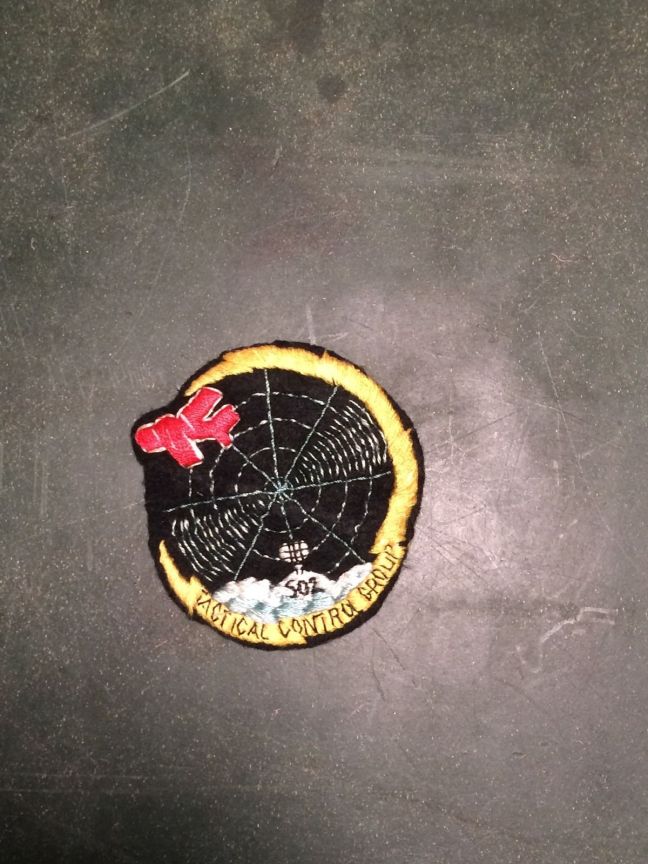
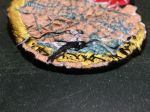
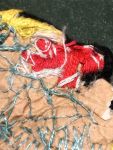
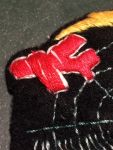
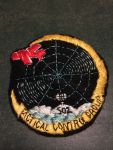
Korean War Era 502nd Tactical Control Group Patch. USAF – Handmade

If you’re looking at this you probably know more about it than I do. From my end, here’s what I can tell you. I came across this particular item in a lot of vintage patches. The patch is definitely hand sewn per the looks of the back. Some details look different from other examples I’ve seen, namely the color of the 502 as well as radar wave details.

Singer Featherweight Travel Sewing Machine Model 221J

This is a Singer featherweight model # 221J made in St Johns, Canada 1961. Serial # JE154076.  Numbers starting with JE were among the last to come from the St. Johns factory which operated from 1904 – the early 1960s. There’s a myriad of history and information on the web around these machines as they’re highly prized and collected. As far as I could tell the 221J is a version of the 221K, the third iteration of the machine.  221 were and still are prized for having the capabilities of a full size machine, including attachments, in a relatively light and compact piece. Traveling seamstresses, club quilters and collectors still covet these machines today. I am not a sewing machine expert, but  know enough from growing up with a mom who sewed everything to thread and run this machine. It threads much the same as larger, later model Singers.
1995 SIMS Noah Salasnek – USS Salasnek – Noahs Ark

If you were riding in the mid nineties you remember it well, the era when snowboard graphics went from neon splashes to skate inspired middle fingers to society. Twin tip boards over took directional race set ups and Summit County, Colorado exploded into a freestyle snowboarding mecca. Noah’s Ark was the follow-up to Noah Salasnek’s monumental “Skate Deck” from the previous year. Essentially the same board, the 1995 graphics pushed the envelope further. A ship full of unsavory characters, hoodlums, gangsters, skaters and brawlers represented snowboarding’s new direction.  This board is seen with period correct Sims pre-ratchet, full-based low back bindings.